Best Large Print Puzzle Books for Seniors (2026 Buyer's Guide)
Most people buying a large print puzzle book are not the person who will solve it. You are buying for a parent whose eyes have changed, for a grandparent who has stopped picking up the newspaper puzzle, or for a room full of residents who need something to do at four in the afternoon. That changes what matters. You cannot hold the book before you buy it, so you need signals you can check from a listing — and "Large Print" on a cover is not one of them. It is a marketing phrase with no standard behind it, and a great many books wearing it are ordinary puzzle books with the type nudged up a point or two, thin grid lines untouched, and an answer key set in six-point agate at the back. This guide is about the measurable things: how big the type actually is, how heavy the grid lines are, whether the paper fights a pencil, whether the book will lie flat on a lap tray, and whether the answer key was printed at the same size as the puzzles. Full disclosure before you read the picks: we publish large print puzzle books ourselves, under the Sunlight imprint. Our titles appear below, clearly marked, and we have said plainly where they are not yet available to buy.
The short answer
- 1.Sunlight Large Print Word Search for Seniors: Easy, Medium & HardAdults · large print
- 2.Sunlight Large Print Puzzle Book for Seniors: Easy, Medium & HardAdults · large print
- 3.Sunlight Large Print Crossword Puzzles for Seniors: Easy, Medium & HardAdults · large print
- 4.Brain Games large print puzzle books
- 5.New York Times Large-Print crossword collections
- 6.Large-print sudoku compilations
How we chose
A real type size, stated as a number
The floor for comfortable large print is about 14pt body text; genuine low-vision editions run 16–18pt, and puzzle grids need to go bigger still because a single letter has no surrounding word to help you guess it. If a listing never names a point size anywhere in its description, assume it is 11 or 12pt with a large cover font. The look-inside preview is your friend — compare the puzzle letters against the page number and the copyright line, which are almost never enlarged.
Grid cell size and line weight, not just letter size
This is the failure nobody warns you about. A publisher can enlarge the letters and leave the rules between cells hairline-thin, which is exactly the part an aging eye loses first. In a word search you need visible separation between rows so a diagonal can be traced without losing your place. In a sudoku you need cells wide enough to write a digit and still have corner room for pencil marks. In a crossword you need the black squares to read as solidly black rather than grey.
Paper and binding you can work on
Bright white uncoated stock is easier to read than cream, but heavily coated glossy paper throws lamp glare straight back and is genuinely worse for older eyes than cheap matte. Paper thin enough to show the puzzle on the reverse makes a busy grid harder to parse. Binding decides whether the book gets used: a perfect-bound paperback has to be held open with one hand or cracked at the spine, while spiral and lay-flat bindings free both hands and work on a lap, a wheelchair tray, or a bed table.
Difficulty honesty, and an answer key set as large as the puzzles
A book that says "easy" and spikes to expert on page 40 gets closed and not reopened, and the person who closed it usually blames themselves rather than the book. Look for a stated difficulty band, or a book that is explicit that it climbs. Then check the back: an answer key printed at a fraction of the puzzle size tells you the publisher stopped caring about the reader once the fun part was over, and it makes the book useless for anyone who wants to check their own work.
Our top picks
- #1
Sunlight Large Print Word Search for Seniors: Easy, Medium & Hard
Adults · large print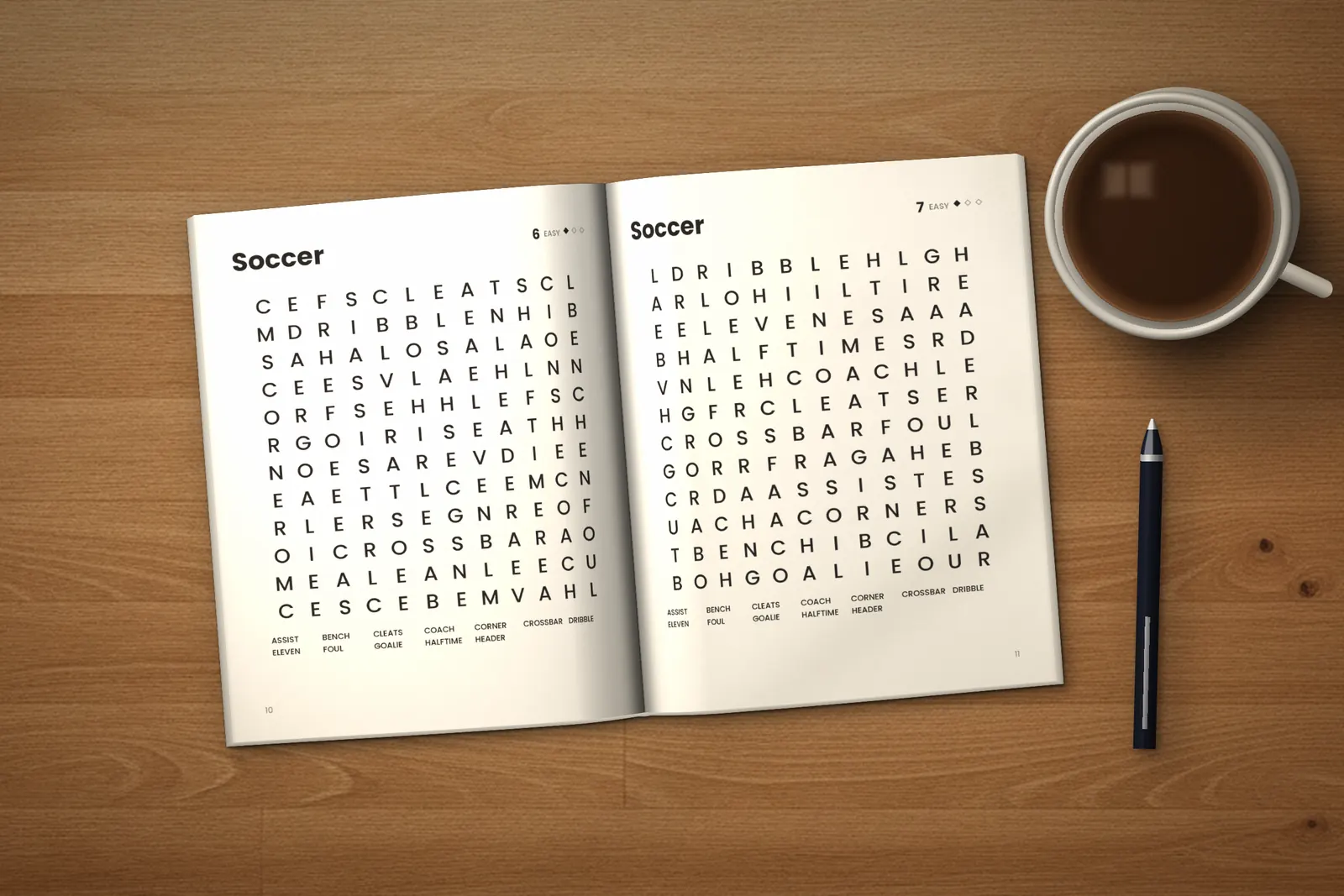
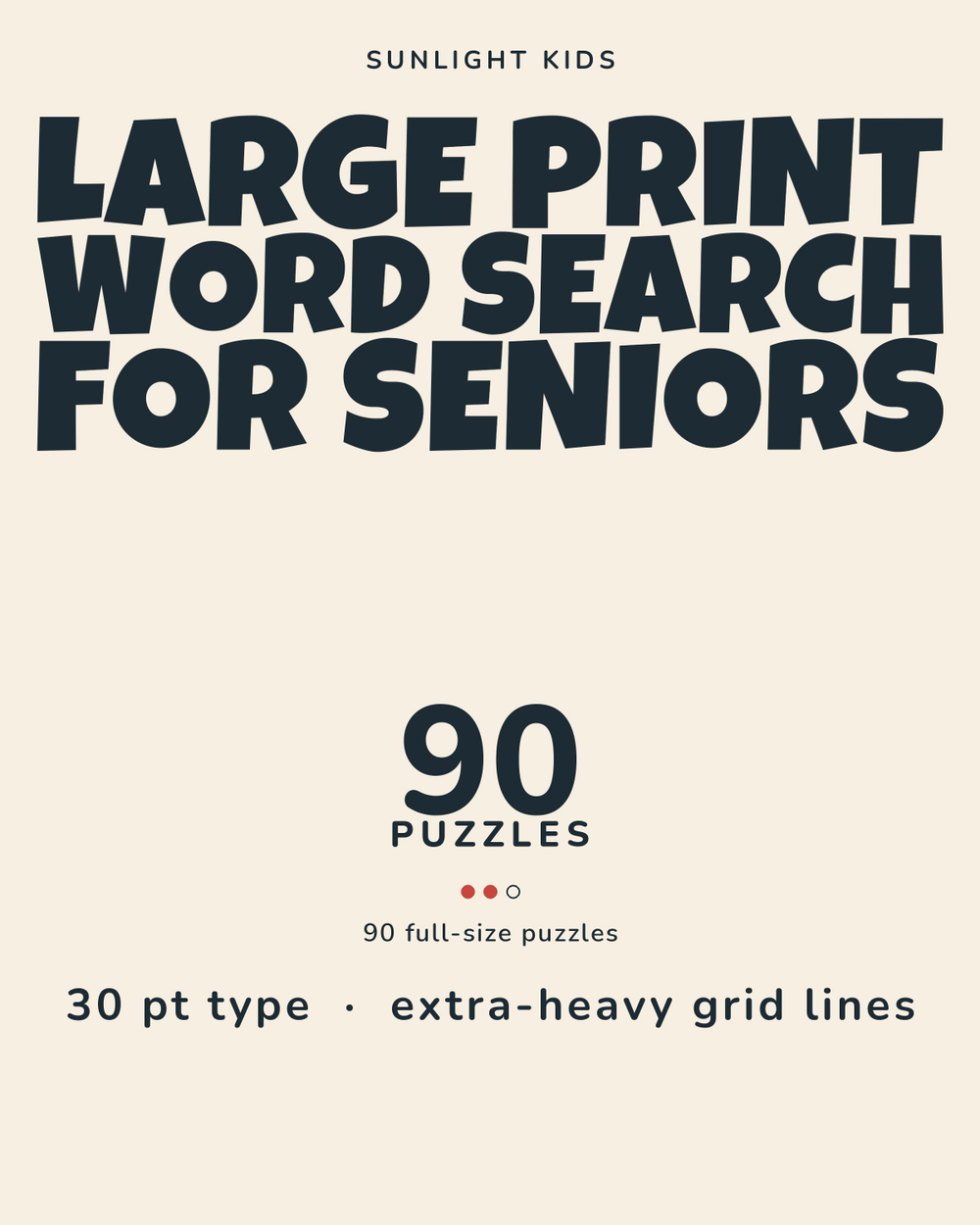
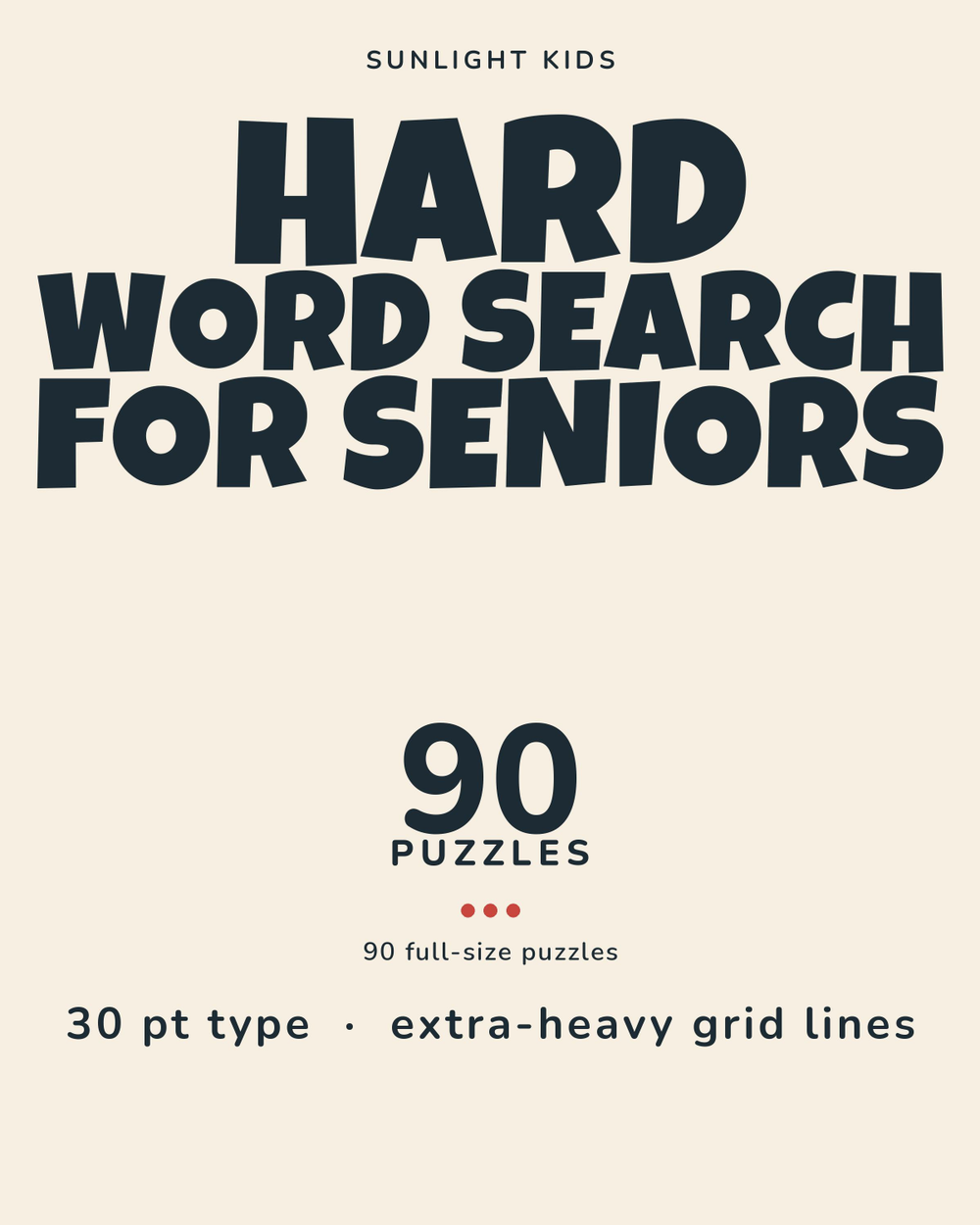
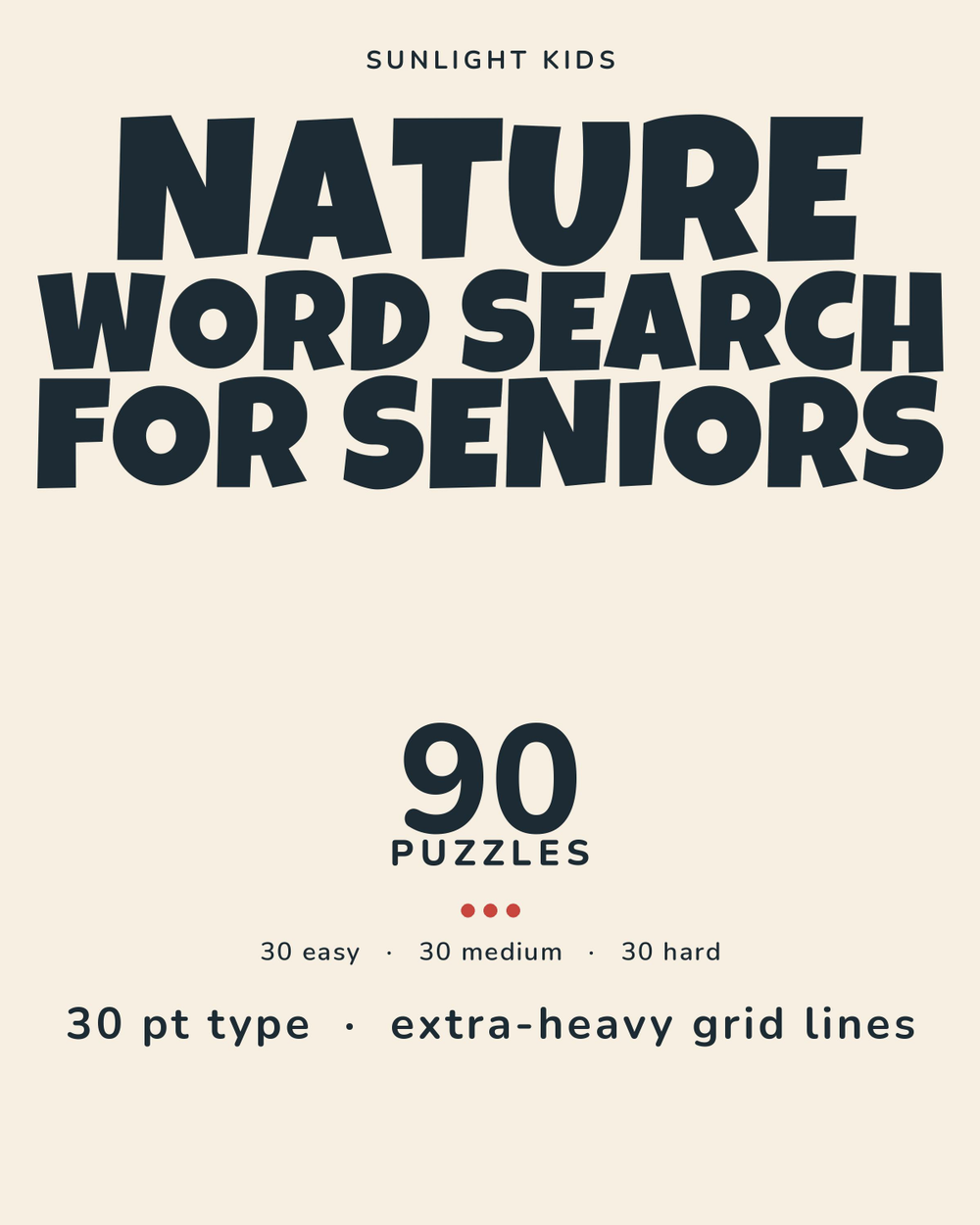
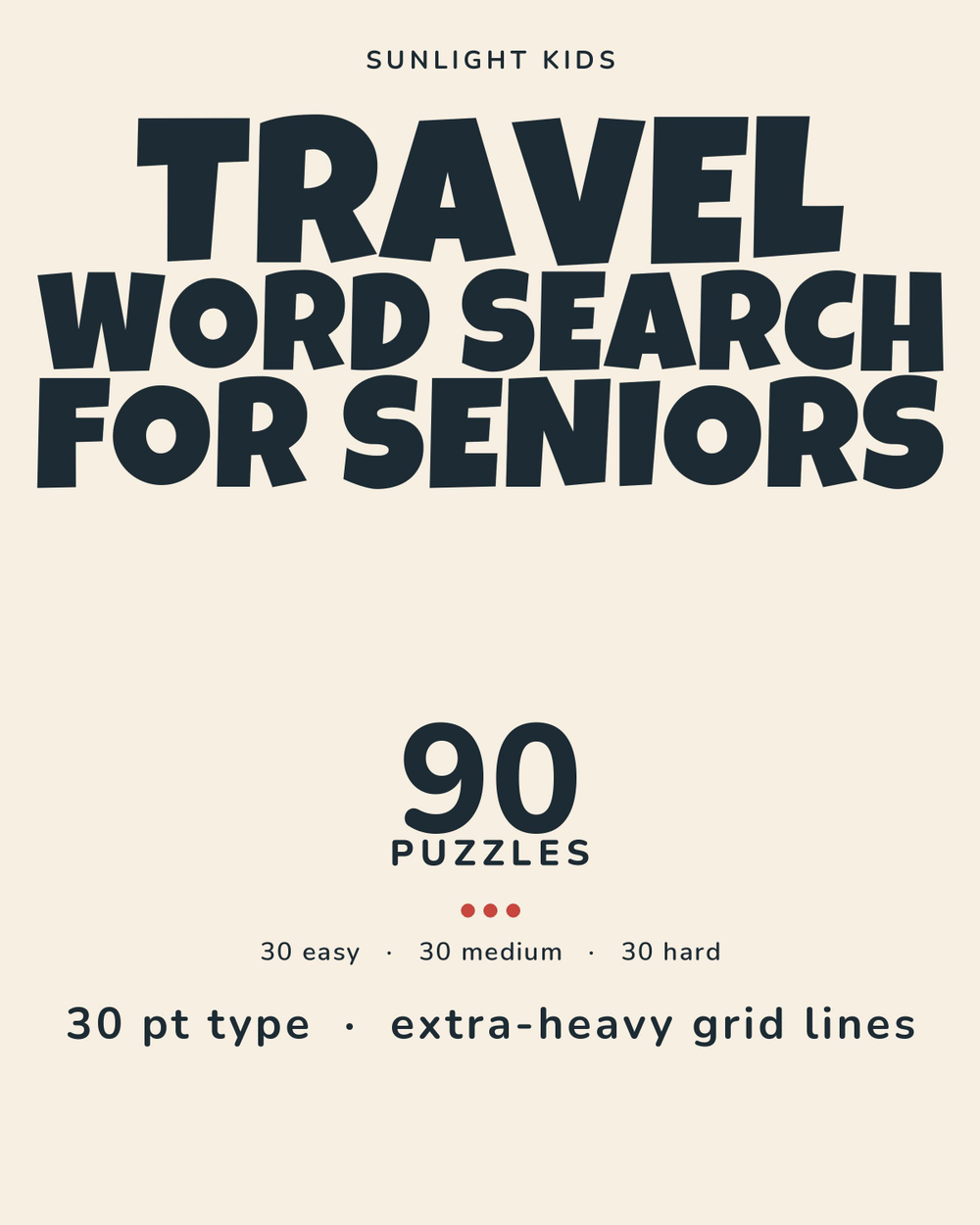
Ours, and the one we would hand to someone whose eyes have changed but whose patience has not. Set in 30pt type on an 8 x 10 page with extra-heavy grid rules, one puzzle per page, word banks printed beside the grid at the same size as the grid, and an answer key in the back printed just as large as the puzzles rather than shrunk to save a signature. It climbs deliberately from easy to hard, so a solver who finds the first section too gentle has somewhere to go without buying a second book. If you want one difficulty only, the same line splits into Easy, Medium and Hard, and there are themed volumes — nature, travel, seasons, Americana — for a reader who would rather the word lists were about something. Weakness: one puzzle per page at this type size means fewer puzzles per volume than a mass-market compilation. You are buying legibility, and legibility costs pages.
Paperback$10.99In a rush? Download the PDF now and print it at home.
- #2
Sunlight Large Print Puzzle Book for Seniors: Easy, Medium & Hard
Adults · large print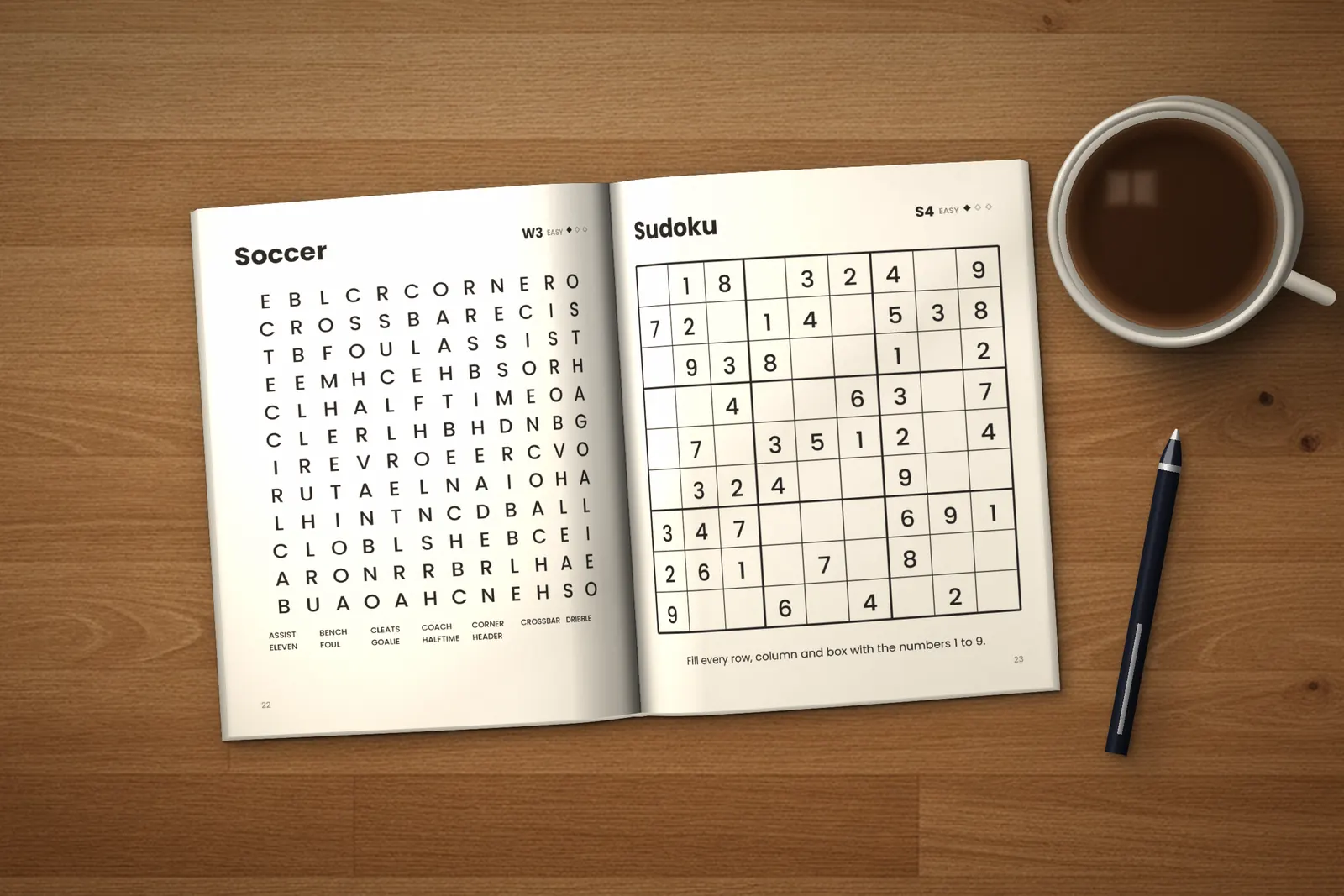
The variety edition, and the better pick if you do not know which puzzle type the person actually likes — a very common situation when you are buying for a parent. Sudoku, crosswords, and word searches mixed through one 8 x 10 book, all three set at the same large size with the same heavy rules, one puzzle per page, with plain-language instructions for each type up front so nobody has to be taught. Variety books also age better in a shared setting, where three people want three different things. Weakness: a mixed book is by definition a third as many of each type, so a committed sudoku solver will finish the sudoku and leave the rest. If you already know which puzzle they do, buy the single-format edition instead.
Paperback$10.99In a rush? Download the PDF now and print it at home.
- #3
Sunlight Large Print Crossword Puzzles for Seniors: Easy, Medium & Hard
Adults · large print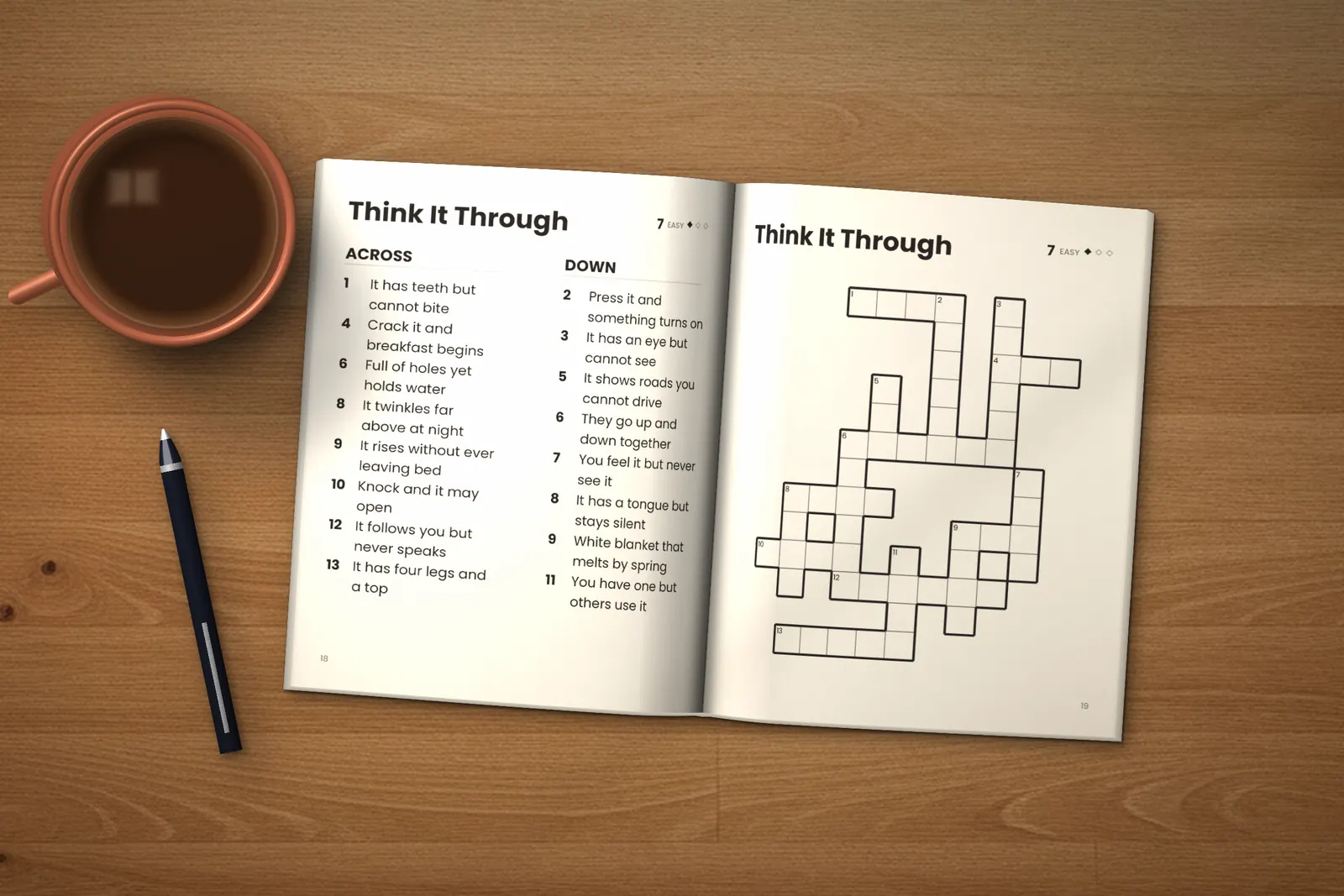
The crossword end of our line, and the right first crossword book for someone coming back to the format after twenty years away. Black squares that read as solidly black rather than grey, clue lists set as large as the grid, and three difficulty tiers labelled on every puzzle so a returning solver can start gentle without feeling talked down to. Full-size answer key in the back. Weakness: the cluing is fair rather than tricky, by design. A lifelong Saturday solver will find it kind. Buy the NYT large-print collections below for that reader instead.
Paperback$10.99In a rush? Download the PDF now and print it at home.
- #4
Brain Games large print puzzle books
The most widely available large print line in US stores, and the sensible default if you need something today and cannot wait for delivery. Publications International puts out large print word search, sudoku, crossword, and mixed-variety editions; the type really is enlarged, the difficulty is genuinely gentle, and you can find them in supermarkets and drugstores as well as online. Weakness: production is built to a price. The paper is thin enough to show through, grid rules are lighter than the letters would suggest, and the answer keys are set much smaller than the puzzles. Editions also vary a lot — two books with the same series branding can differ noticeably in how large the grids are, so check the preview of the specific edition rather than trusting the line.
- #5
New York Times Large-Print crossword collections
If the person you are buying for is a lifelong crossword solver and the only thing that has changed is their eyesight, this is the right book. Same hand-edited puzzles and same cluing as the standard editions, reset at a genuinely larger size with clue lists you can read without a magnifier. Nothing about the solving experience is dumbed down, which for this particular reader is the entire point. Weakness: the difficulty is unchanged, so it is a bad first crossword book. Later-week NYT puzzles lean hard on wordplay and current pop culture, and a solver who last did crosswords twenty years ago can find the clues alienating rather than hard. For a returning solver, start with a beginner or Monday-level large print edition instead.
- #6
Large-print sudoku compilations
For a dedicated sudoku solver, a large-format single-type compilation is the best value per hour in this whole category — several hundred puzzles, tiered difficulty, one book that lasts a year. Dover and Sterling both publish credible large-print sudoku collections, and because sudoku has no clue text the enlargement problem is simpler than it is for crosswords: the publisher only has to make the grid bigger. Weakness: many so-called large print sudoku books enlarge the given digits but keep the cell size the same, which leaves no corner room for pencil marks — and pencil marks are how most people actually solve. Check the preview for white space inside the cells, not just for digit size. And a 400-puzzle book of one type is monotonous for anyone who is not already a sudoku person.
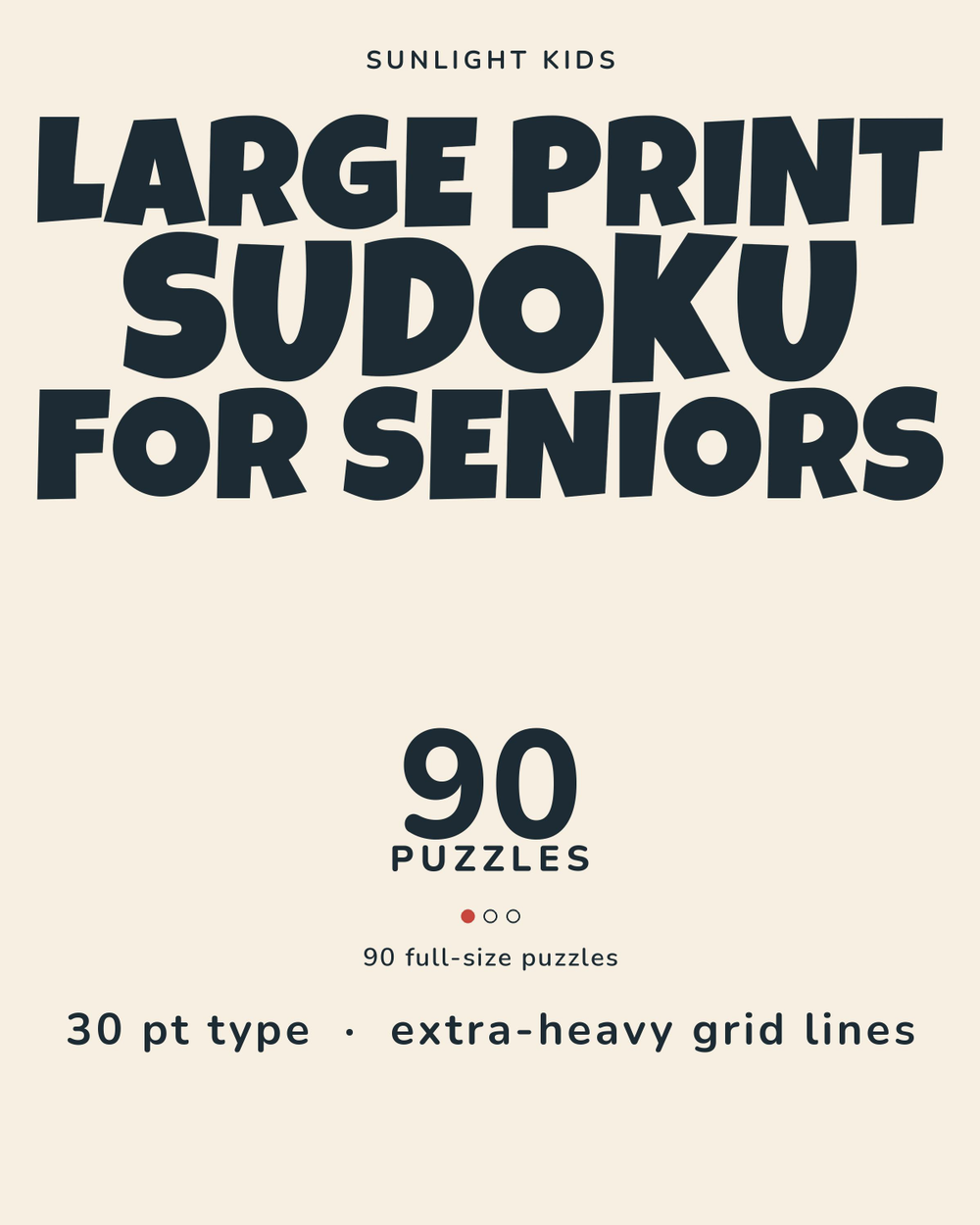
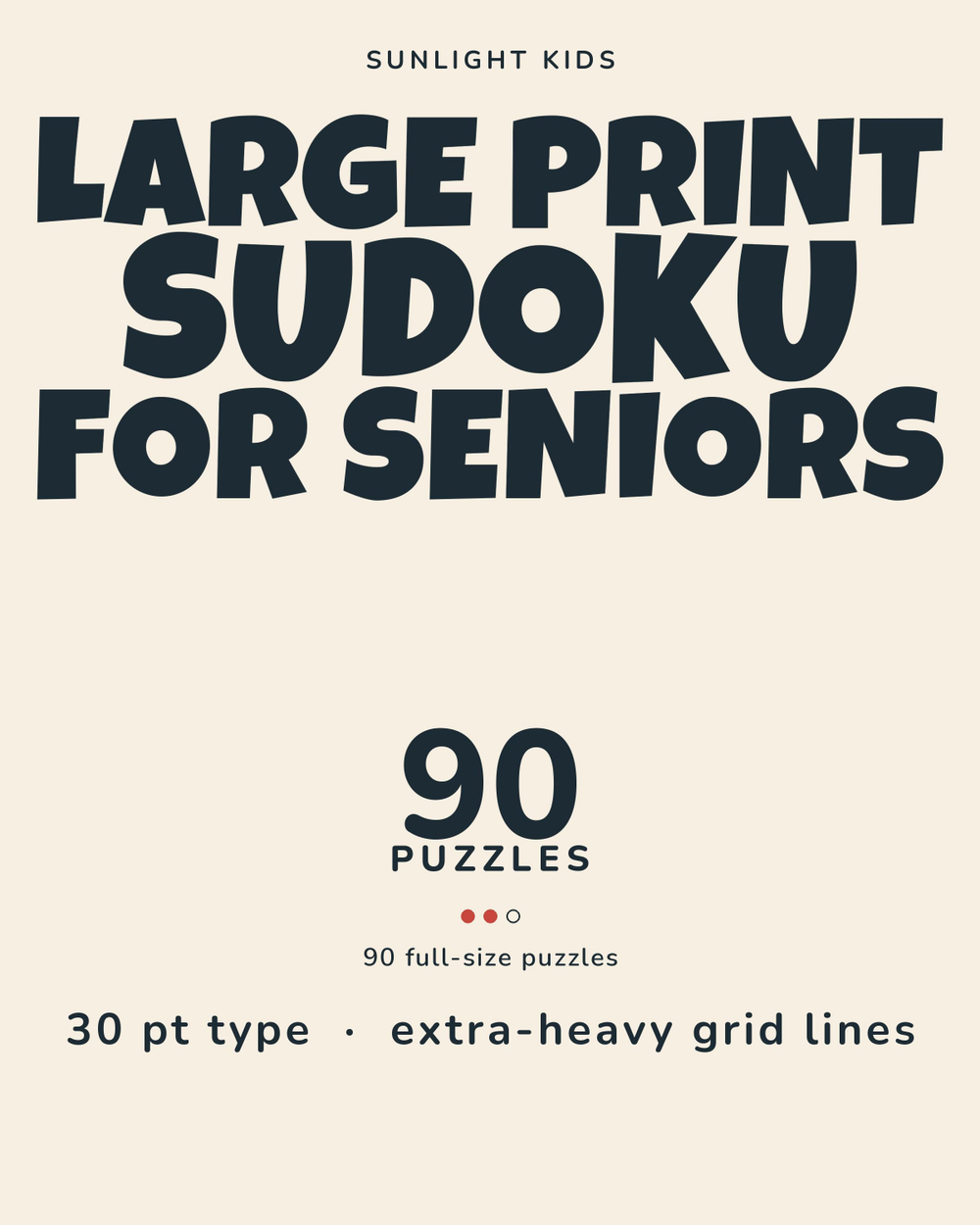
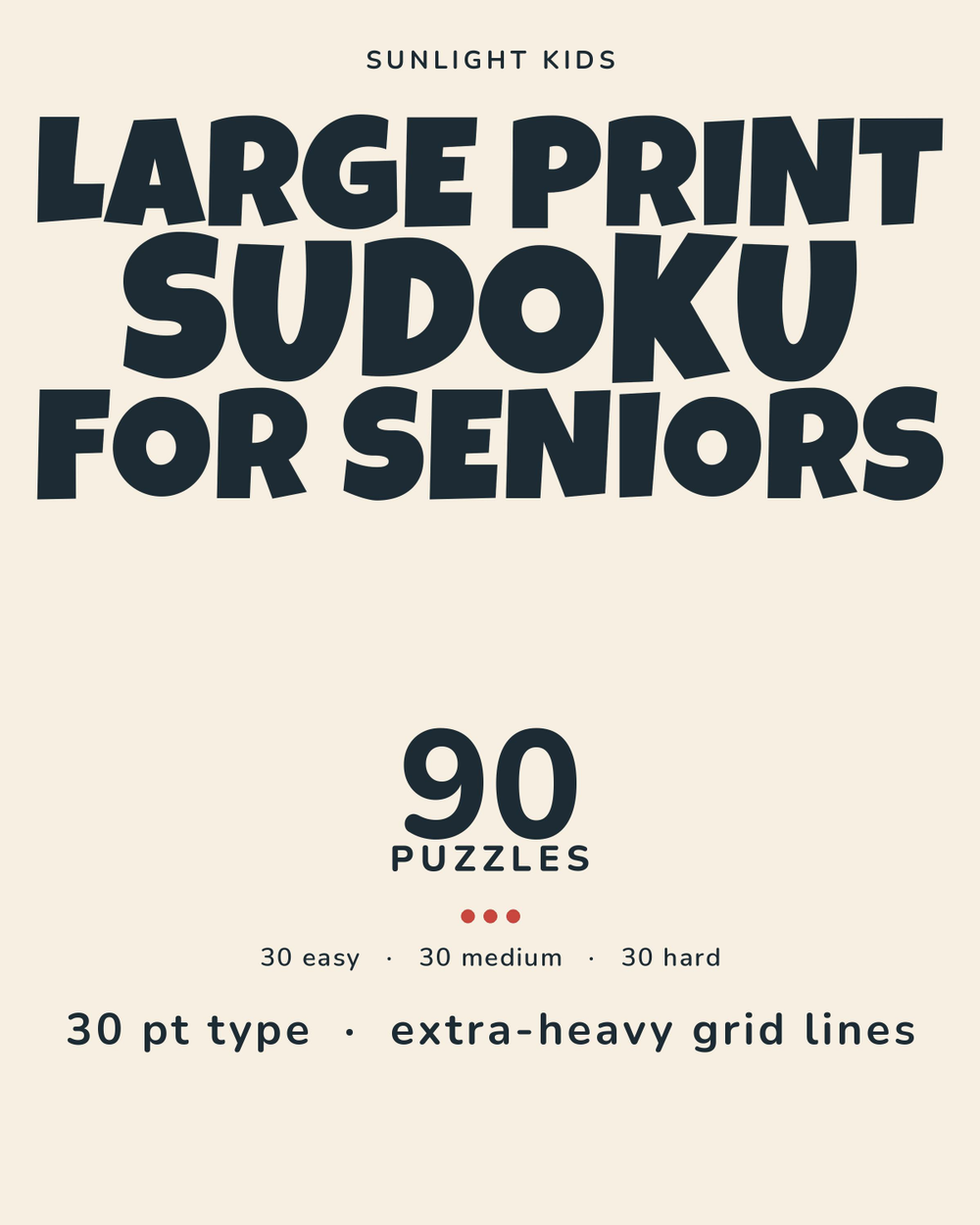
Large print sudoku for seniors
Extra-large grids and numbers you can read without glasses. Easy is a gentle start; Hard is daily-newspaper level; the combined volume climbs through all three.
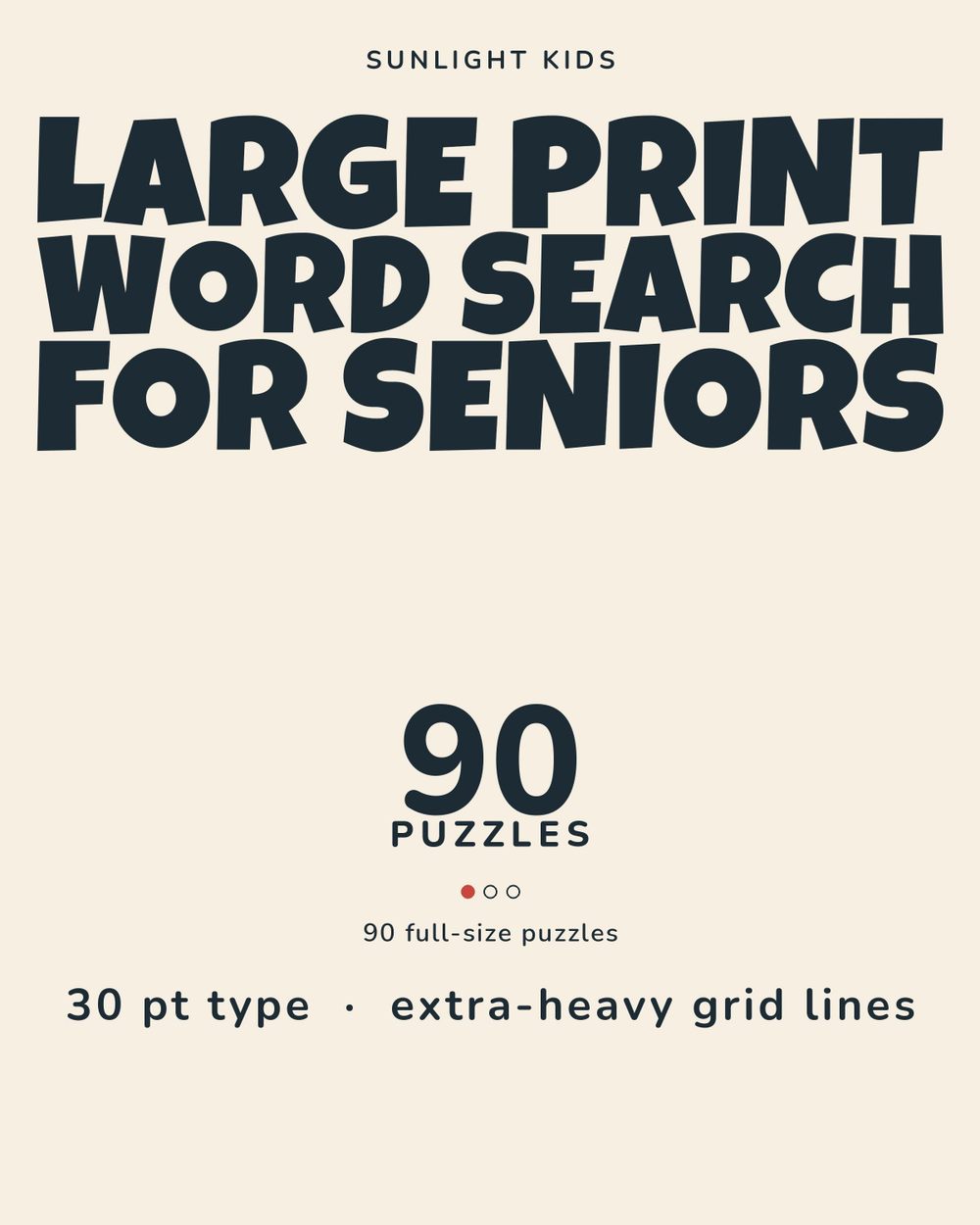
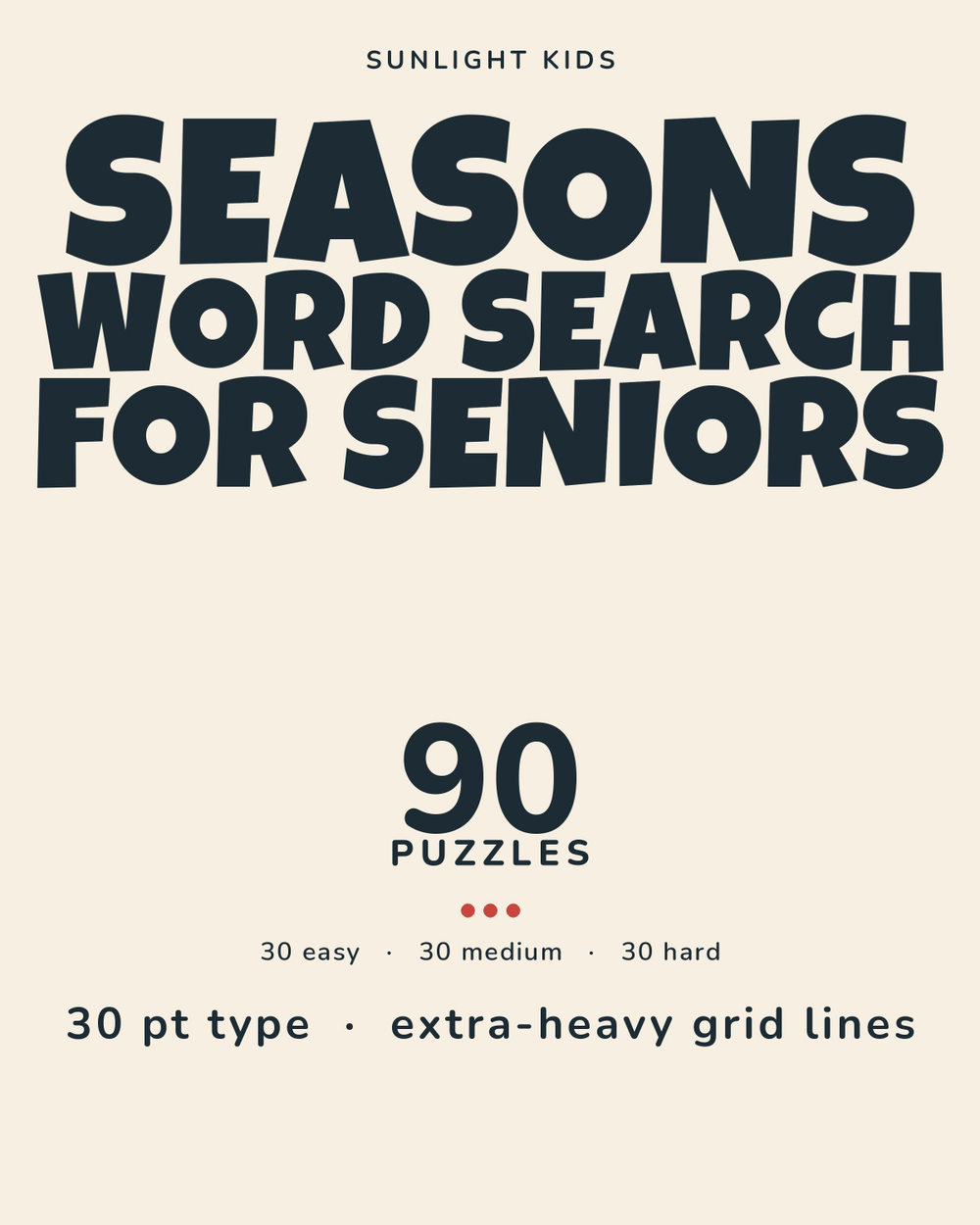
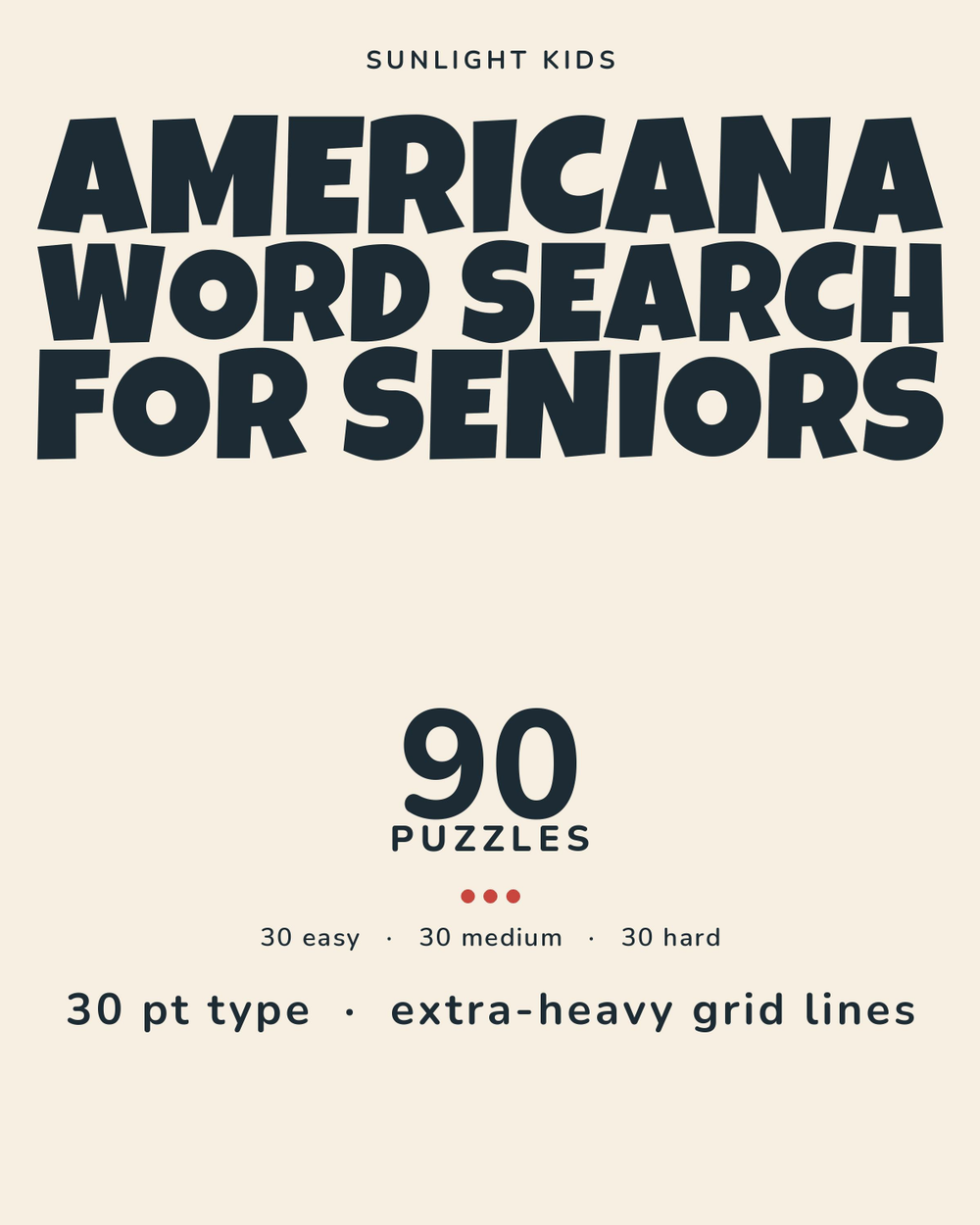
Large print word search, including themed volumes
The most relaxing large print puzzle. Themed volumes — nature, travel, the four seasons, Americana — make an easy gift.
Large print variety puzzle books
Sudoku, crosswords and word searches in one book — the safest gift when you don't know which puzzle someone likes. The Easy edition is the gentlest start.
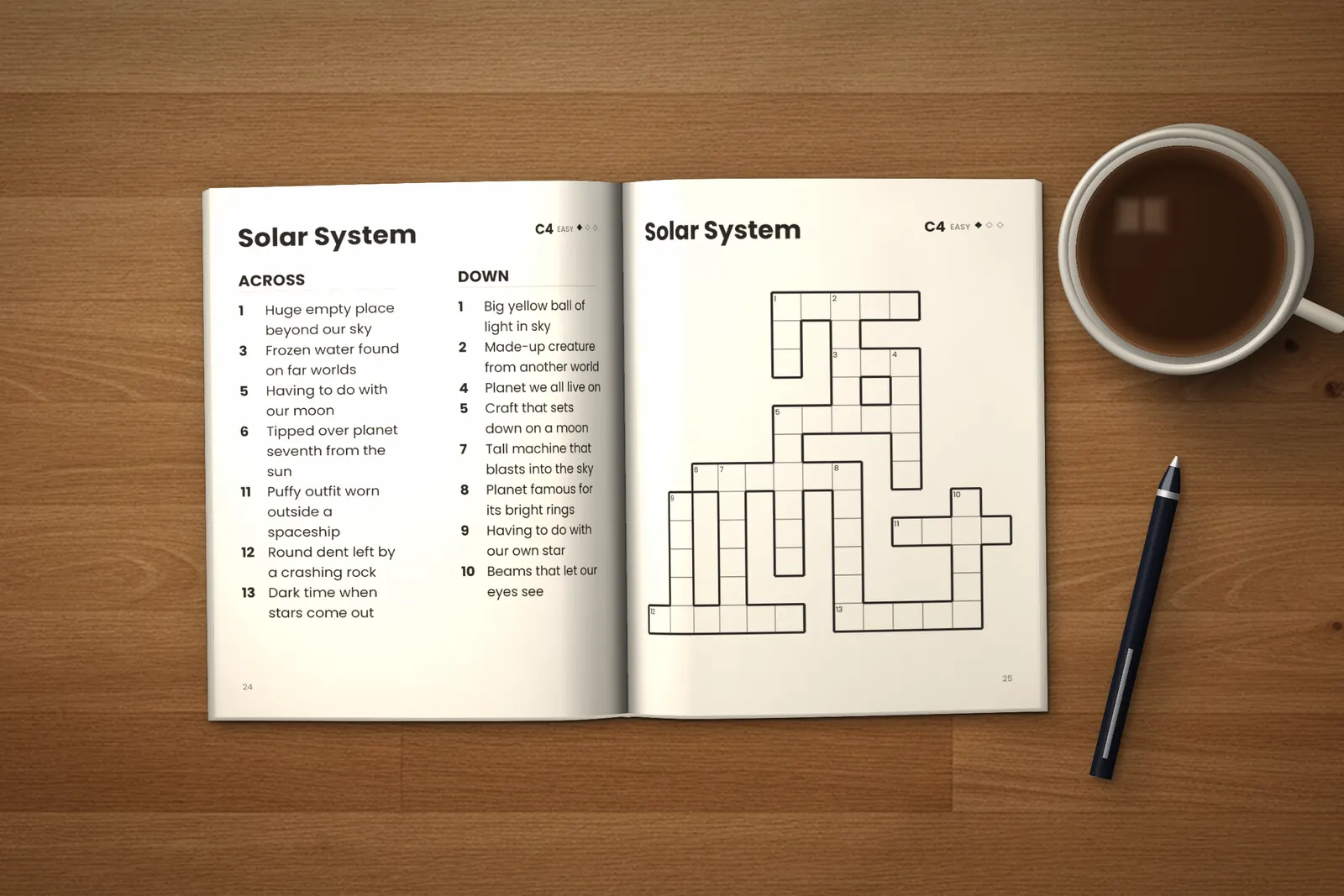
Large Print Puzzle Book for Seniors: Easy — 66 puzzles, one per page — 30 pt type · extra-heavy grid lines
Large Print Puzzle Book for Seniors: Easy, Medium & Hard — 66 puzzles, one per page — 30 pt type · extra-heavy grid lines
What to look for before you buy
Measure the preview against something you know
Open the look-inside and compare the puzzle letters to the page number or the copyright line, which publishers almost never enlarge. If the puzzle text is only slightly bigger than the page furniture, the book is not large print in any meaningful sense. Two grids per page on a standard paperback trim is another instant tell: there is not enough room on that page for a genuinely large grid.
Turn to the back and look at the answers
The answer key is the honest part of a puzzle book. A publisher that reset the puzzles properly reset the solutions too. A key printed at half the size of the puzzles means the enlargement was cosmetic, and it means the solver cannot check their own work without asking someone — which is exactly the small daily indignity you were trying to avoid.
Think about where the book will physically sit
A recliner armrest, a wheelchair tray, a hospital bed table, and a dining table are four different surfaces. Perfect-bound paperbacks want a table and two hands. Spiral or lay-flat bindings work everywhere else. If the solver has arthritis, hand tremor, or limited grip, binding matters more than any other single feature on this page.
Buy for enjoyment, not as treatment
Puzzles are pleasant, low-stakes, and easy to do alongside another person, and a book that gets picked up daily is doing real good — it fills time, it gives someone a small win, and it is something to talk about at a visit. What it is not is a medical intervention. Nobody should buy a puzzle book expecting it to prevent or slow dementia; the evidence does not support that, and framing a gift that way puts a weight on it that no book can carry. Pick the one they will actually enjoy.
DIY vs buy
Printing your own is a reasonable stopgap and a genuinely bad long-term plan. Our free hard word search and difficult word search packs are set for standard-sighted adults, not for large print — you can enlarge them at the copier or print them at 130–140% onto larger paper, which does work, but you lose the heavy grid rules and you end up with loose sheets that slide off a lap and get thrown out by mistake. Printables are the right answer for a one-off afternoon, a hospital waiting room, or trying a puzzle type before you commit. For a person who will pick a book up every day, a bound book that opens flat, holds together, and cannot be tidied away by a well-meaning visitor is worth the money.
Our large print line
Ages 2–5 · 4–7 · 7+ · Adults
Frequently asked questions
- What point size counts as large print?
- There is no legal standard for the phrase on a puzzle book cover, which is why it gets abused. As a working rule: 14pt is the floor for comfortable reading, 16–18pt is what dedicated large-print publishers use for prose, and puzzle grids need to run larger still because an isolated letter or digit gives your eye nothing to guess from. Our own large print line is set at 30pt for exactly that reason. If a listing will not tell you a number, treat that as the answer.
- Do puzzle books help prevent dementia?
- No, and be careful with anyone who tells you otherwise. Research on cognitive activity and brain aging is genuinely interesting but it does not show that doing word searches prevents, delays, or treats dementia, and a book is not a treatment for any condition. What puzzles honestly are: enjoyable, low-frustration, easy to pick up and put down, and easy to do next to another person. That is a good enough reason to buy one.
- Which puzzle type is best for someone just starting again?
- Word search, almost always. It has one rule, it cannot be failed, it does not depend on general knowledge or vocabulary, and progress is visible on the page — you can see how much you have done. Sudoku is the next step up and needs a taught technique. Crosswords are the hardest re-entry because they lean on cultural references, and a solver who has been away for years can feel the gap immediately.
- What should I buy for an assisted living or memory care activity room?
- Buy variety editions rather than single-type books, buy several copies of the same title so a group can work in parallel, and weight your choice toward the easiest difficulty band you can find — a room of mixed abilities is limited by the person who gets stuck first. Prioritize lay-flat or spiral binding for tray tables, matte paper over glossy because of overhead fluorescent glare, and large answer keys so staff can check work quickly. Themed word search collections (nature, travel, seasons, Americana) tend to start more conversations than abstract puzzles do, which is often the real goal of the session.
- Is spiral binding worth paying more for?
- For anyone solving in a chair, a bed, or a wheelchair, yes — it is probably the single biggest usability upgrade in the category, because it removes the need to hold the book open at all. For someone who solves at a kitchen table with two free hands, it matters much less, and a perfect-bound book with genuinely large grids beats a spiral-bound book with small ones every time. Do not trade type size for binding.
Sunlight Kids activity books — for every age.
Ages 2–5 · 4–7 · 7+ · Adults