32 Activities for 5 Year Olds (That Actually Keep Them Busy)
Learning games, fine-motor play, and busy-hands ideas a five-year-old can mostly do on their own — plus a free printable pack.
Here are 32 activities for a 5-year-old, grouped by how long you've got and what you have on hand — from 5-minute, nothing-to-buy ideas to longer sit-down play. Each one is tagged with the skill it builds and whether your child can do it on their own, so you can scan to exactly what you need right now.
Five is the bridge year into kindergarten: most fives can write some letters, count past ten, follow rules in a game, and tell a short story. The ideas below lean into that — early reading and writing, simple logic and STEM, and turn-taking games — without ever feeling like a worksheet.
Free printable
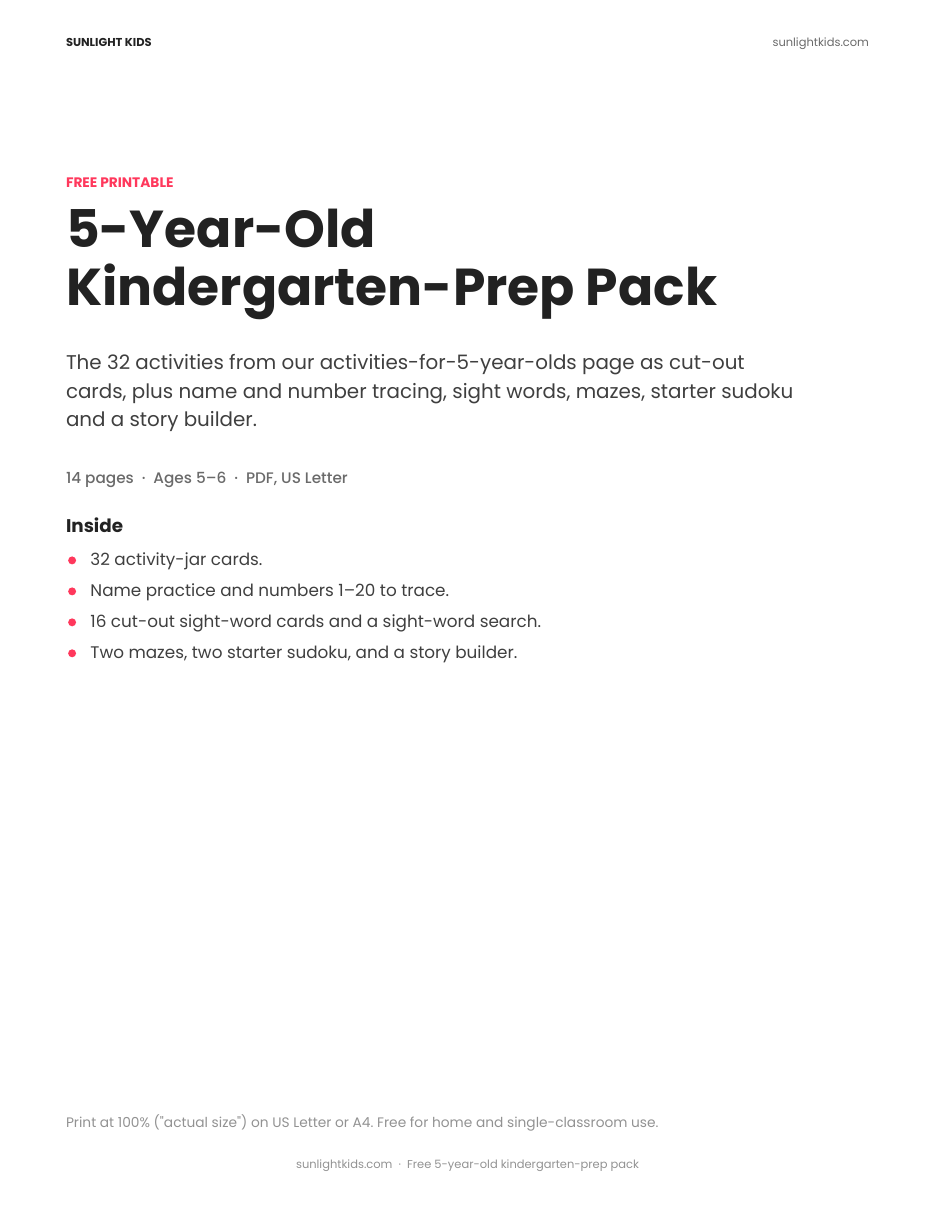
Free 5-Year-Old Kindergarten-Prep Pack
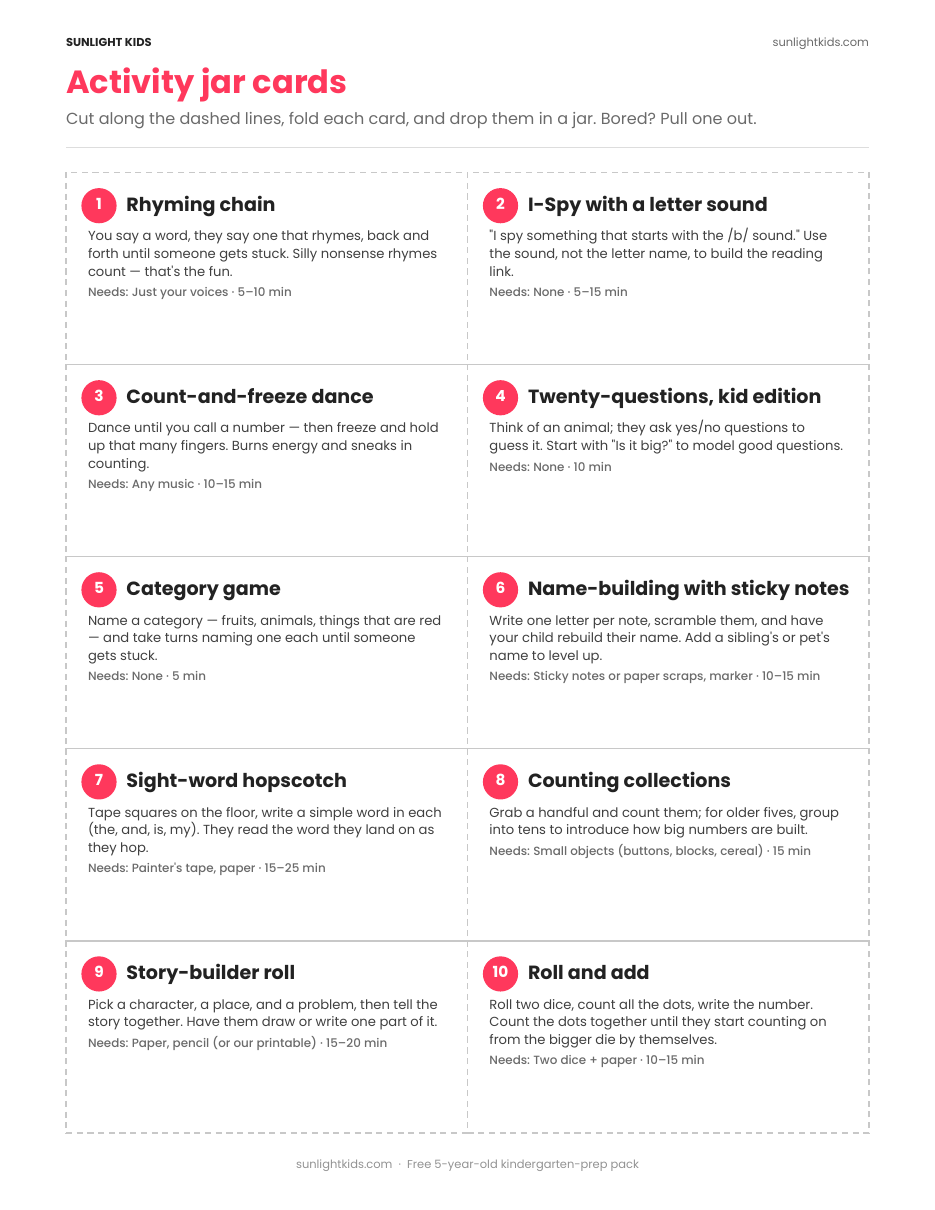
- All 32 activities as cut-out cards for an activity jar
- Name, letter, and number (1–20) tracing
- 16 cut-out sight-word cards and a sight-word search
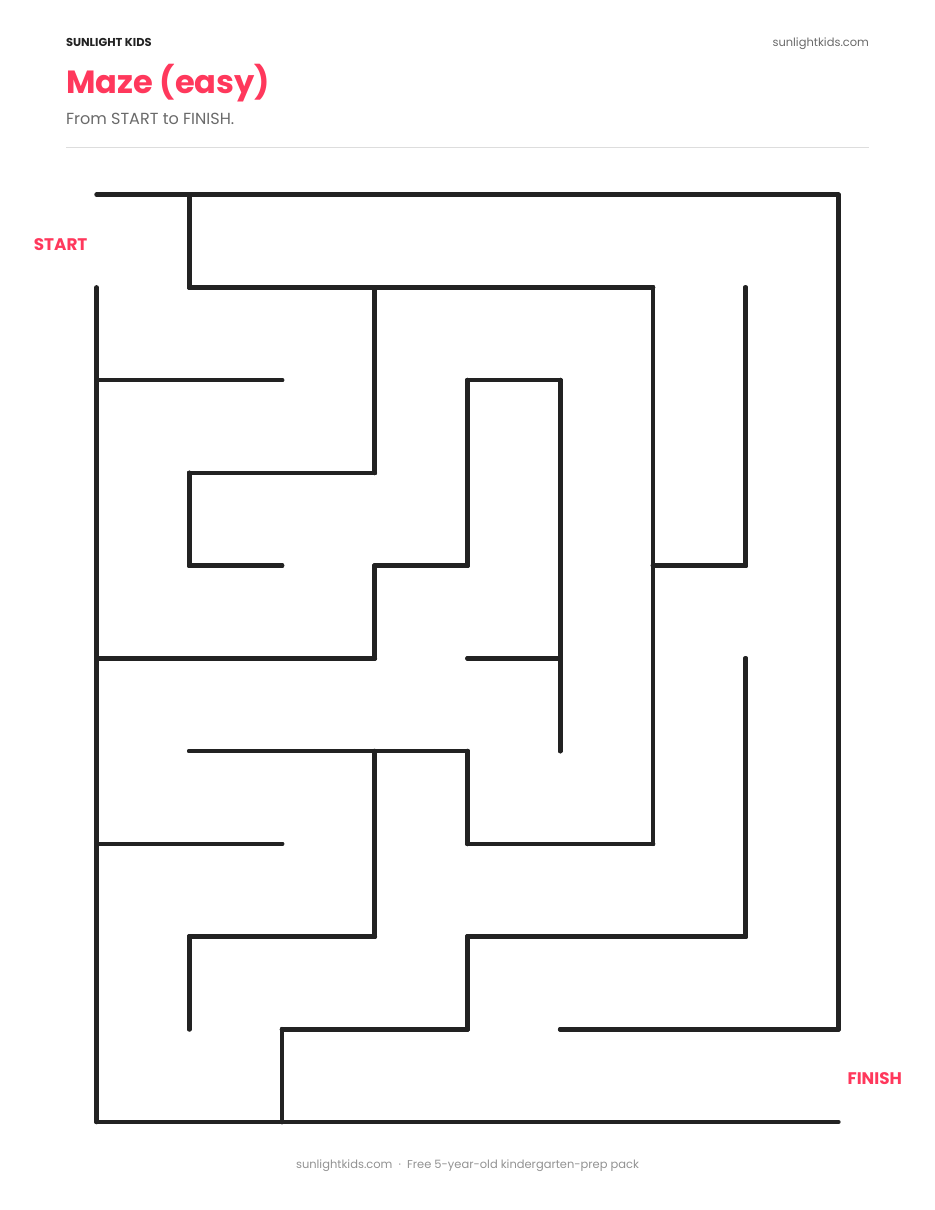
- Two mazes, a starter sudoku, and a story-builder
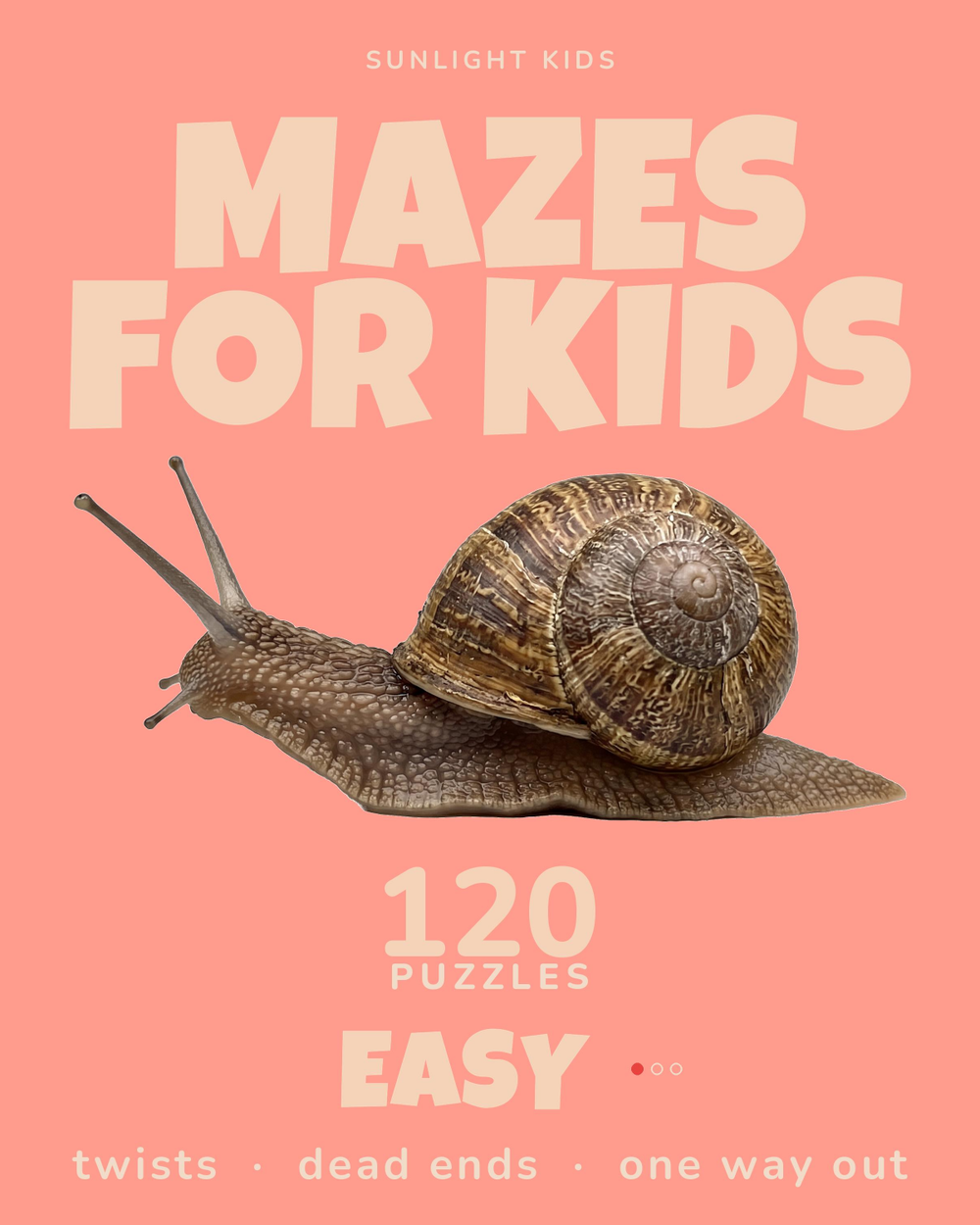
If your five loves the mazes, here are 100 more
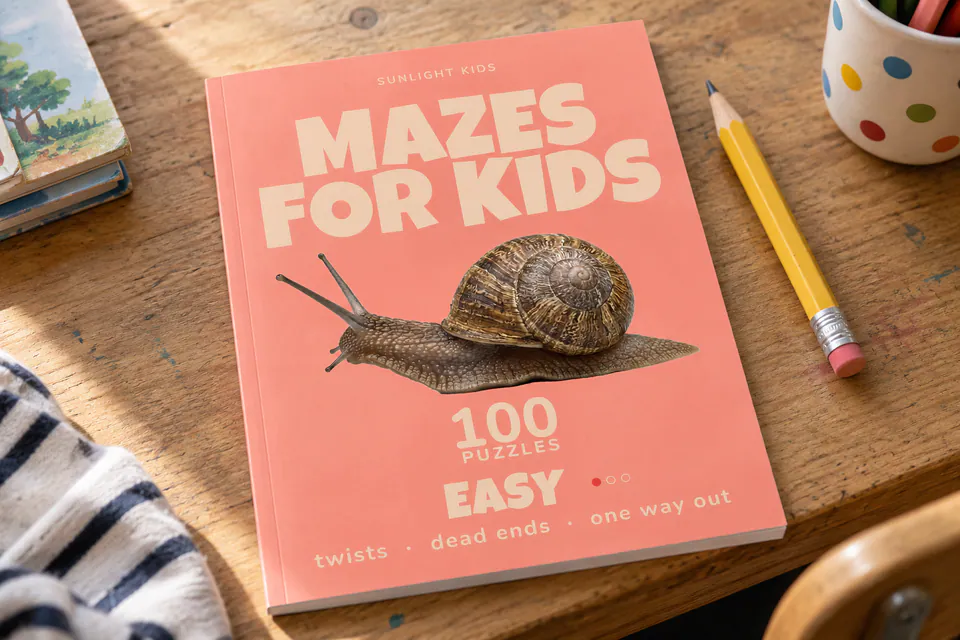
Mazes for Kids: Easy is a different maze on every page, starting with wide paths a kindergartner can do alone and building to real puzzles. Pencil control, planning ahead, and twenty quiet minutes at a time.
In a rush? Download the PDF now and print it at home.
32 activities
Quick no-prep activities for 5 year olds (5 minutes, nothing to buy)
For the restaurant table, the waiting room, or the ten minutes before dinner. No supplies beyond what's already in the room.
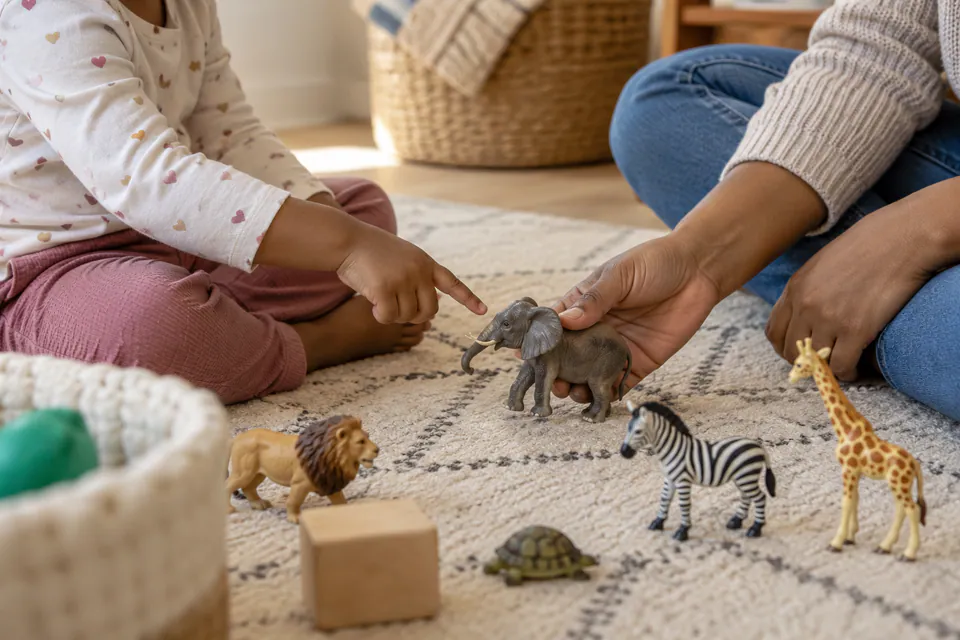
1.Rhyming chain
Great at 5You say a word, they say one that rhymes, back and forth until someone gets stuck. Silly nonsense rhymes count — that's the fun.
- Needs:
- Just your voices
- Keeps them busy:
- 5–10 min
- Builds:
- Phonological awareness (pre-reading)
5-min · no-prepLow mess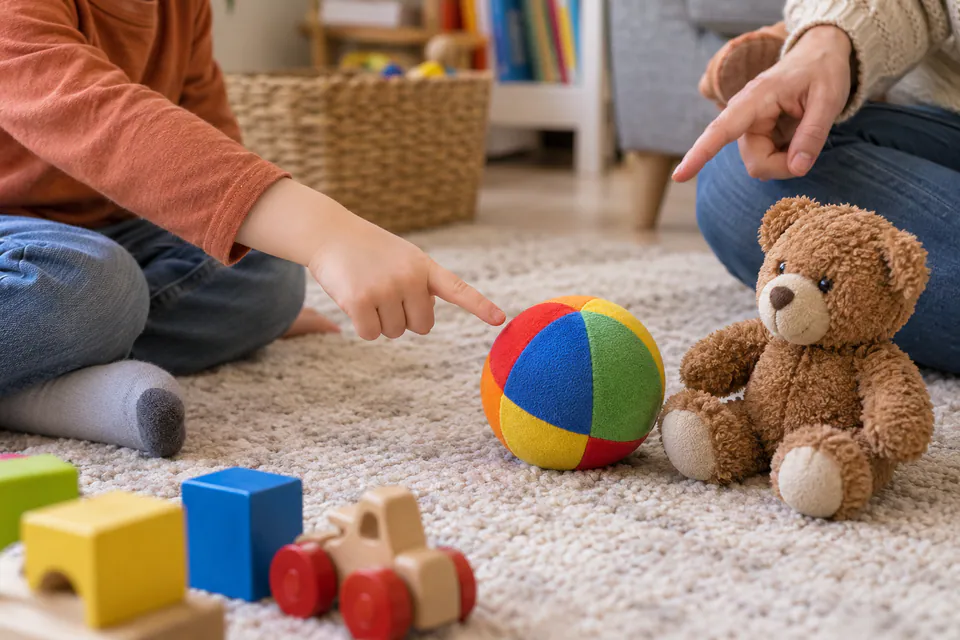
2.I-Spy with a letter sound
Great at 5"I spy something that starts with the /b/ sound." Use the sound, not the letter name, to build the reading link.
- Needs:
- None
- Keeps them busy:
- 5–15 min
- Builds:
- Letter–sound matching
5-min · no-prepLow mess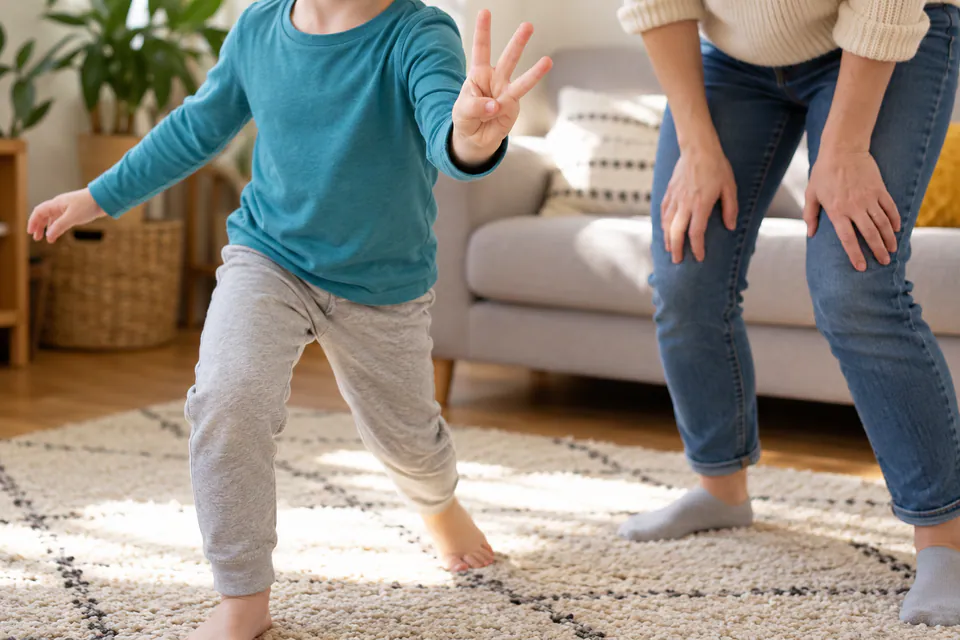
3.Count-and-freeze dance
4–6Dance until you call a number — then freeze and hold up that many fingers. Burns energy and sneaks in counting.
- Needs:
- Any music
- Keeps them busy:
- 10–15 min
- Builds:
- Gross motor + listening
5-min · no-prepLow mess4.Twenty-questions, kid edition
Great at 5Think of an animal; they ask yes/no questions to guess it. Start with "Is it big?" to model good questions.
- Needs:
- None
- Keeps them busy:
- 10 min
- Builds:
- Reasoning + categories
5-min · no-prepLow mess5.Category game
5–6Name a category — fruits, animals, things that are red — and take turns naming one each until someone gets stuck.
- Needs:
- None
- Keeps them busy:
- 5 min
- Builds:
- Vocabulary + quick recall
5-min · no-prepLow mess
Learning activities for 5 year olds
Early reading, writing, and number sense — the kindergarten-prep skills, disguised as play.
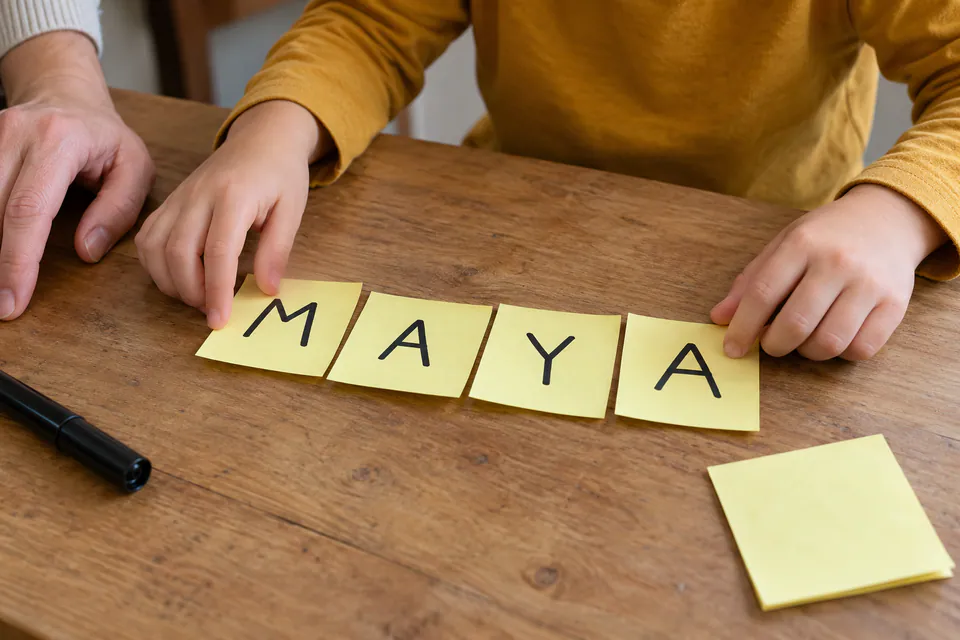
6.Name-building with sticky notes
Great at 5Write one letter per note, scramble them, and have your child rebuild their name. Add a sibling's or pet's name to level up.
- Needs:
- Sticky notes or paper scraps, marker
- Keeps them busy:
- 10–15 min
- Builds:
- Letter recognition + spelling their name
Low mess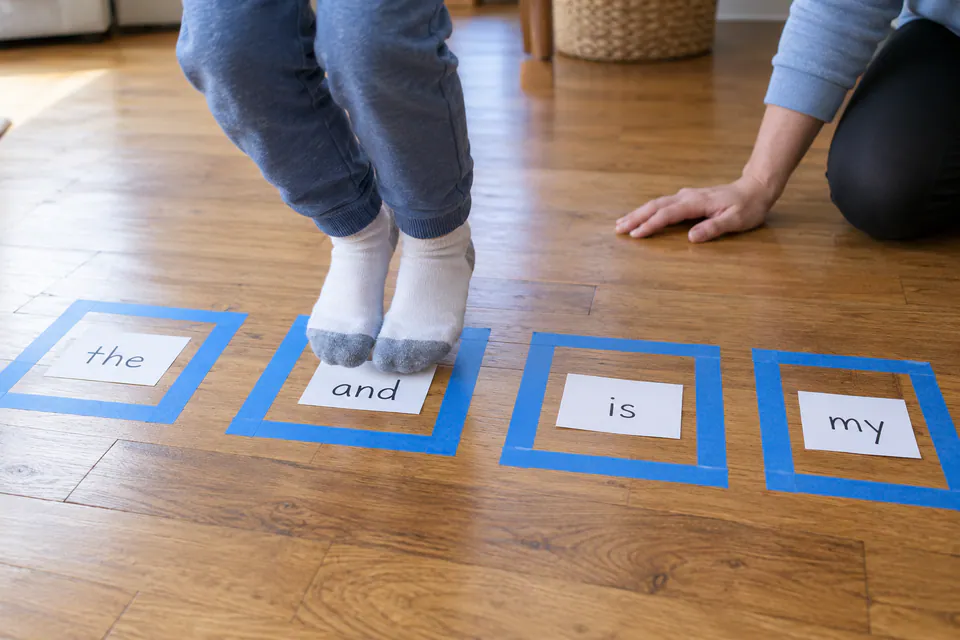
7.Sight-word hopscotch
5–6Tape squares on the floor, write a simple word in each (the, and, is, my). They read the word they land on as they hop.
- Needs:
- Painter's tape, paper
- Keeps them busy:
- 15–25 min
- Builds:
- Sight-word reading + gross motor
Low mess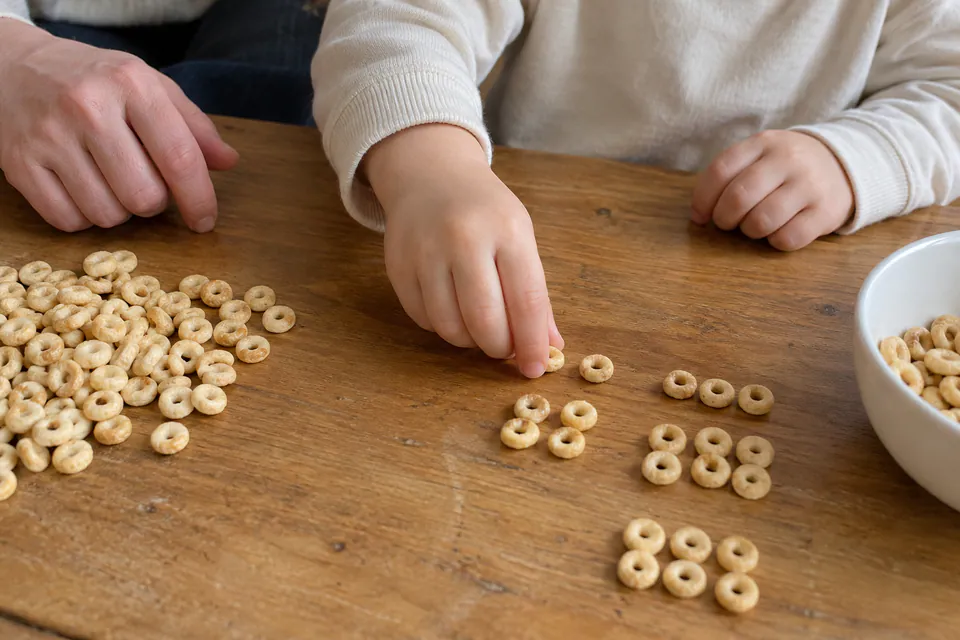
8.Counting collections
4–6Grab a handful and count them; for older fives, group into tens to introduce how big numbers are built.
- Needs:
- Small objects (buttons, blocks, cereal)
- Keeps them busy:
- 15 min
- Builds:
- One-to-one counting + grouping by tens
Low mess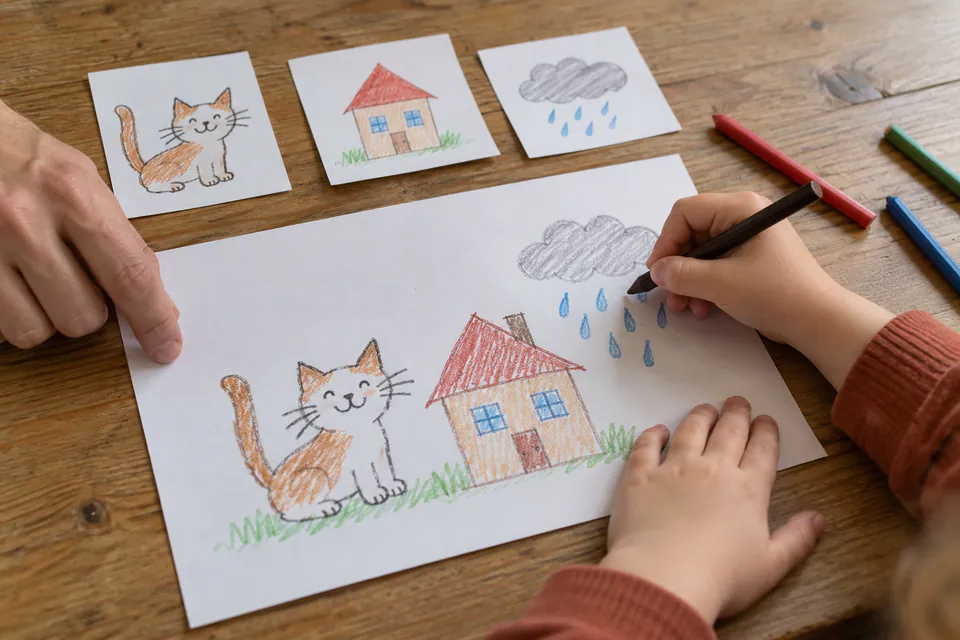
9.Story-builder roll
5+Pick a character, a place, and a problem, then tell the story together. Have them draw or write one part of it.
- Needs:
- Paper, pencil (or our printable)
- Keeps them busy:
- 15–20 min
- Builds:
- Storytelling + early writing
Low mess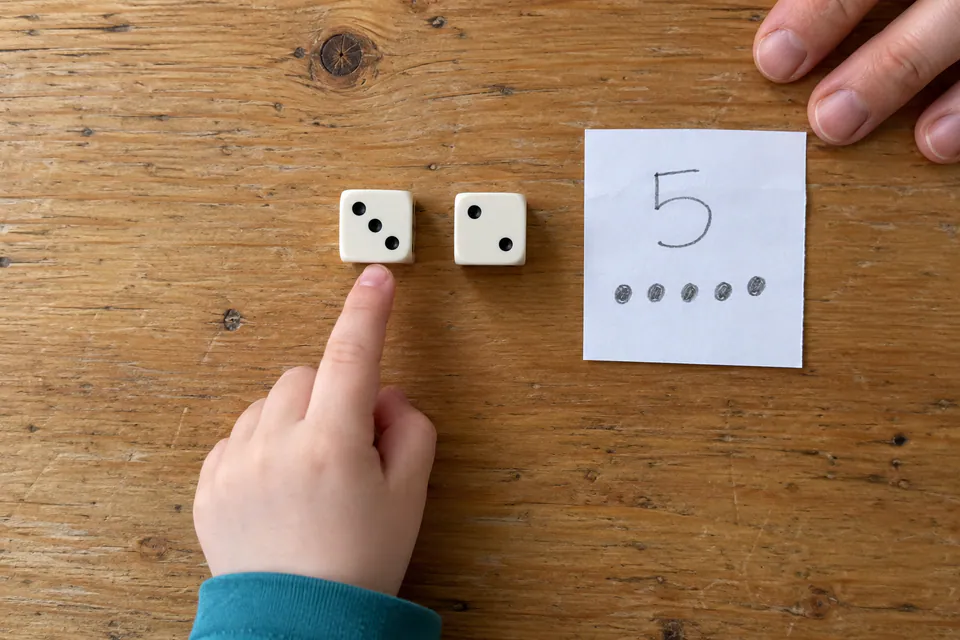
10.Roll and add
Great at 5Roll two dice, count all the dots, write the number. Count the dots together until they start counting on from the bigger die by themselves.
- Needs:
- Two dice + paper
- Keeps them busy:
- 10–15 min
- Builds:
- Early addition
Can do soloLow mess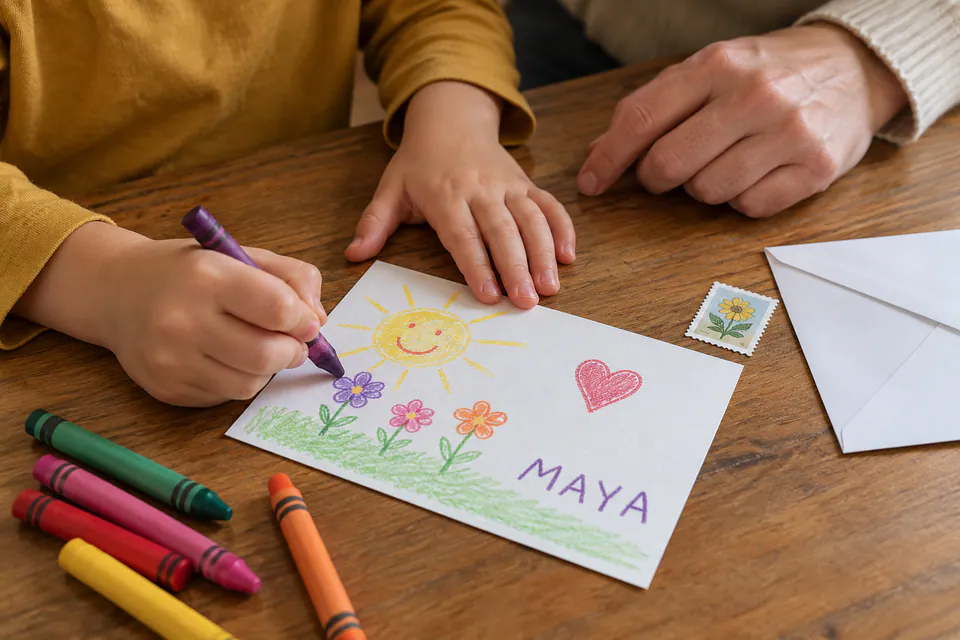
11.Write a postcard
5–6They draw, you write what they say, they copy their name. Mail it to a grandparent — getting real mail back is the motivation.
- Needs:
- Card or paper, crayons, a stamp
- Keeps them busy:
- 15–20 min
- Builds:
- Writing + letter knowledge
Low mess
Fine motor activities for 5 year olds
Hand strength and pencil control — the foundation for neat writing. (More ideas on our fine-motor page.)
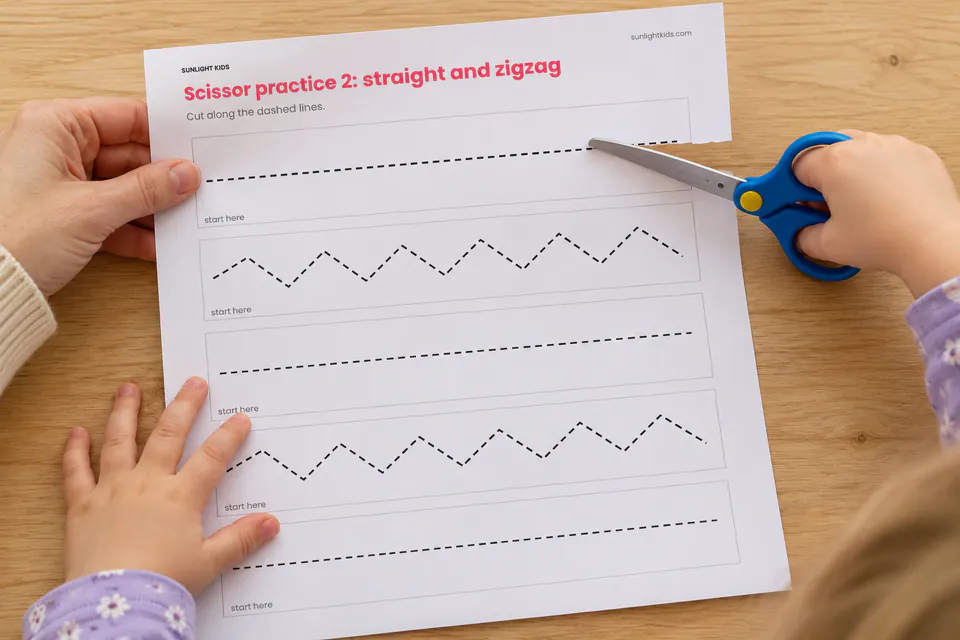
12.Cutting practice strips
4–6Draw straight, then wavy, then zig-zag lines and let them cut along each. Free strips are in the printable pack.
- Needs:
- Safety scissors, paper with lines
- Keeps them busy:
- 10–20 min
- Builds:
- Scissor control + bilateral coordination
Can do soloLow mess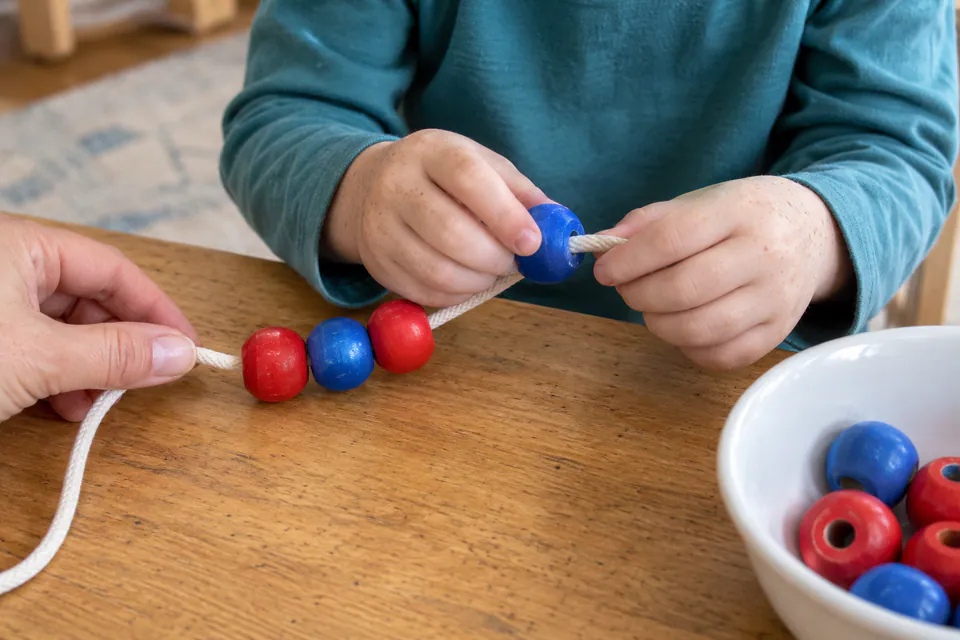
13.Bead patterns
Great at 5Thread a repeating color pattern (red, blue, red, blue) and have them continue it — fine motor plus early math.
- Needs:
- Beads + string or pipe cleaner
- Keeps them busy:
- 15–25 min
- Builds:
- Pincer grip + pattern logic
Can do soloLow mess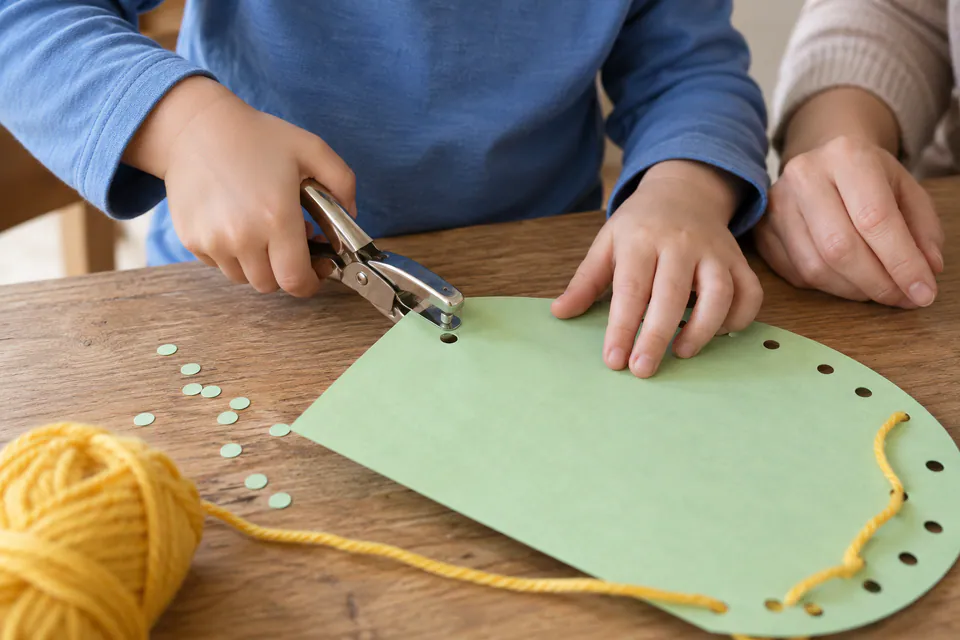
14.Hole-punch art
5+Punching holes is surprisingly hard work for little hands — let them punch a design, then thread yarn through it.
- Needs:
- Single hole punch, paper
- Keeps them busy:
- 15 min
- Builds:
- Hand strength
Can do soloLow mess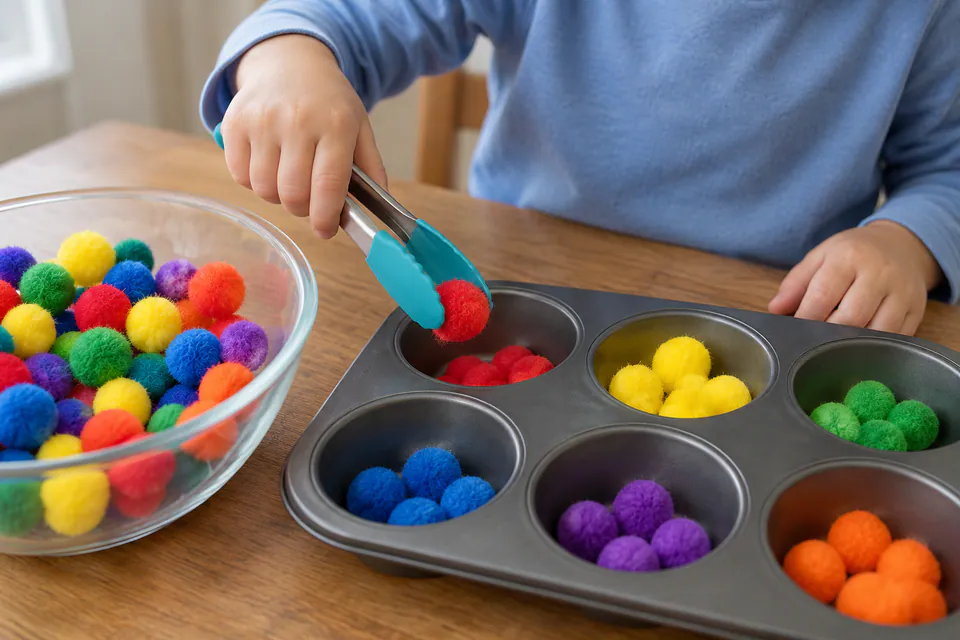
15.Tweezer transfer race
4–6Move pom-poms from one bowl to the other with tweezers. Add a timer for a five-year-old who loves a challenge.
- Needs:
- Tweezers/tongs, pom-poms, two bowls
- Keeps them busy:
- 10–15 min
- Builds:
- Pincer strength + focus
Low mess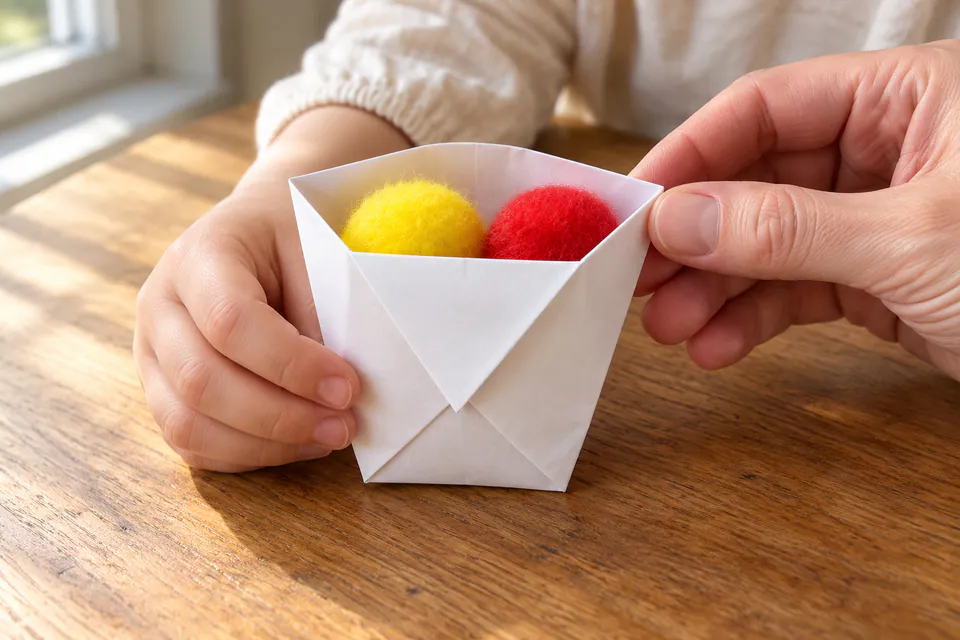
16.Fold a paper cup
5–6A simple origami cup takes five folds and actually holds a few pom-poms. Fold yours alongside theirs, step by step.
- Needs:
- One square of paper
- Keeps them busy:
- 10 min
- Builds:
- Following steps + precise folding
Low mess
Books for this age
Mazes for Kids: Easy is a different maze on every page, starting with wide paths a kindergartner can do alone and building to real puzzles. Pencil control, planning ahead, and twenty quiet minutes at a time.
Mazes for Kids: Easy
Kids · Easy · 113 pages
$10.99
Puzzle Book for Kids: Easy
Kids · Easy · 118 pages
$10.99
Sudoku for Kids: Easy
Kids · Easy · 114 pages
$10.99
Word Search for Kids: Easy
Kids · Easy · 113 pages
$10.99
STEM & science play for 5 year olds
Simple cause-and-effect experiments that feel like magic.
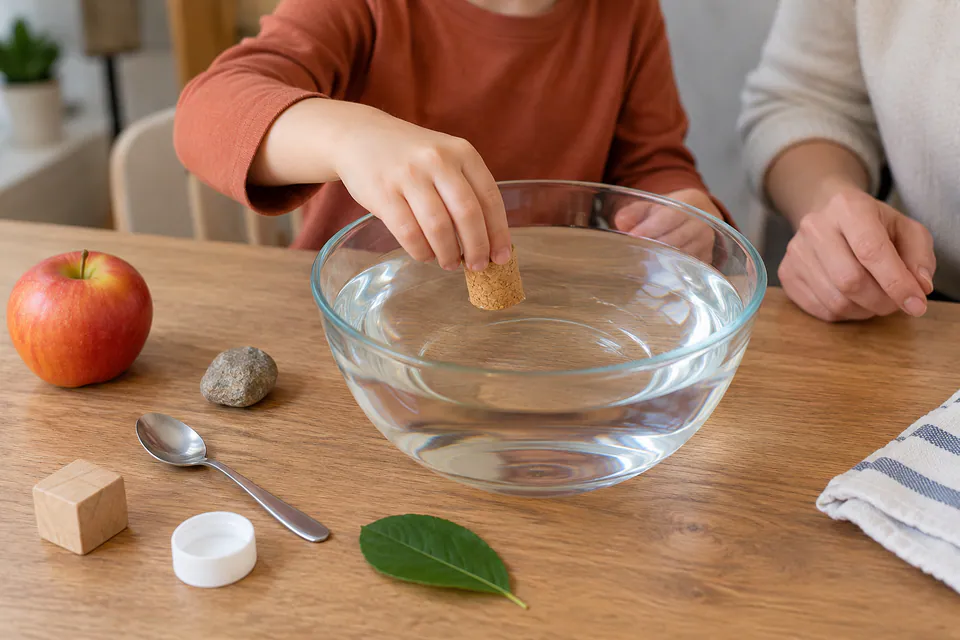
17.Sink or float
4–6Guess whether each object will sink or float before dropping it in. Ask "why do you think so?" to build reasoning.
- Needs:
- Bowl of water, household objects
- Keeps them busy:
- 15–20 min
- Builds:
- Prediction + observation
Medium mess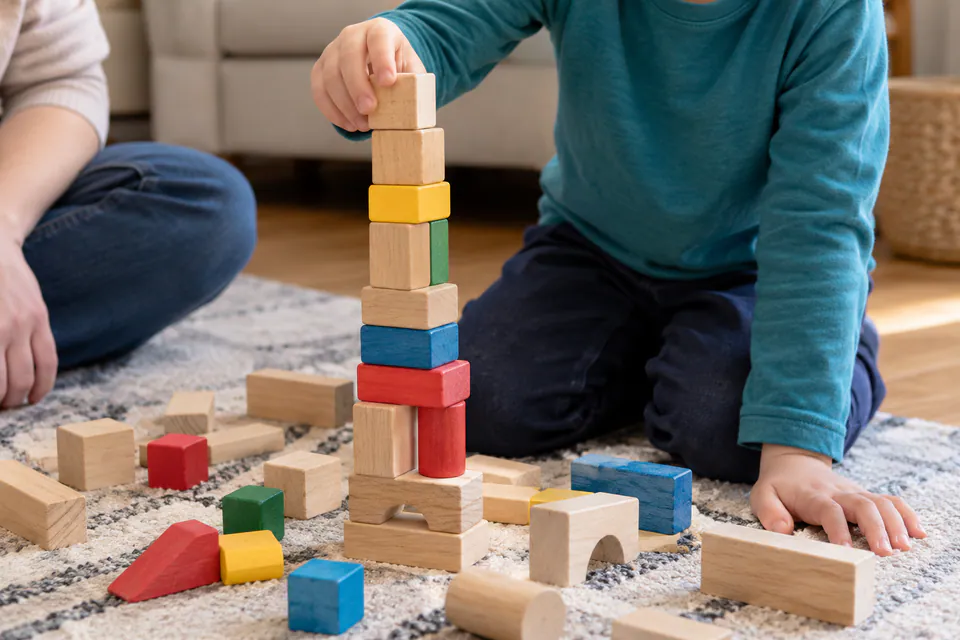
18.Build the tallest tower
5+Challenge them to build the tallest tower that won't fall. When it topples, ask what they'd change next time.
- Needs:
- Blocks, cups, or cans
- Keeps them busy:
- 15–30 min
- Builds:
- Engineering + problem-solving
Can do soloLow mess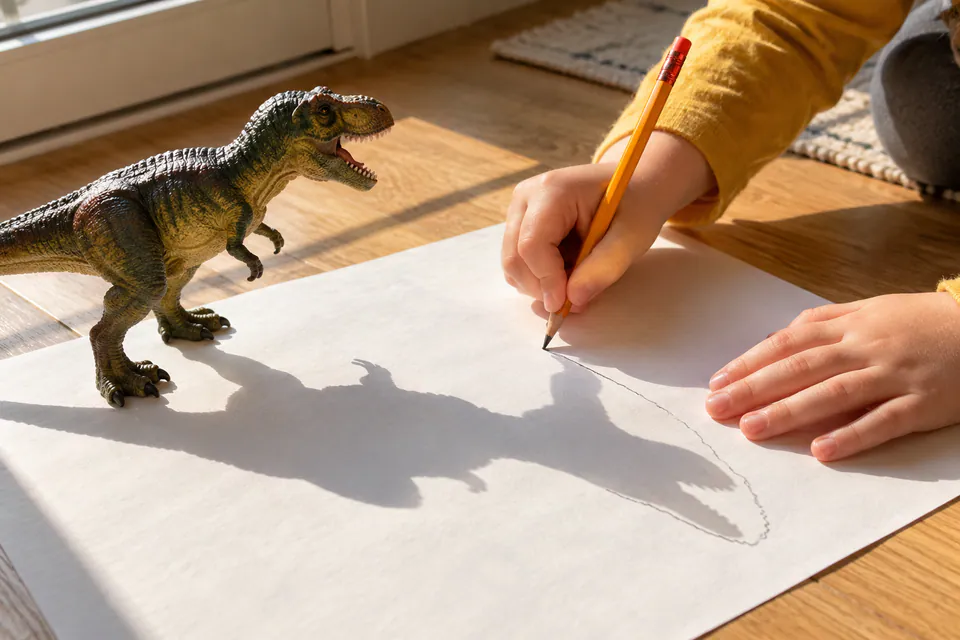
19.Shadow tracing
5–6Stand a toy on paper in sunlight and trace its shadow. Come back an hour later to see how the shadow moved.
- Needs:
- Toys, paper, sun or a lamp
- Keeps them busy:
- 15 min
- Builds:
- Light + observation
Low mess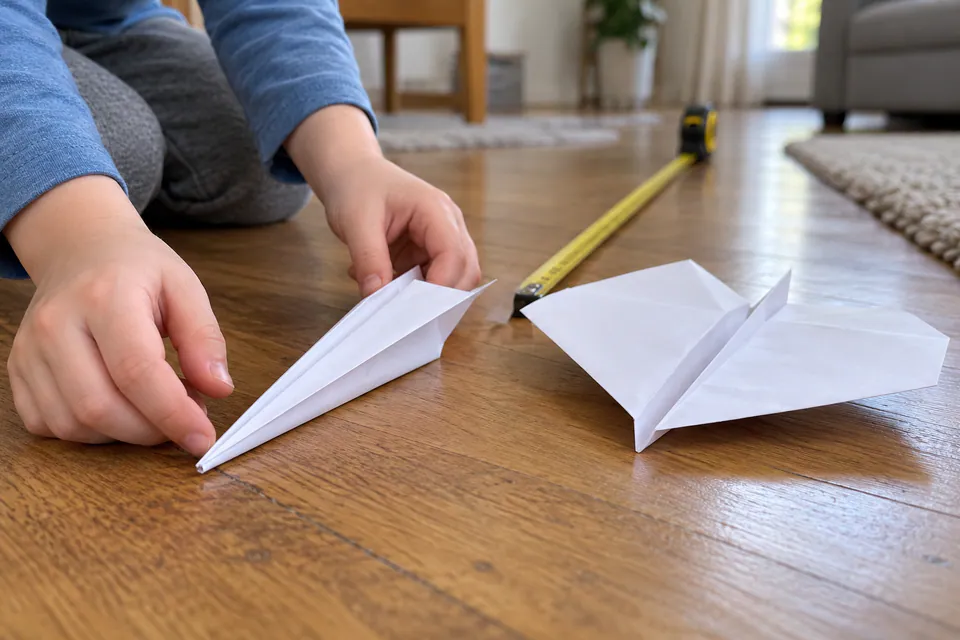
20.Paper airplane test flight
5–6Fold two different planes, fly each three times, and measure how far. Ask which one went farther and why they think so.
- Needs:
- Paper + a tape measure
- Keeps them busy:
- 20–30 min
- Builds:
- Measuring + testing an idea
Can do soloLow mess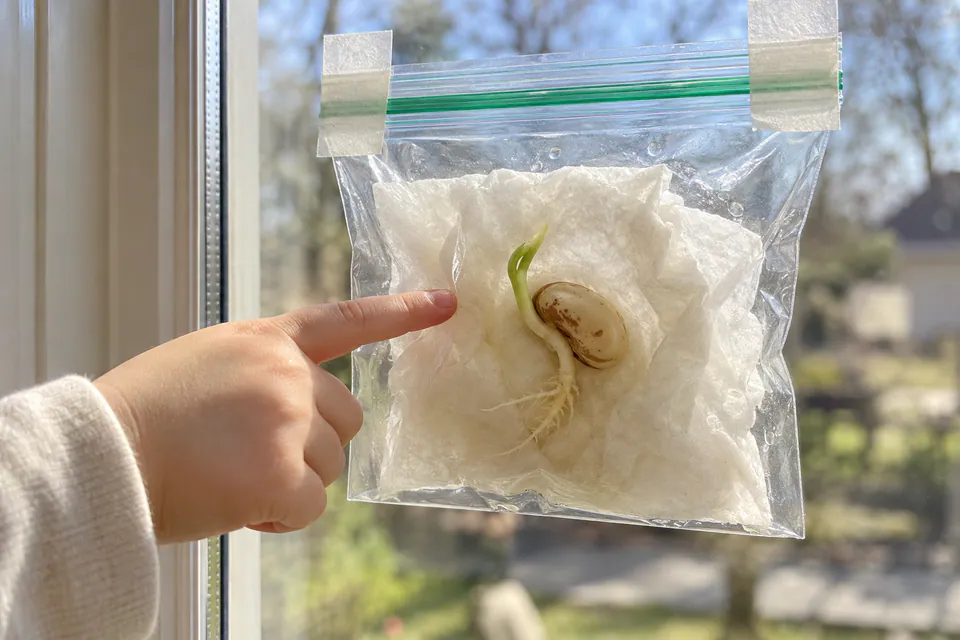
21.Bean in a bag
5–6Tuck a bean in a damp paper towel inside a zip bag and tape it to a sunny window. Roots in a few days; draw what you see each morning.
- Needs:
- Dry bean, damp paper towel, zip bag, tape
- Keeps them busy:
- 5 min + daily checks
- Builds:
- Observation over time
Low mess
Games & turn-taking for 5 year olds
Five is the age cooperative games click — following rules and taking turns are real milestones now.
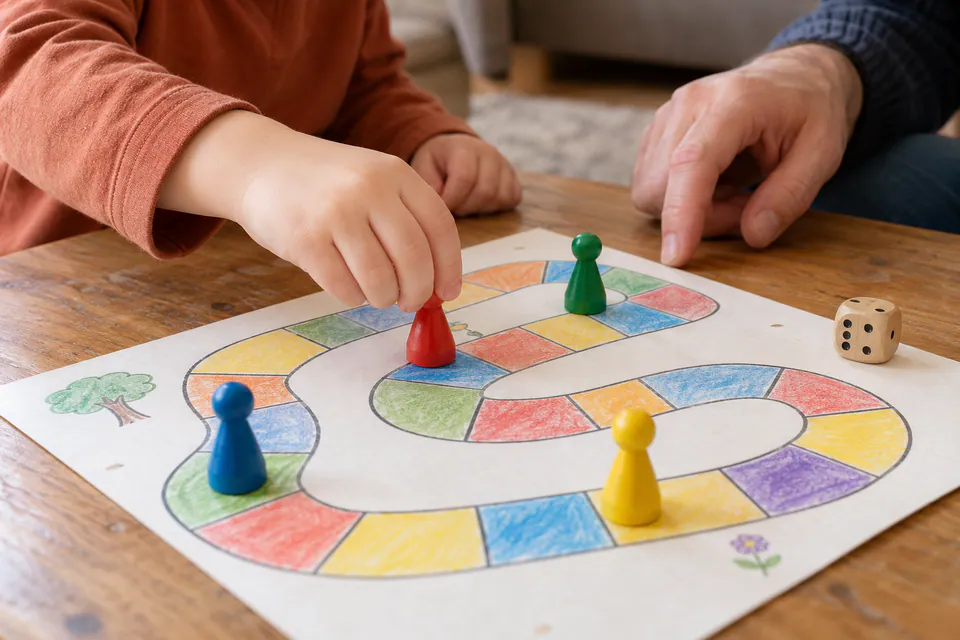
22.First board games
5+Counting-and-moving games are perfect now. Model losing gracefully — it's half the lesson.
- Needs:
- Any simple board/card game
- Keeps them busy:
- 20–30 min
- Builds:
- Rule-following + good sportsmanship
Low mess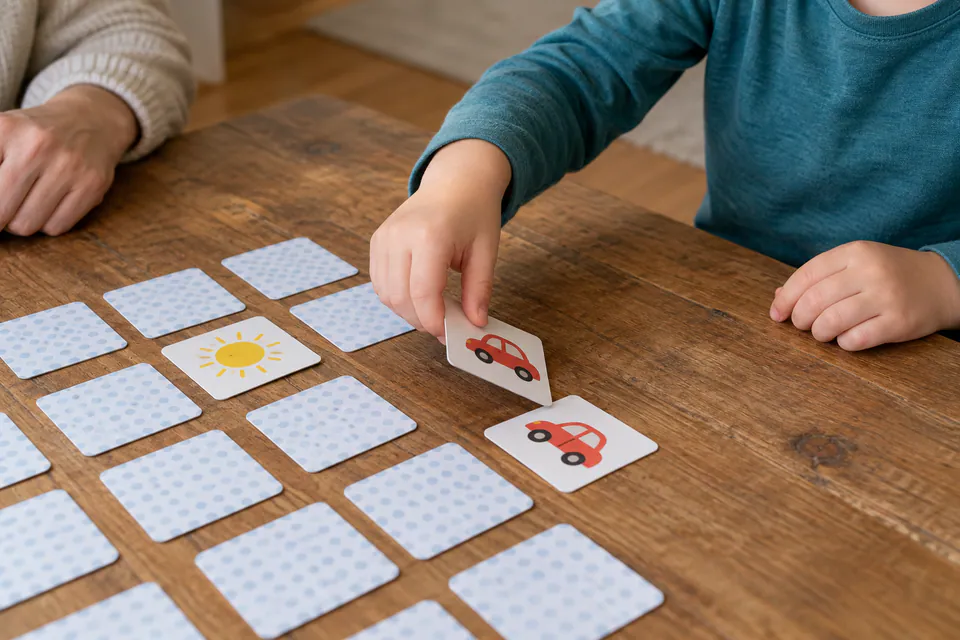
23.Memory match
4–6Flip two cards, find pairs. Start with 6–8 pairs and add more as they get sharp.
- Needs:
- A deck of matching cards (or homemade)
- Keeps them busy:
- 15 min
- Builds:
- Working memory
Low mess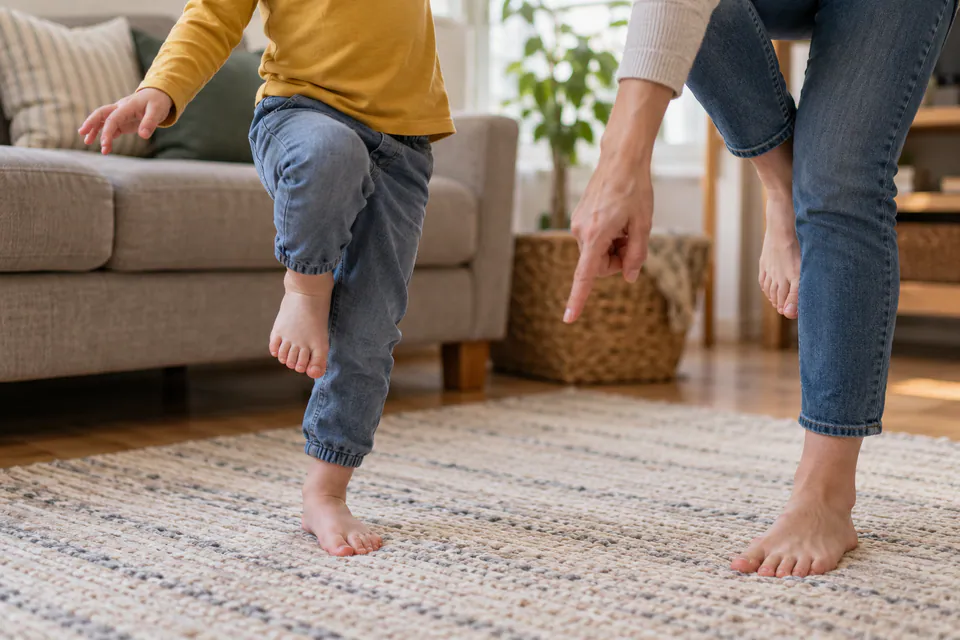
24.Simon says
4–6Classic for a reason — it trains the exact self-control kindergarten asks for.
- Needs:
- None
- Keeps them busy:
- 10 min
- Builds:
- Listening + impulse control
5-min · no-prepLow mess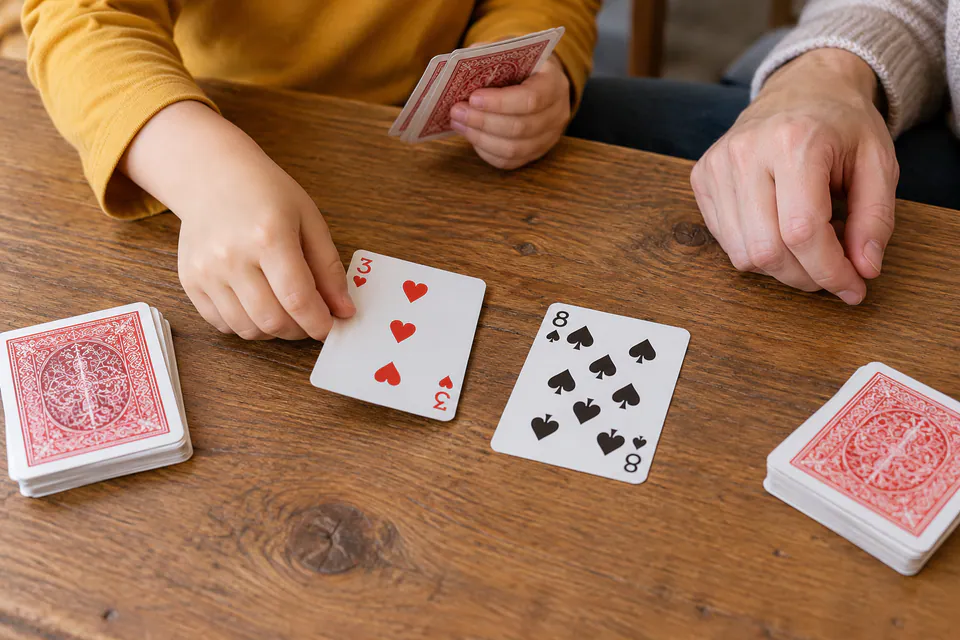
25.Go Fish and War
Great at 5War is pure number comparison (which is bigger?). Go Fish adds matching and asking. Both are fast enough to finish before anyone sulks.
- Needs:
- A deck of cards
- Keeps them busy:
- 15–20 min
- Builds:
- Number recognition + taking turns
Low mess
Indoor & rainy-day activities for 5 year olds
Big-energy and quiet options for when you're stuck inside.
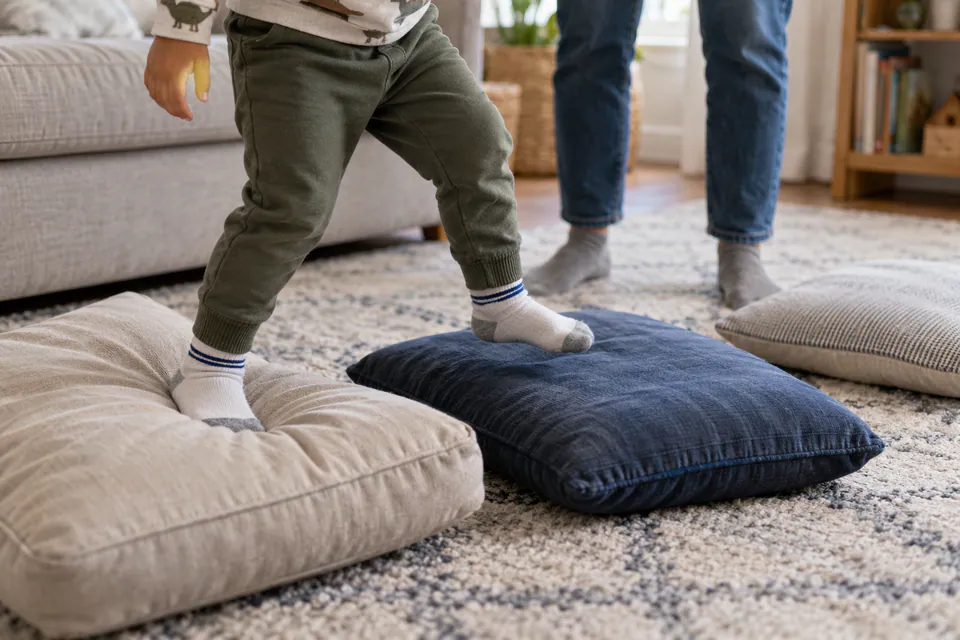
26.Indoor obstacle course
4–6Crawl under the table, jump over the pillow, balance on the tape line. Let them design the next round.
- Needs:
- Cushions, painter's tape, furniture
- Keeps them busy:
- 20–40 min
- Builds:
- Gross motor + sequencing
Medium mess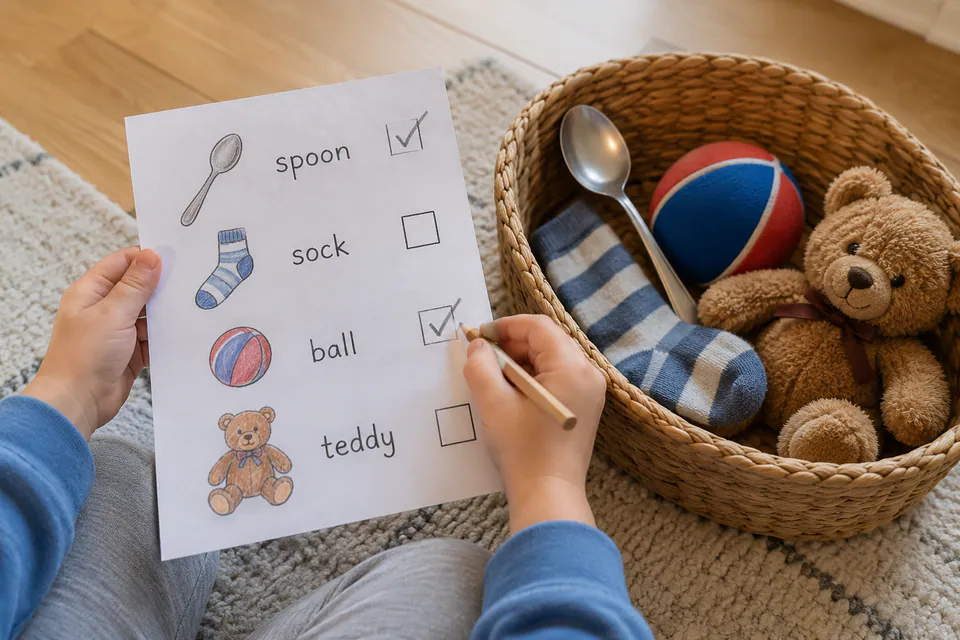
27.Indoor scavenger hunt
5+Give a picture-and-word list of things to find around the house. Fives can read short words and tick them off solo.
- Needs:
- A short list (or our printable)
- Keeps them busy:
- 20–30 min
- Builds:
- Reading + matching
Can do soloLow mess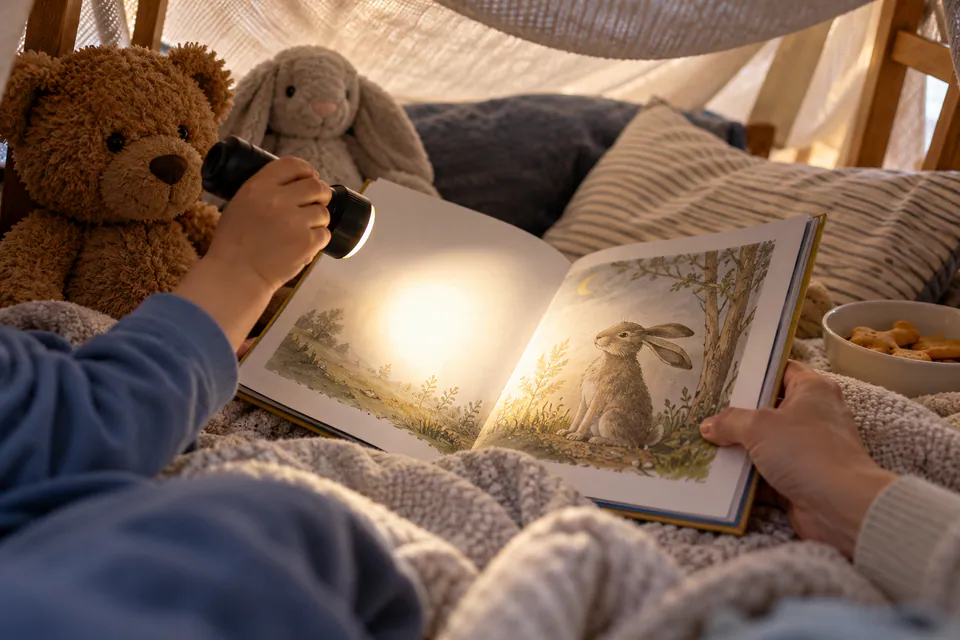
28.Fort + flashlight reading
All agesBuild a fort, climb in with books and a flashlight. Quiet, cozy, and buys you a real break.
- Needs:
- Blankets, chairs, flashlight, books
- Keeps them busy:
- 30+ min
- Builds:
- Pretend play + love of reading
Medium mess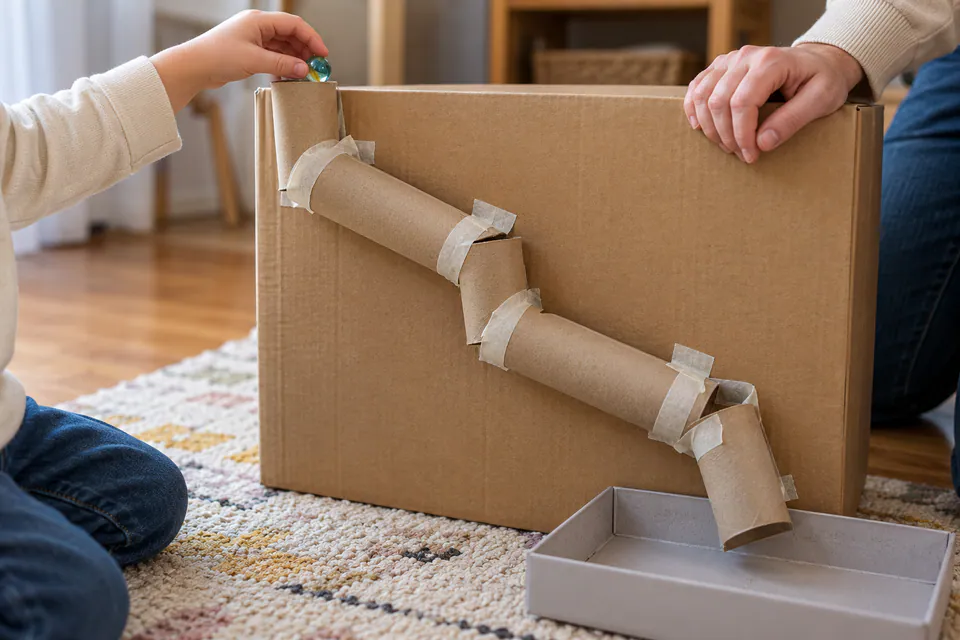
29.Cardboard marble run
5–6Tape tubes to a wall or a big box at angles and send a marble down. When it falls out, that's the fun part: fix it and try again.
- Needs:
- Paper-towel tubes, tape, a marble
- Keeps them busy:
- 30+ min
- Builds:
- Engineering + trial and error
Can do soloLow mess
Printable activities for 5 year olds
When you want zero-prep, grab the free pack above: all 32 ideas on this page as cut-out activity cards, plus name and number tracing, sight-word cards, a sight-word search, two mazes, a starter sudoku, and a story-builder.
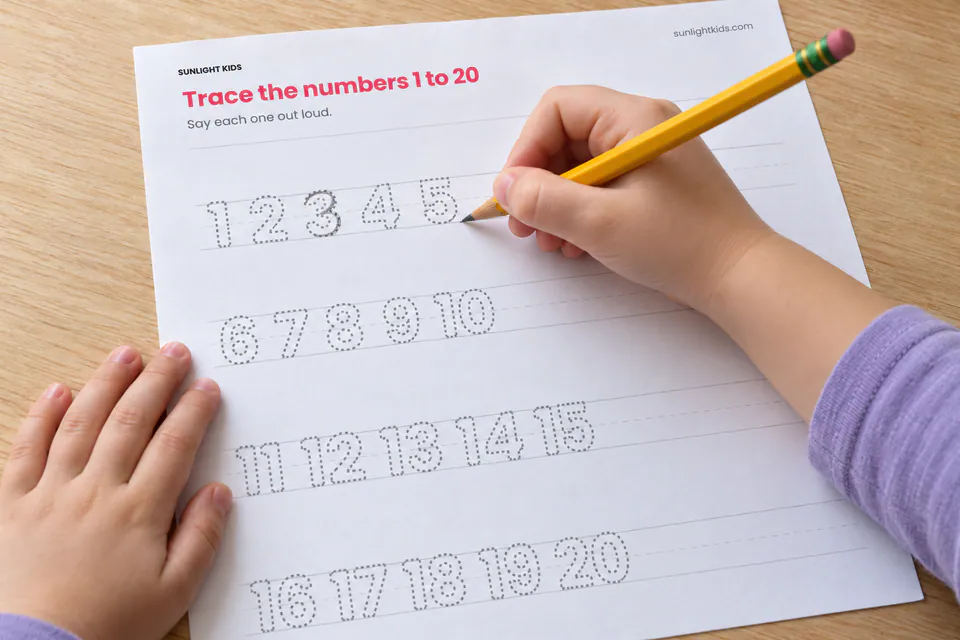
30.Name and number tracing
Great at 5Their name, then numbers 1–20. Write their name in the blank row for them first so it's personal.
- Needs:
- Pencil + the printable
- Keeps them busy:
- 5–10 min
- Builds:
- Letter formation
Can do soloLow mess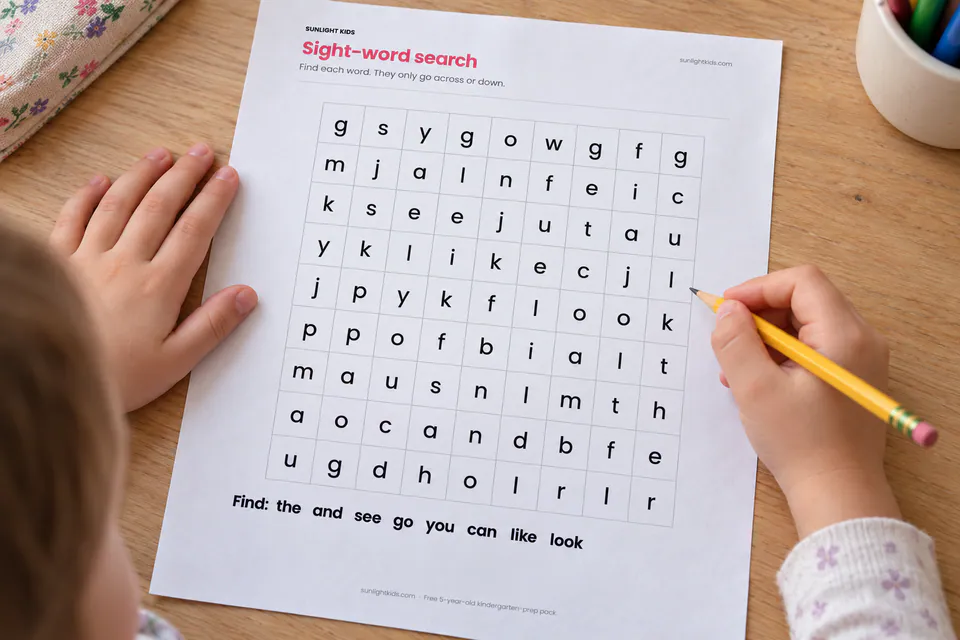
31.Sight-word search
5–6Find the first sight words (the, and, I, see) in a small grid. They're reading without noticing.
- Needs:
- Pencil + the printable
- Keeps them busy:
- 10 min
- Builds:
- Early reading
Can do soloLow mess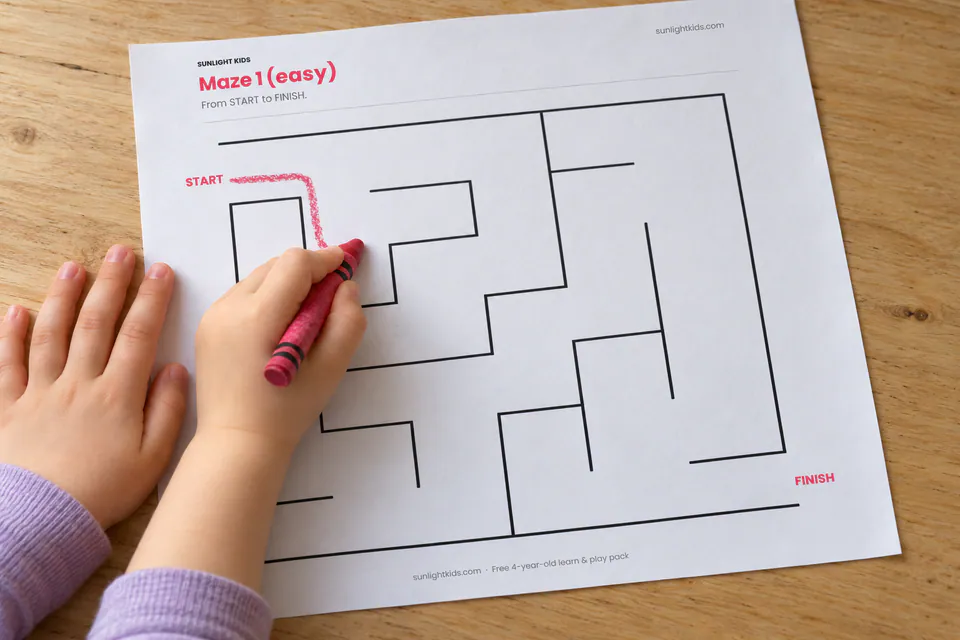
32.Easy and medium mazes
5–6Two mazes in the free pack. If they love these, there's a whole book of them below.
- Needs:
- Pencil + the printable
- Keeps them busy:
- 5–15 min
- Builds:
- Planning ahead
Can do soloLow mess
More free printables for 5-year-olds


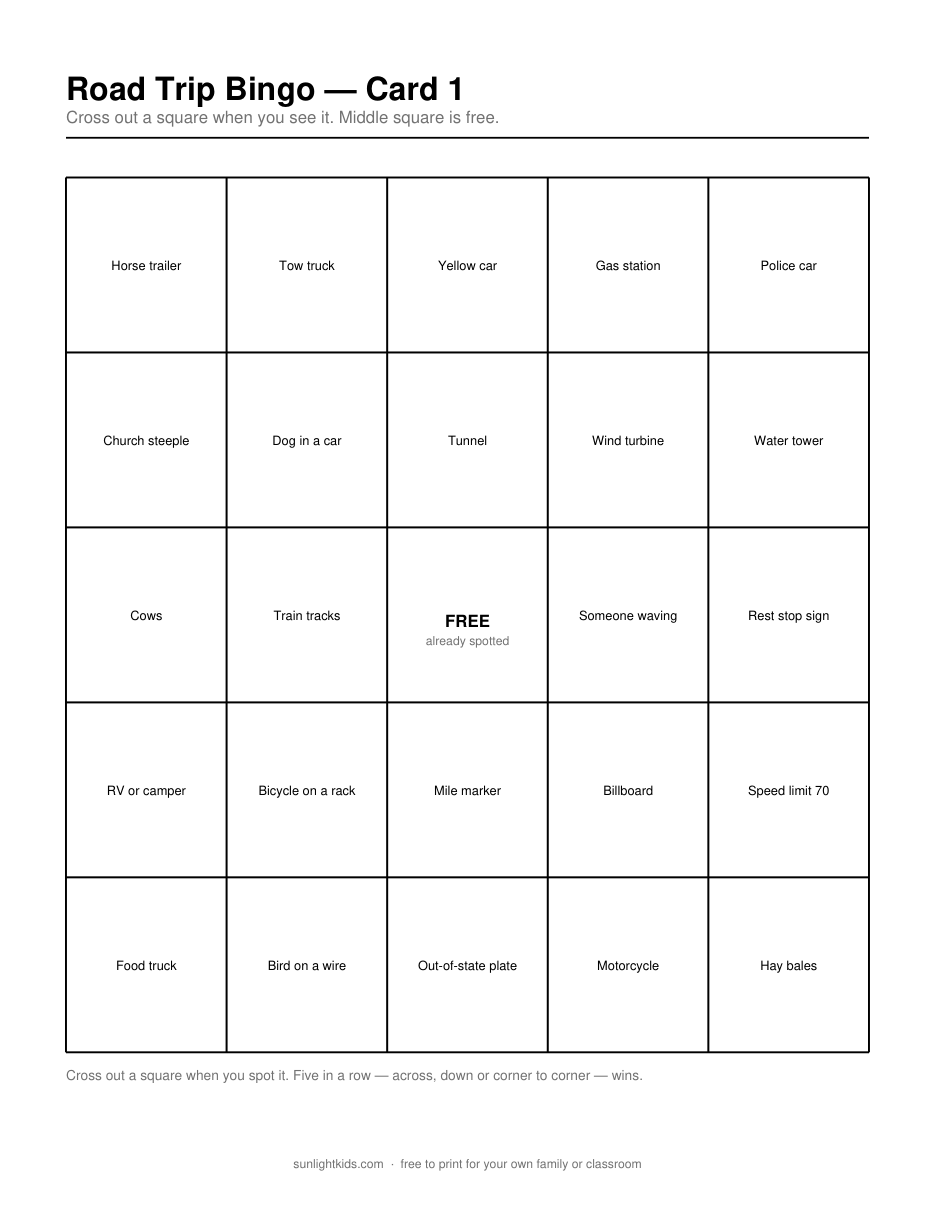
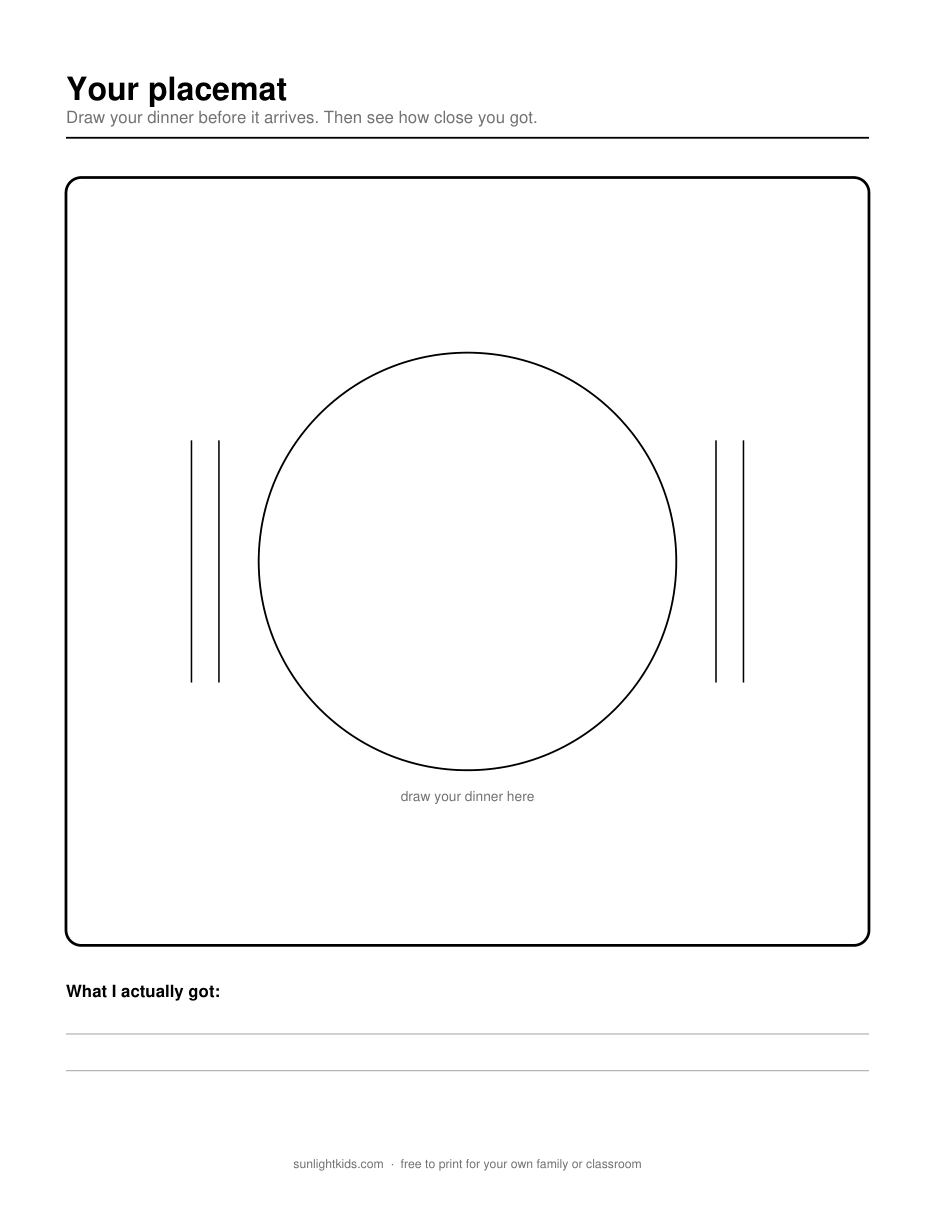
More pencil-and-paper practice
What a 5-year-old is working on (and how these activities help)
By age 5, most children (per the CDC's "Learn the Signs. Act Early." milestones) can write some letters of their name, draw a person with at least six body parts, count to ten or beyond, and follow rules or take turns in a simple game. They can also tell a short story with a couple of events in order.
That's why fives thrive on activities that nudge early writing (name and letter tracing), early reading (matching pictures to first words), simple logic and counting (mazes, easy sudoku, sorting), and cooperative play (board and turn-taking games). The goal isn't drilling — it's giving real skills a fun place to show up. Keep turns short and let them "win" at the right difficulty; a five-year-old who feels successful will ask to do it again.
Reviewed by Lindsay Clark — B.A. in Child Development · classroom & early-childhood educator · mom of two.
How to use these activities
Two things make these land at five. First, keep turns short and varied — even a kindergarten-ready five-year-old does better with three 15-minute activities than one 45-minute one. Second, aim for the "just right" challenge: hard enough to feel like an accomplishment, easy enough that they succeed most of the time. When something clicks, leave it out where they can return to it on their own — independent play is a skill that grows with practice.
Frequently asked questions
What activities should a 5 year old be doing?
At five, the most useful activities build early reading and writing (name and letter tracing, rhyming, sight-word games), early math (counting collections, simple mazes and sudoku), fine-motor strength (cutting, beading), and cooperative play (board games, Simon Says). Keep them playful and short — five-year-olds learn best in 15–20 minute bursts.
How do I keep a 5 year old busy at home?
Rotate between active and quiet: an indoor obstacle course or scavenger hunt to burn energy, then a fort with books, a board game, or a printable pack for calm focus. Having a few zero-prep options ready (rhyming chains, I-Spy, counting collections) covers the moments you can't plan for.
How long can a 5 year old focus on one activity?
Most five-year-olds can stay with an engaging, well-matched activity for about 10–20 minutes, and longer for something they chose themselves. If attention fades fast, the activity is usually too hard or too easy — adjust the challenge rather than pushing through.
What are good screen-free activities for a 5 year old?
All 32 ideas on this page are screen-free. Standouts: sight-word hopscotch, sink-or-float, first board games, cutting-practice strips, and an indoor scavenger hunt. A printable activity book is the easiest grab-and-go screen-free option for travel and restaurants.
Are activity books good for a 5 year old?
Yes — at five, a good activity book reinforces exactly the right skills (tracing, mazes, simple puzzles, early reading) while feeling like fun, and it's invaluable for screen-free travel and quiet time. Look for one sized for ages 4–7 so the puzzles match their ability.
What learning should a 5 year old be doing before kindergarten?
Recognizing and writing letters (especially their name), counting to at least ten, knowing colors and shapes, rhyming, and taking turns in a game. None of it needs to look like school — the activities here build all of it through play.
Take the fun with you
Mazes for Kids: Easy — A different maze on every page, start to finish.
In a rush? Download the PDF now and print it at home.