30 Quiet-Time Activities (When You Need 20 Minutes)
Thirty calm, low-supervision activities for the post-nap years — plus the simple method for teaching a kid to play happily on their own.
When the afternoon nap disappears but your kid (and you) still need a reset, 'quiet time' saves the day. It's a calm, independent stretch — usually 20–40 minutes — that protects everyone's sanity and quietly builds focus, creativity, and the ability to be content alone.
Below are 30 quiet-time activities that run with minimal supervision, plus a short method for building independent play if your child isn't there yet. Rotate a few so they stay fresh.
Free printable
Free Quiet-Time & Busy-Bag Pack (printable PDF)
- 10 printable busy-bag activities (cut, assemble, reuse)
- Counting and color clip-cards
- Calm-down yoga pose cards for kids
- A 'quiet time' visual timer and rules card
The quiet-time MVP
A Sunlight Kids activity book is the easiest set-and-go: hand it over with crayons and buy yourself a calm 30 minutes.
In a rush? Download the PDF now and print it at home.
Set-and-go activities (minimal supervision)
Hand it over and step back. Keep these in a special bin used only for quiet time.
Activity / coloring book + crayons
Ages 2–8- Needs:
- An activity book
- Keeps them busy:
- 20–40 min
- Builds:
- Focus, fine motor
Sticker books & sticker-by-number
Ages 2–7- Needs:
- Sticker books
- Keeps them busy:
- 20–30 min
- Builds:
- Fine motor
Puzzles
Ages 2–8- Needs:
- An age-right puzzle
- Keeps them busy:
- 20–40 min
- Builds:
- Problem-solving
Magnetic tiles or blocks
Ages 2–8- Needs:
- Tiles/blocks
- Keeps them busy:
- 30–60 min
- Builds:
- Open-ended building
Play-dough quiet kit
Ages 2–6- Needs:
- Dough + a few tools in a box
- Keeps them busy:
- 30 min
- Builds:
- Sensory, fine motor
Lacing cards & threading
Ages 3–6- Needs:
- Lacing cards or beads
- Keeps them busy:
- 20 min
- Builds:
- Bilateral coordination
Window clings / felt board
Ages 2–6- Needs:
- Reusable clings or felt set
- Keeps them busy:
- 20 min
- Builds:
- Creativity
Wikki Stix / pipe-cleaner play
Ages 3–7- Needs:
- Bendable craft sticks
- Keeps them busy:
- 20–30 min
- Builds:
- Fine motor, creativity
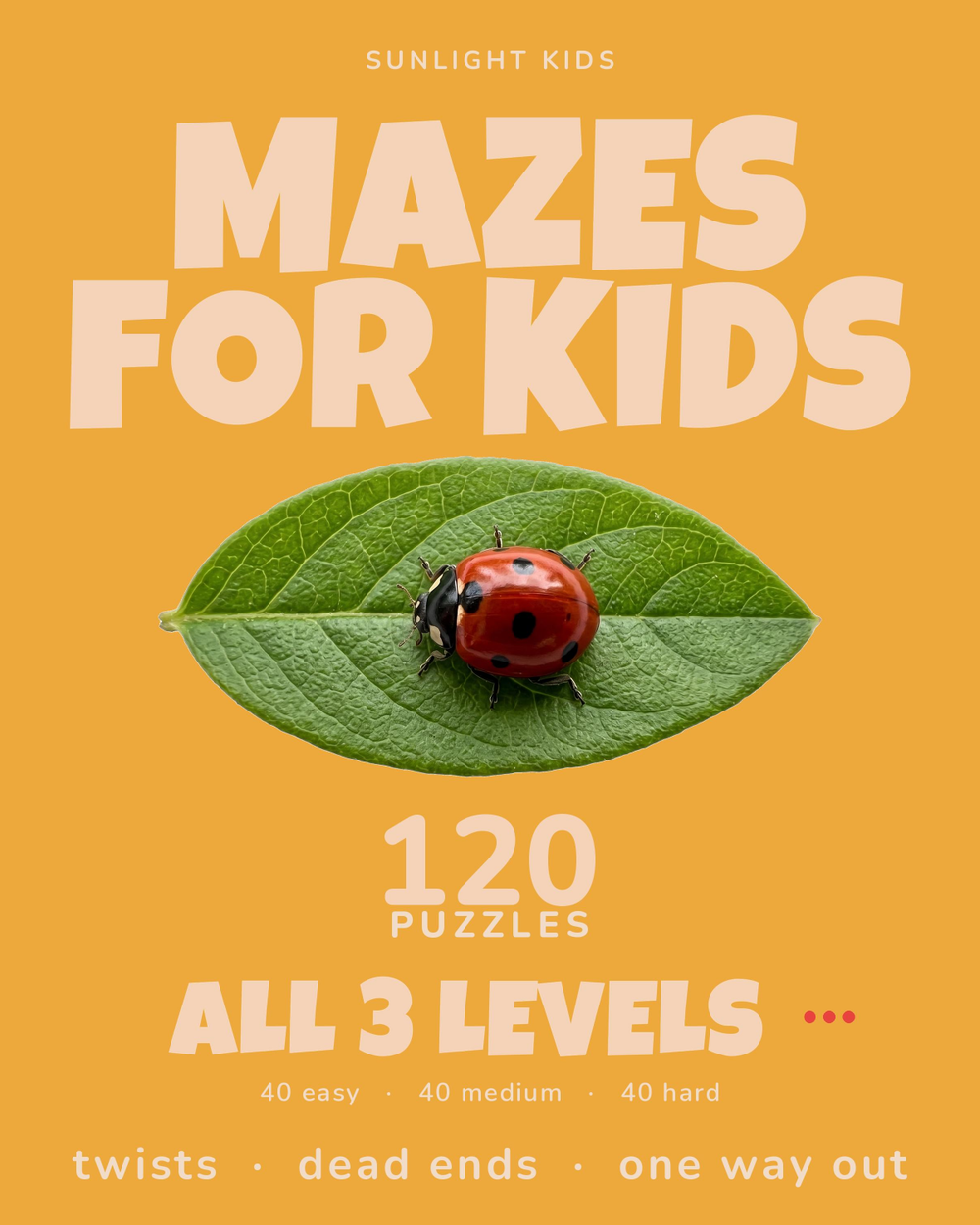
Mazes for Kids: Easy, Medium & Hard
A different maze on every page, start to finish.
In a rush? Download the PDF now and print it at home.
Calm-down & listening
Audiobook or story player
Ages 2–8- Needs:
- An audio device for kids
- Keeps them busy:
- 20–40 min
- Builds:
- Listening, calm
Look-and-find / picture books
Ages 2–8- Needs:
- Seek-and-find books
- Keeps them busy:
- 20–30 min
- Builds:
- Visual scanning, focus
Quiet 'reading nest'
Ages 2–8- Needs:
- Pillows + a basket of books
- Keeps them busy:
- 20–40 min
- Builds:
- Literacy, calm
Calm-down sensory bottle
Ages 2–6- Needs:
- A sealed glitter bottle
- Keeps them busy:
- 10–15 min
- Builds:
- Self-regulation
Yoga / stretch cards for kids
Ages 3–8- Needs:
- Printable pose cards
- Keeps them busy:
- 15 min
- Builds:
- Body awareness, calm
Busy-bag ideas (rotate one per day)
Small zip bags with a single self-contained activity. Cheap, portable, and perfect for quiet time or the car.
Pom-pom color sort
Ages 2–5- Needs:
- Pom-poms + a sorting card
- Keeps them busy:
- 15 min
- Builds:
- Sorting, pincer grasp
Pipe-cleaner + colander
Ages 2–4- Needs:
- Pipe cleaners + colander
- Keeps them busy:
- 15 min
- Builds:
- Fine motor
Button snake
Ages 3–5- Needs:
- Felt shapes + ribbon + button
- Keeps them busy:
- 15 min
- Builds:
- Buttoning skill
Magnetic letters + cookie sheet
Ages 3–6- Needs:
- Letter magnets + tray
- Keeps them busy:
- 20 min
- Builds:
- Letters, fine motor
Counting clip cards
Ages 3–6- Needs:
- Printable cards + clothespins
- Keeps them busy:
- 15 min
- Builds:
- Counting, hand strength
Frequently asked questions
What is 'quiet time' and how does it work?
It's a daily calm, independent stretch — often replacing a dropped nap — where a child plays quietly alone in a safe space for 20–40 minutes. It restores everyone and builds independence. Use a visual timer so the child knows when it ends.
How do I get my child to play independently?
Build it gradually: start with you nearby doing your own thing, offer one open-ended activity (not a pile), resist jumping in, and praise the playing. Add a few minutes at a time. It's a learnable skill, not a fixed trait.
At what age can a child do quiet time?
Many children manage short independent quiet time by 2.5–3, lengthening as they get older. Younger toddlers need a very safe space and shorter stretches with closer supervision.
What should quiet time NOT include?
Skip screens (they don't deliver the same restorative, creative benefit) and anything needing supervision or that's a safety risk unattended. Keep the bin to safe, self-contained activities.
My child keeps coming out of quiet time. What do I do?
Set a clear, visual timer, keep the activities genuinely fun (rotate them), and calmly walk them back without a lot of attention. Consistency over a week or two usually does it.
Are busy bags worth making?
Yes — they're cheap, reusable, and perfect for quiet time, restaurants, and travel. Rotating one per day keeps them feeling novel.
Take the fun with you
Mazes for Kids: Easy, Medium & Hard — A different maze on every page, start to finish.
In a rush? Download the PDF now and print it at home.