Best Road Trip Activity Books for Kids (2026 Buyer's Guide)
A car is a harder room than a plane. There is no tray table, so everything happens on a lap. Nothing that falls can be retrieved — a dropped crayon at 70 miles an hour is gone until the next gas stop, and your child knows it, which is why the dropping is the event and not the crayon. The one adult who might help is driving, and the other one cannot turn around for six hours without regretting it. And unlike a flight, the trip is not a fixed block you can plan around: it is four hours, then a stop, then two more hours, then a wrong turn. What that adds up to is a different shopping list from the one you would use for a flight. You want something that works flat on a lap or clipped to a board, that a child can start and finish alone, that survives being sat on, and that does not require anyone in the front seats to read a prompt aloud. We drive a lot with small children and have made most of the available mistakes, and the picks below are sorted by those constraints. Full disclosure before you read them: we publish activity books ourselves, including a line of destination books written for exactly this kind of trip, and they lead the list. They are marked as ours and we have given their drawbacks the same treatment as everyone else's.
How we chose
Lap-sized, and stable without a table
There is no flat surface in the back of a car, so the book itself has to be the surface. An 8 by 10 book rests on the thighs of a booster-seated child; anything much bigger overhangs both knees and folds in the middle. The single best upgrade you can make is a cheap lightweight clipboard or lap desk under whatever book you buy — it turns a floppy paperback into a writable surface and gives you somewhere to trap a pencil. Buy the board at the same time as the book, not after the first trip.
Binding that stays open on its own
In a car this matters more than it does anywhere else, because one of the child's hands is usually doing something else and neither of yours is available. Spiral and lay-flat bindings fold back on themselves and stay put. Perfect-bound paperbacks need to be held open, and a child holding a book open with one hand while coloring with the other is a child who will ask you to hold it. If you are buying a perfect-bound book, plan on cracking the spine at the first stop so it lies flatter, or clipping it to a board.
One pencil, and nothing else
Every additional component is a component on the floor of the footwell. Stickers, punch-out pieces, dice, spinners, and cards all end up under the seat within the first hour, and unlike on a plane you cannot even see the floor to find them. Markers are worse in a car than on a plane because of the upholstery and because nobody can supervise. Crayons have a specific car problem: a box of crayons left in a parked car in summer melts, and melted crayon on a cloth seat is a genuinely bad afternoon — bring them inside at every stop, or use pencils. A book that works with a single pencil, and that has a place to clip that pencil, is the one that gets used on day two of the drive.
Nothing the driver has to explain
Assume no adult help at all and buy accordingly. That means one self-contained activity per page, tasks shown in pictures rather than described in sentences for anyone under six, difficulty tuned slightly below what your child can do at a desk, and an answer key in the back so an older kid can settle their own questions. Any page that requires someone in the front to read a prompt, judge whether it counts, or referee between two children in the back is a page you will do once and then quietly skip.
Our top picks
- #1
A destination activity book (Sunlight Kids)
Ages 2–5Best overall for the drivePick where you are driving to. The line covers the places families actually road trip to — the Grand Canyon, Yellowstone, Yosemite, San Diego, Orlando — alongside the fly-to destinations, and every book is built around that one place: coloring, tracing, counting, simple mazes, and facts about what the child is going to see when the car finally stops. That is the part a generic activity book cannot do. A kid coloring a bison two hours out from Yellowstone is doing something connected to the day, and it gives everyone in the car something to talk about besides how much further it is. One activity per page, 8 by 10, pencil or crayons, no stickers and nothing to lose in the footwell. Full disclosure: we publish these. Weakness: it is perfect-bound rather than spiral, so it wants a clipboard or a cracked spine to stay flat on a lap, and if your drive is to somewhere we have not published yet, buy one of the picks below rather than a book about the wrong place.
Where are you headed? Pick the destination (all 2–5 edition)
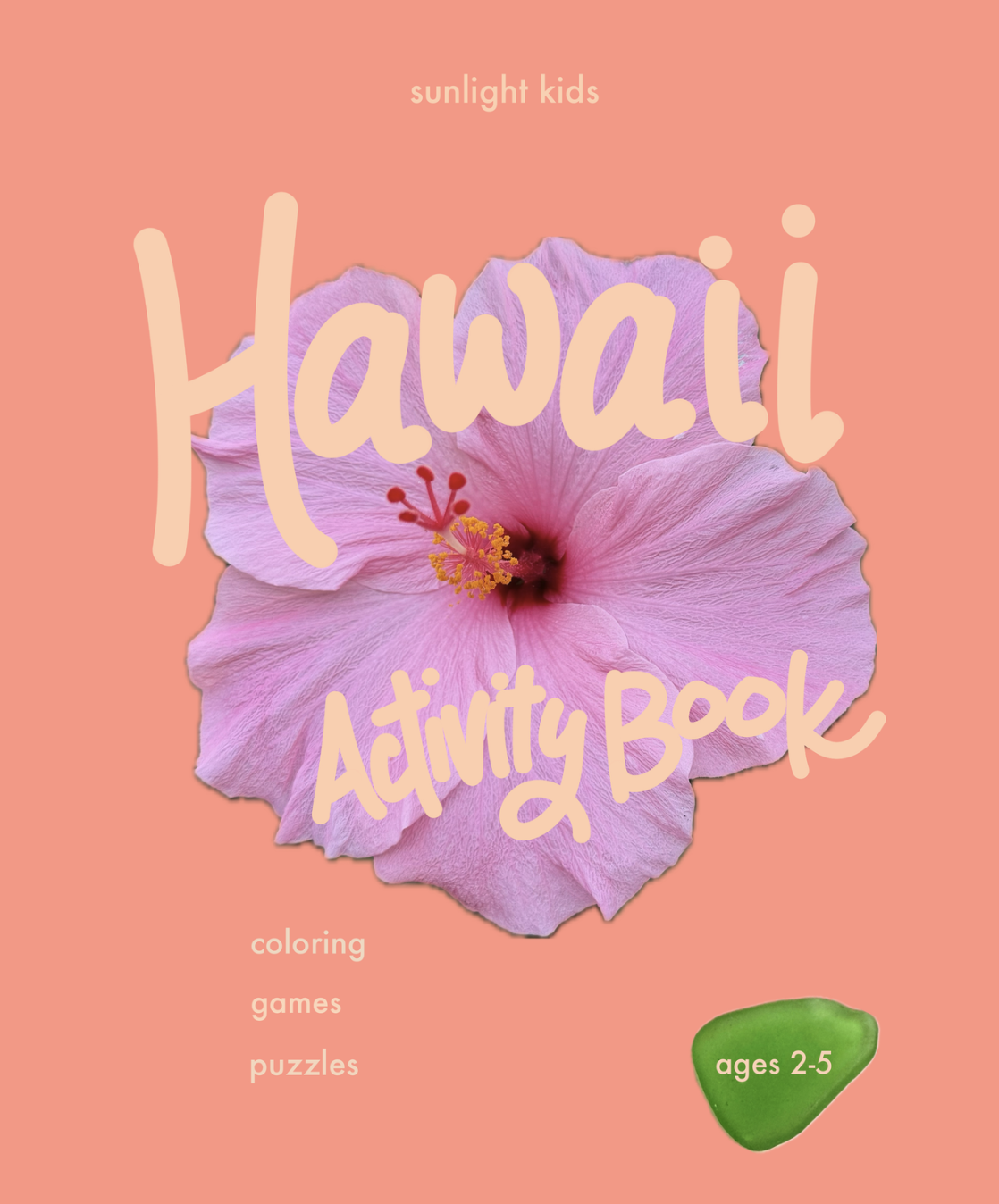
Ages 2–5 · Coloring, tracing, counting, ABCs & first Hawaiian words — made for toddlers & preschoolers.
- #2
Melissa & Doug Water Wow reusable books
Ages 2–4The best thing in a car for a child still in a five-point harness. The pen holds water, the pages colour where it touches and fade back a few minutes later, and there is genuinely nothing to lose but the pen and nothing to stain the upholstery — no small feat in a vehicle you also have to return clean. Refilling from a water bottle at a stop takes ten seconds, and the small format suits a car seat tray far better than a full-size book. Weakness: four or so scenes per book means a two-year-old who likes it will exhaust it and start again, and the novelty is thinner on the third loop. Buy two different titles. The pen is also the whole product: lose it in the footwell and the book is finished for the rest of the drive, so bring a spare.
- #3
Spotting and scavenger hunt books
Ages 4–8The category built for exactly this vehicle. Spotting books, license plate hunts, and road trip scavenger hunts point the child out of the window rather than down at their lap, which is the single most useful thing an activity can do in a car — Usborne's travel spotting titles are the best-known version and there are dozens of credible alternatives. They also work for two children at once without a fight, because both can spot the same water tower, and they cost you nothing in dropped equipment if the checking is done by pointing rather than writing. Weakness: they need daylight and scenery. A spotting book is dead weight after dark, in fog, and on a two-hour stretch of identical interstate, which is unfortunately when you need it most. Treat it as one tool in the bag rather than the whole plan.
- #4
Highlights Hidden Pictures compilations
Ages 5–9The most reliable hour of independent quiet you can buy for this age in a car. No instructions to read, no writing precision required — a shaky line around a hidden umbrella still counts — and no adult judgement about whether a page is done. The thick compilations run several hundred pages, which comfortably covers a drive out and a drive back with pages left over, and the answer section settles the arguments. Weakness: it is a look-down activity, and sustained close focus in a moving car is exactly what makes a lot of kids feel carsick, particularly on winding roads. It works well on flat interstate and much less well in the mountains. Pair it with a spotting book and switch when someone goes quiet.
- #5
Sunlight Puzzle Book for Kids: Medium
Ages 7–10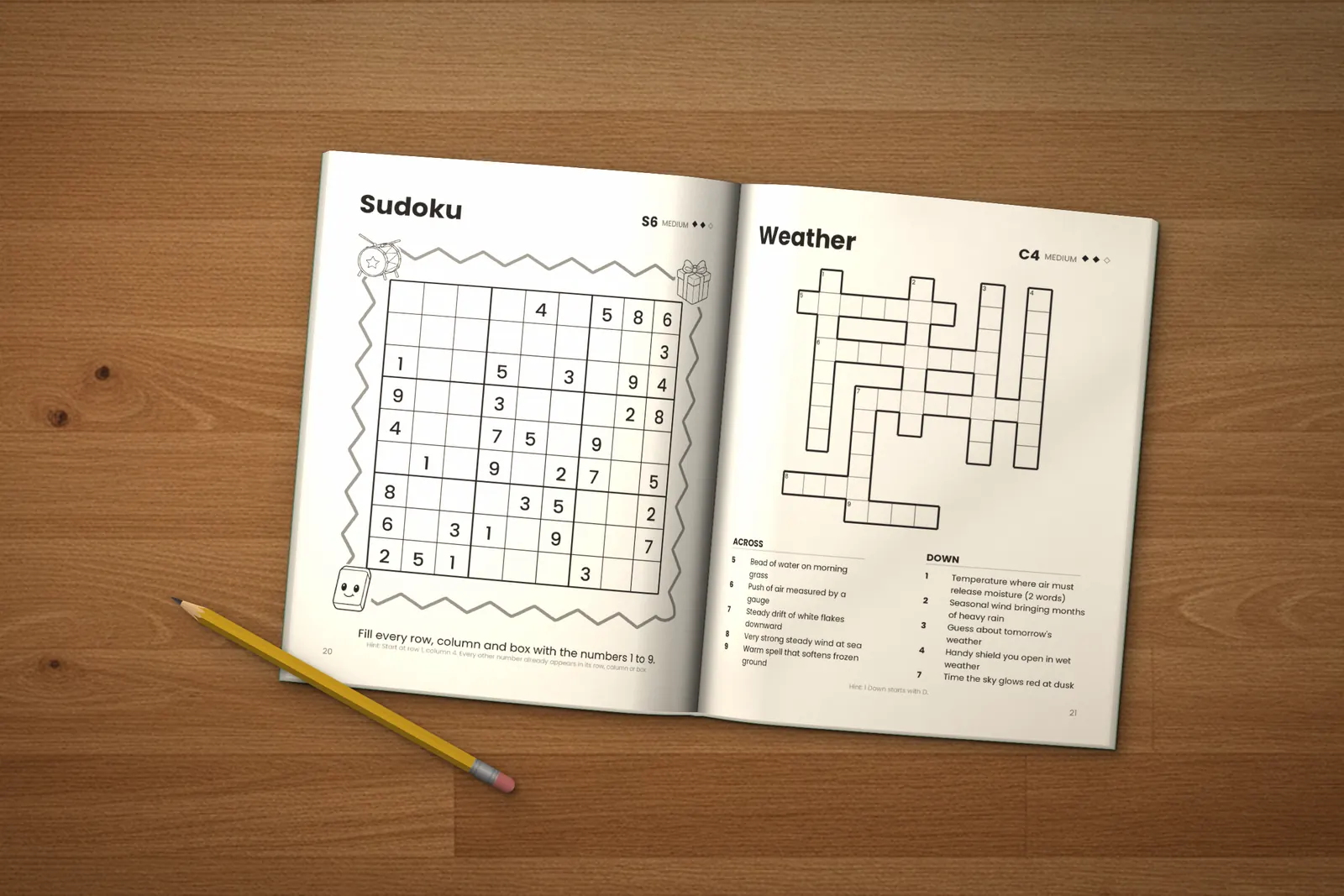
For the older sibling in the third row who is past coloring and not yet allowed a phone. Sudoku, crosswords, and word searches mixed through one 8 by 10 book, one puzzle per page in big clear type, self-teaching instructions up front, and a complete answer key in the back — which in a car is the important feature, because it means nobody has to ask the driver whether they got it right. The mix keeps a stalled kid moving instead of shutting the book. Weakness: it is finished but not yet listed, so the button below reads Coming soon rather than taking you to a checkout. It is also a look-down activity and a reading one, so it is the wrong pick for a child who reads reluctantly or gets carsick easily.
Paperback$10.99In a rush? Download the PDF now and print it at home.
What to look for in a road trip book
Balance looking down with looking out
A lot of children feel sick if they stare at a page for a long stretch in a moving car, and it tends to be worse on winding roads and in the back row. You do not fix that by banning books — you fix it by alternating. Half an hour of coloring or puzzles, then a spotting book, an audiobook, or a window game, then back. Buying two different kinds of book instead of two of the same kind is the practical version of this advice.
Give the pencil a home
Almost every backseat crisis on a long drive is a dropped item, and it is almost always the pencil. A clipboard with a clip, a lap desk with a pen groove, a pencil case that closes, or a bit of string taped to the board all solve it for less than the cost of the book. Bring three pencils, not one, and put them somewhere the child can reach without unbuckling.
Count the driving hours honestly, then add the stops
People pack for the mileage and forget the queue at the drive-through, the twenty minutes in a parking lot waiting for someone, the motel evening, and the restaurant where the food takes forty minutes to arrive. That dead time is where an activity book earns most of its money, and it is easier to fill than the road itself because there is a table. Plan for the whole day, not just the driving.
One book per child, and keep one in reserve
Two children cannot share one activity book across a centre seat without a negotiation neither of them will honour. Buy one each, and ideally not identical ones, so a swap at a gas stop feels like something new. Then keep one unopened book in the front footwell for the last stretch — a fresh book produced at hour five buys more peace than two books handed out at hour one.
DIY vs buy
A printed pack plus a clipboard is a genuinely good road trip setup, and it is cheap enough to be disposable, which matters in a car where things get sat on and spilled on. Our free printables cover most of what you would want — the restaurant busy kit for the meal stops, the rainy day activity pack for the motel evening, dot markers for the youngest, and a boredom buster set for the last hour. Print a stack before you leave, because the thing you will not do is find a printer in a motel. What loose sheets do badly is live in a car: they crease, slide into the footwell, blow out of an open door at a rest stop, and get thrown away with the food wrappers. Clip them to a board or punch them into a slim folder and they behave. For the child who will use it every day for a week, a bound book still wins.
Driving somewhere specific?
Ages 2–5 · 4–7 · 7+ · Adults
Frequently asked questions
- What is the best activity book for a car?
- For two to four year olds, a no-mess reusable book like Water Wow, because nothing is lost and nothing marks the upholstery. For four to seven, a destination activity book about where you are driving, which connects the book to the day. For seven and up, a thick mixed-puzzle or Hidden Pictures compilation they can work alone with an answer key in the back. Whatever the age, add a clipboard — it changes how usable every one of these is on a lap.
- What if my child gets carsick reading in the car?
- It is common, and the practical fix is to alternate rather than eliminate. Keep close-focus activities to shorter stretches, save them for flat straight roads, and switch to window-based things — spotting books, license plate hunts, audiobooks, I Spy — on winding sections and after dark. Fresh air, a front-facing seat as soon as they are old enough for one, and a stop to walk around all help. If it is a persistent problem for your child, that is a conversation for your pediatrician rather than something a book choice can solve.
- Spiral bound or paperback for a road trip?
- Spiral, if the content is otherwise equal, because it lies flat on a lap and stays open with no hands. But do not trade good content for binding: a perfect-bound book about the place you are driving to, clipped to a board, beats a spiral-bound book of pages your child finds boring. The clipboard erases most of the difference for a few dollars.
- How many activity books do I need for a week-long road trip?
- Two or three per child for a week, staggered rather than handed over at once, plus a printed pack for the motel evenings and the restaurant waits. More than that and they become clutter in the car. The bigger lever is variety of type — one coloring or activity book, one puzzle book, one window-based spotting book — rather than volume of the same thing.
- Crayons or colored pencils in the car?
- Colored pencils, mostly. Crayons melt in a car parked in the sun, and melted crayon on a fabric seat is far worse than the mess you were trying to avoid — if you do bring them, bring them into the motel at night. Pencils do not melt, do not stain, and are easier to fish out of a seat crack. Bring a small sharpener with a shavings compartment, and skip markers entirely.
Sunlight Kids activity books — for every age.
Ages 2–5 · 4–7 · 7+ · Adults