Best Word Search Books for Kids (2026 Buyer's Guide)
Word search is the puzzle format parents buy most and research least. Nearly every book on the shelf says "for kids" and nothing on the cover tells you the one thing that decides whether your kid finishes a page or quits on it: grid size. A 10×10 grid with eight forward-only words is a fifteen-minute win for a six-year-old. A 20×20 grid with thirty words running backwards and diagonally is the same puzzle in name only, and it will make that same six-year-old put the book down for good. This guide sorts the category by the specs that actually change difficulty — grid size, words per puzzle, and which directions words are allowed to run — and pairs them with real reading ages. One thing to say plainly up front: we publish word search books for kids ourselves, and our line is one of the five picks below. The other four are books we would recommend with no stake in them, and every pick here, ours included, gets its honest weakness.
The short answer
Free printable starter pack
22 pages · Best for ages 10+ and adults
How we chose
Grid size over the age on the cover
Publishers pick age ranges for marketing reach, not accuracy — "ages 4–8" is a five-year span covering pre-readers and confident third-graders. We judged every book on its actual grids: roughly 10×10 for ages 6–7, 12×12 to 15×15 for 8–10, and 15×15 and up for 10–12. Where a book's grids and its stated age range disagreed, we went with the grids.
Whether the book says which directions words run
Forwards across and down is beginner. Add backwards and you roughly double solve time. Add diagonals and you double it again. Good publishers state the direction rules somewhere on the cover or in the front matter; books that hide it are usually hiding a difficulty jump halfway through.
One puzzle per page, word bank beside the grid
Two puzzles crammed on a page means small letters and a kid holding a place with a finger. A word bank printed underneath the grid instead of beside it means constant re-scanning. Both are cost-saving layout choices and both make the puzzle harder in a way that teaches nothing.
An answer key that a kid can actually use
Every book here has a key. What separates them is layout: a key that circles the found words on a reproduced grid is usable by a child alone, while a key that lists coordinates is not. We also downgraded books where checking one answer spoils the puzzle printed next to it.
Our top picks
- #1
Sunlight Kids — Word Search for Kids: Easy, Medium & Hard
Ages 6–12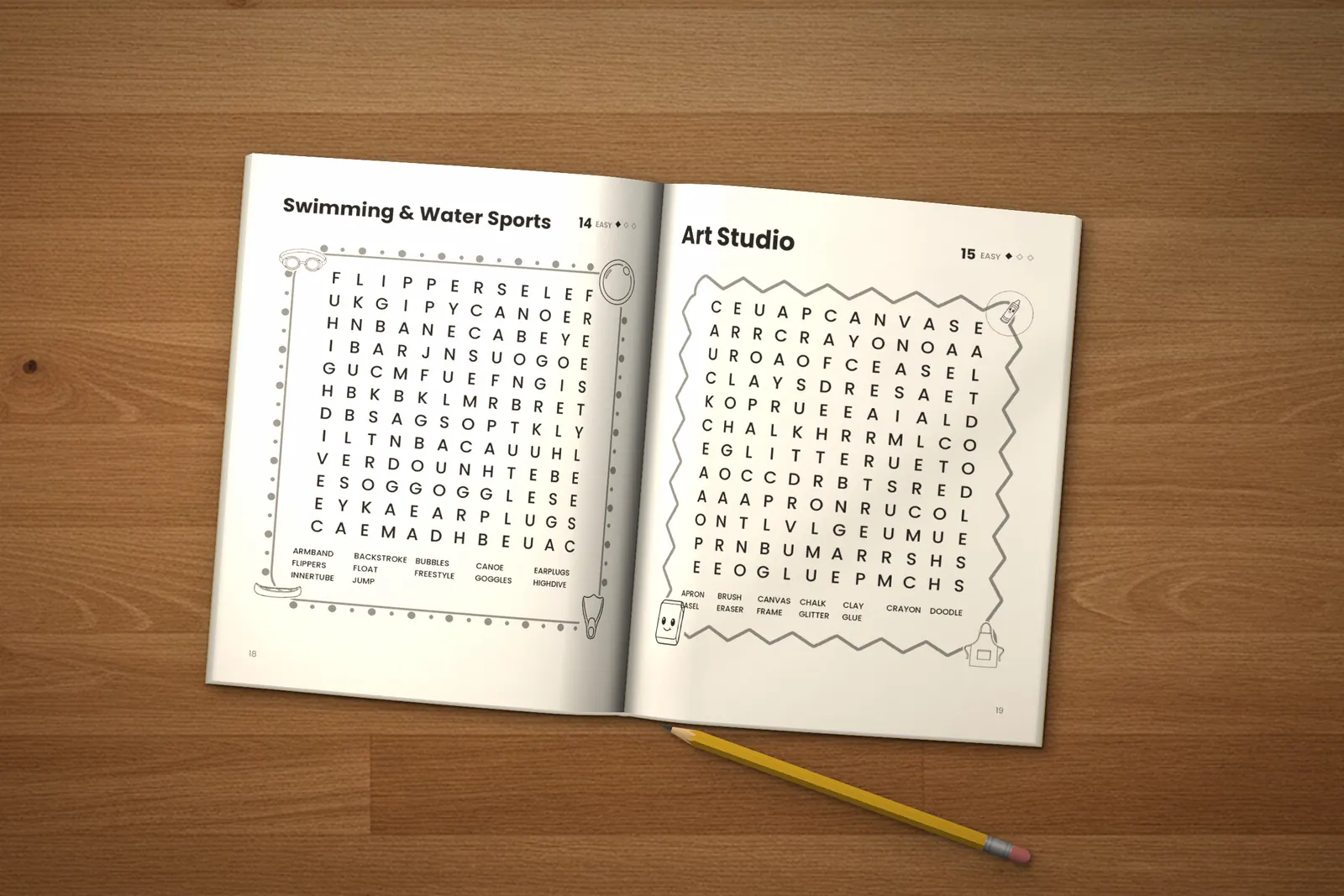
Best if you want one book that keeps working as the kid gets better. 100 puzzles, one per page, split 34 easy / 33 medium / 33 hard across 115 pages at 8×10 inches. The easy third runs across-and-down only so a six-year-old finishes page one; by the hard third words run in all eight directions and backwards. Fresh theme on every page, word bank beside every grid, no three-letter words, and every grid machine-checked so each word appears exactly once — which is why the answer key never looks wrong. Full key in the back. If you'd rather buy one difficulty and stay there, the same line splits into Easy (ages 6–9), Medium (8–11), and Hard Word Search for Kids (9–12), and there are ten themed volumes — animals, space, dinosaurs, ocean, sports, food, world, nature, science, school. Weakness: the climb is the point, which means a kid who only wants easy puzzles gets 34 of them and then hits a wall. For that kid, buy the Easy edition instead of the omnibus.
Paperback$10.99In a rush? Download the PDF now and print it at home.
- #2
Highlights Hidden Pictures and puzzle books
Ages 4–9Best for kids who aren't ready for a wall of letters. Highlights has been building puzzles for children for seventy years and it shows — the art is genuinely good, the difficulty is calibrated to real kids, and the paper takes pencil, marker, and eraser without tearing. For a five- or six-year-old who finds a letter grid intimidating, a Highlights puzzle book is a gentler on-ramp to the same skill: scanning a busy field for a specific target. Weakness: it isn't a word search book. Hidden Pictures is the flagship format and word searches are a minority of pages in the mixed puzzle editions. If you specifically want word searches, you'll pay for a lot of pages you didn't want.
- #3
School Zone word search and puzzle workbooks
Ages 5–9Best for buying to a grade level. School Zone builds to curriculum bands rather than broad age ranges, so a book labeled for first grade genuinely uses first-grade sight words and vocabulary. That makes them the most reliable pick if you're a teacher or a homeschooling parent who needs the words to match what the kid is being taught this month. Weakness: it reads like schoolwork, because it is. Page design is functional, themes are educational rather than fun, and kids who already associate workbooks with homework will treat it as homework.
- #4
Newsstand word search magazines (Penny Press, Kappa, Dell titles)
Ages 9–12Best value per puzzle for an older kid who's genuinely hooked. The grocery-store and airport puzzle magazines are cheap, disposable, and hold hundreds of puzzles. For a ten- or eleven-year-old who finishes a book in a weekend, buying three magazines beats buying one nice book, and nobody cries when one gets left in a seat pocket. Weakness: paper quality is poor — pencil smudges, pens bleed through to the puzzle behind — and letters are printed small to fit the puzzle count. The themes are also written for adults, so a lot of word lists assume references a nine-year-old has never heard of.
- #5
Licensed-character word search books
Ages 6–10Best for the reluctant kid. A word search about a video game or cartoon a child already loves will get done when a generic one won't, and that's not a small thing — the whole value of the format is time spent on the page. If you have a kid who refuses puzzle books on principle, buy the one with the character on the cover and don't overthink it. Weakness: quality is close to random. These are usually generated in bulk, so grids vary wildly in difficulty within a single book, word lists lean on character names a child may not be able to spell, and layout crowding is common. Treat it as a motivation purchase, not a puzzle purchase.
Kids word search books by level
Easy (ages 6–9) keeps words running across and down with big letters; Medium (8–11) adds diagonals; Hard (9–12) uses all eight directions and backwards words. Each is 100 puzzles, one per page, with a word bank beside every grid.
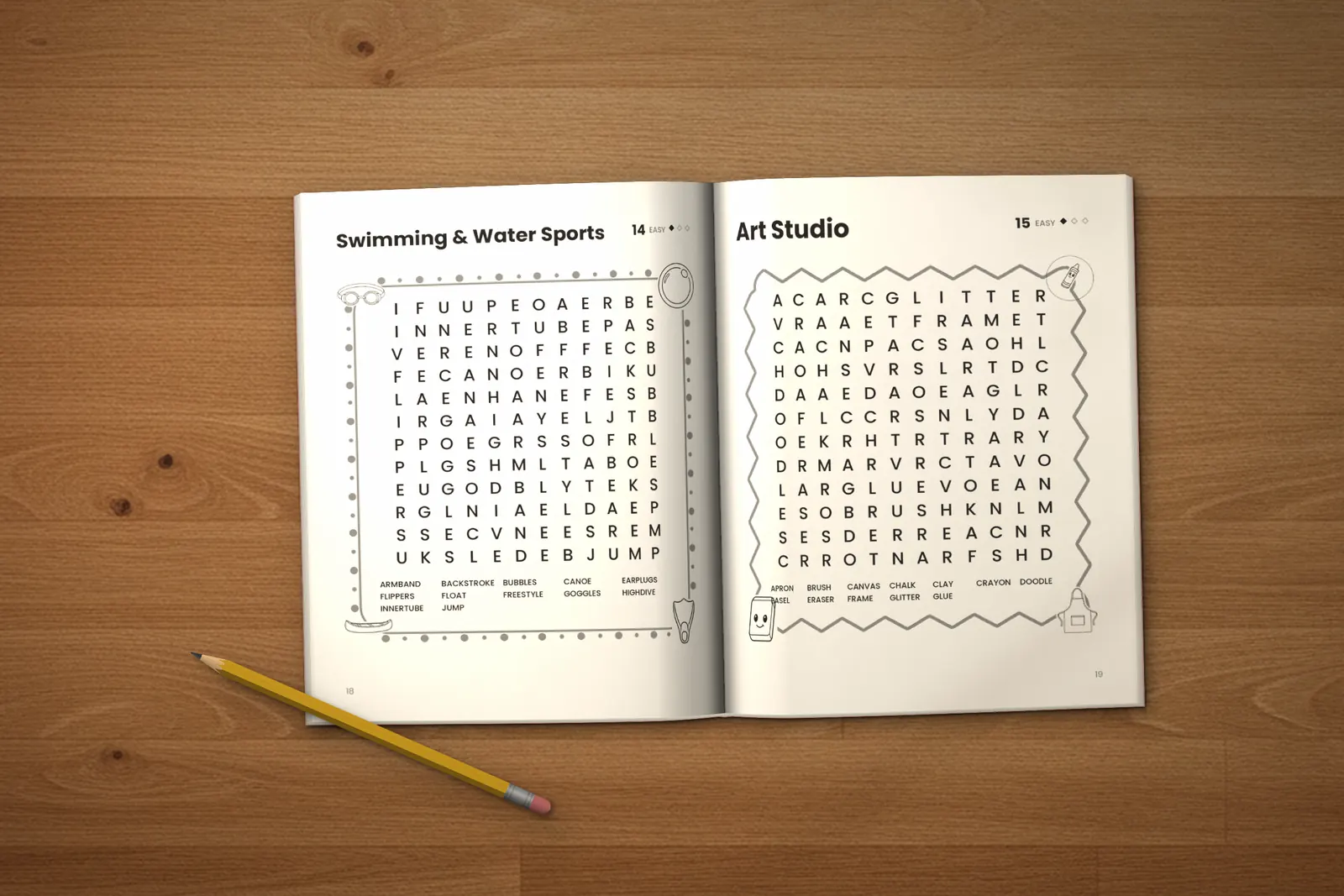
Word Search for Kids: Easy — 100 puzzles, one per page — across · down · diagonal
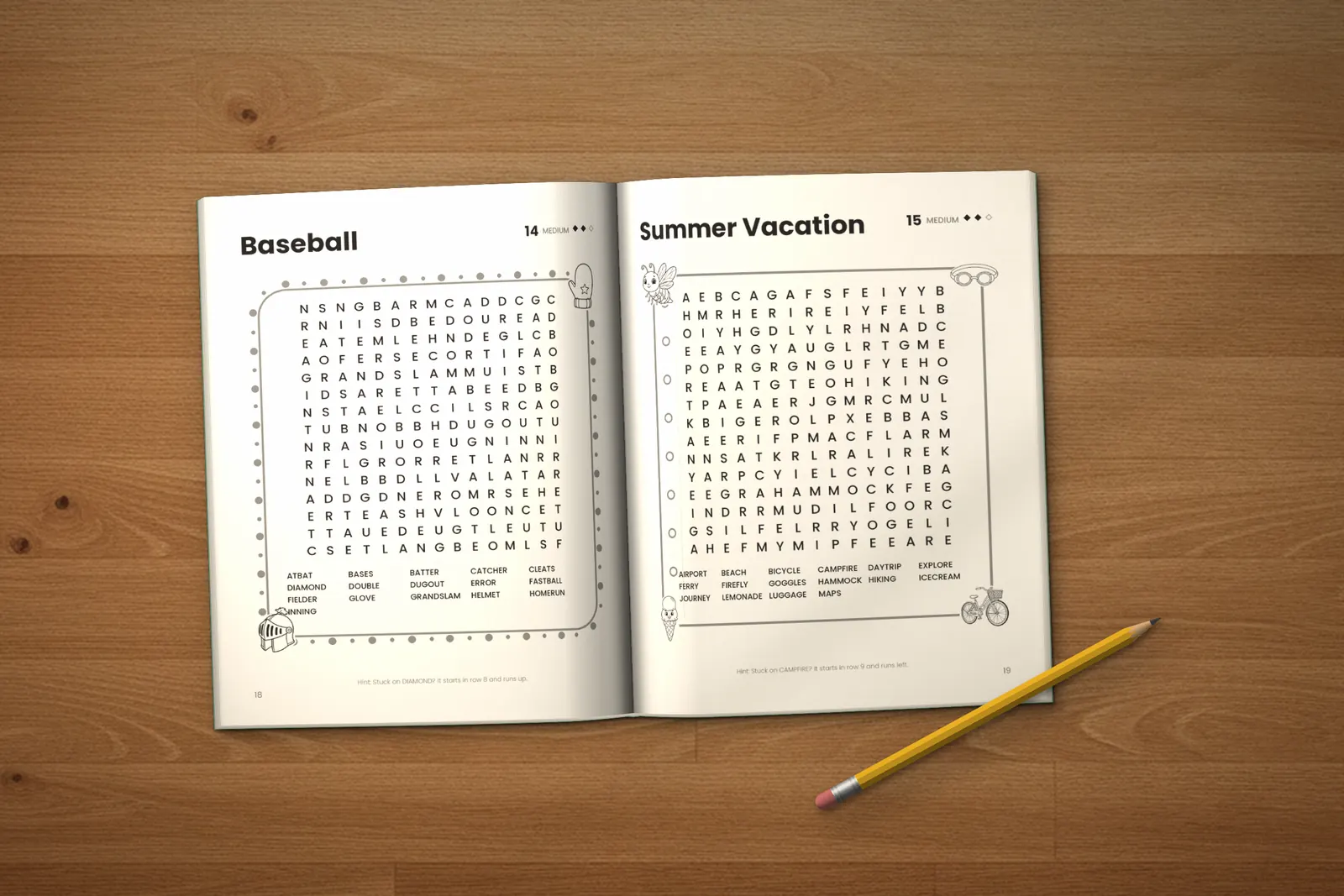
Word Search for Kids: Medium — 100 puzzles, one per page — 8 directions · backwards words
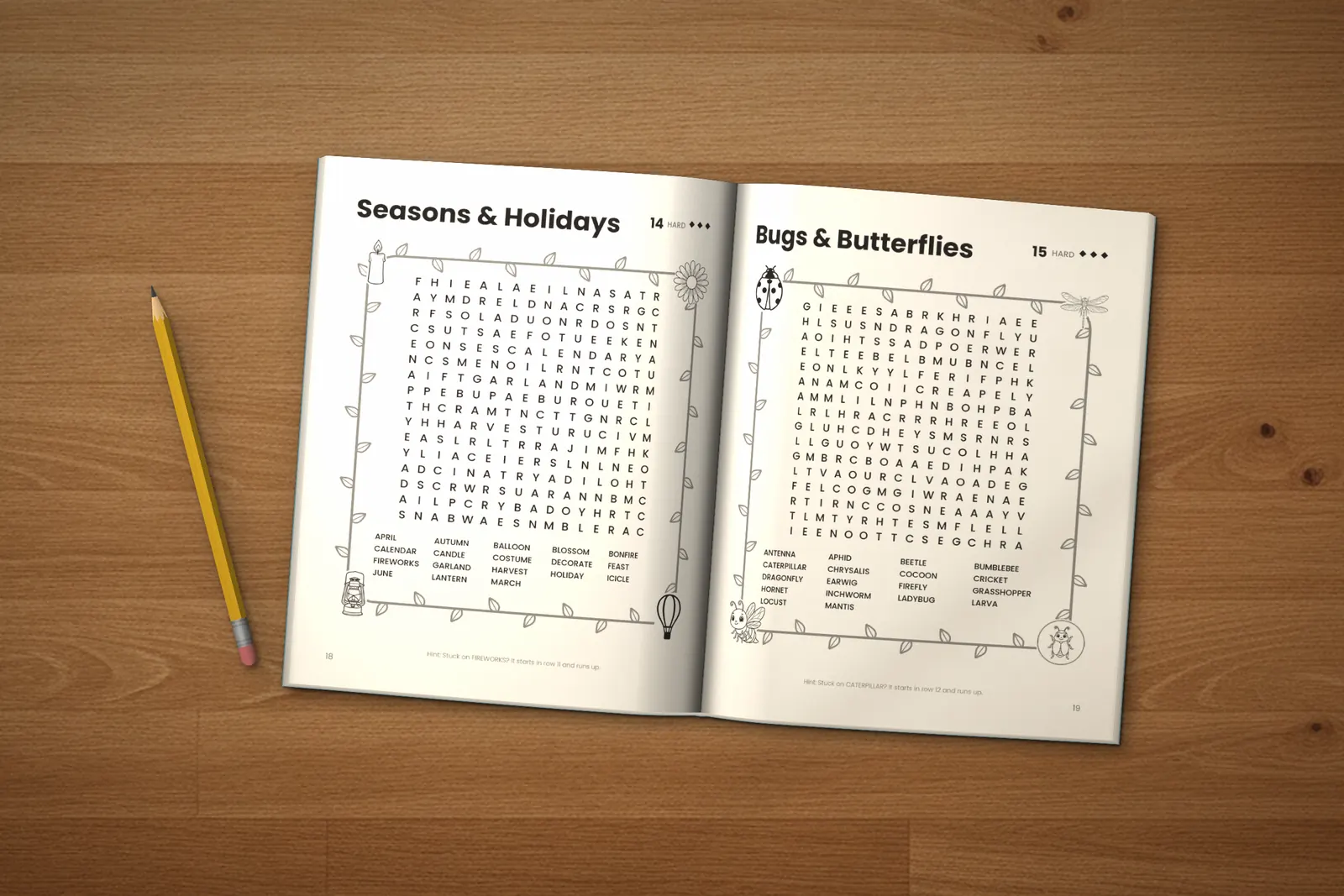
Hard Word Search for Kids — 100 puzzles, one per page — 8 directions · backwards words
Themed word search books for kids
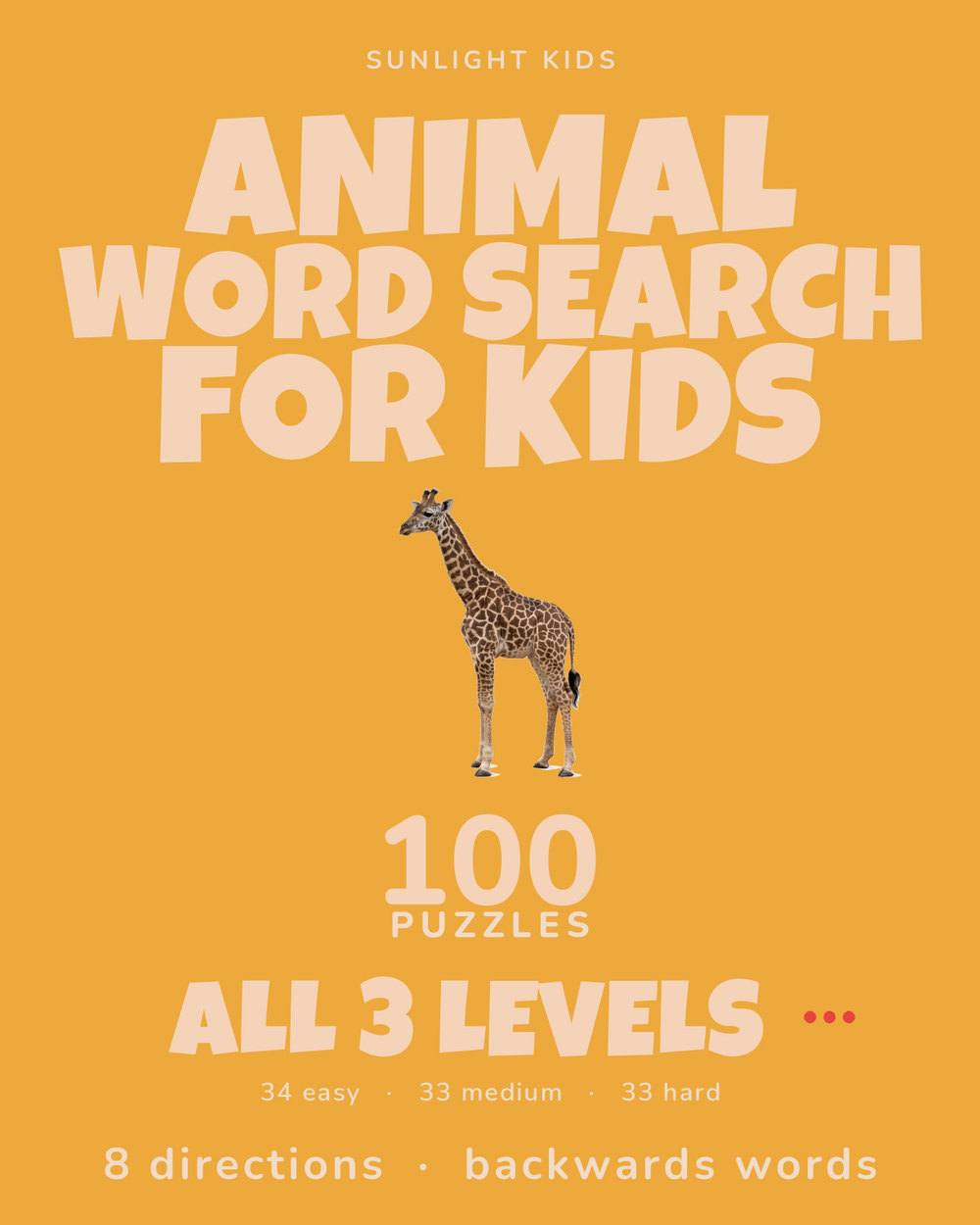
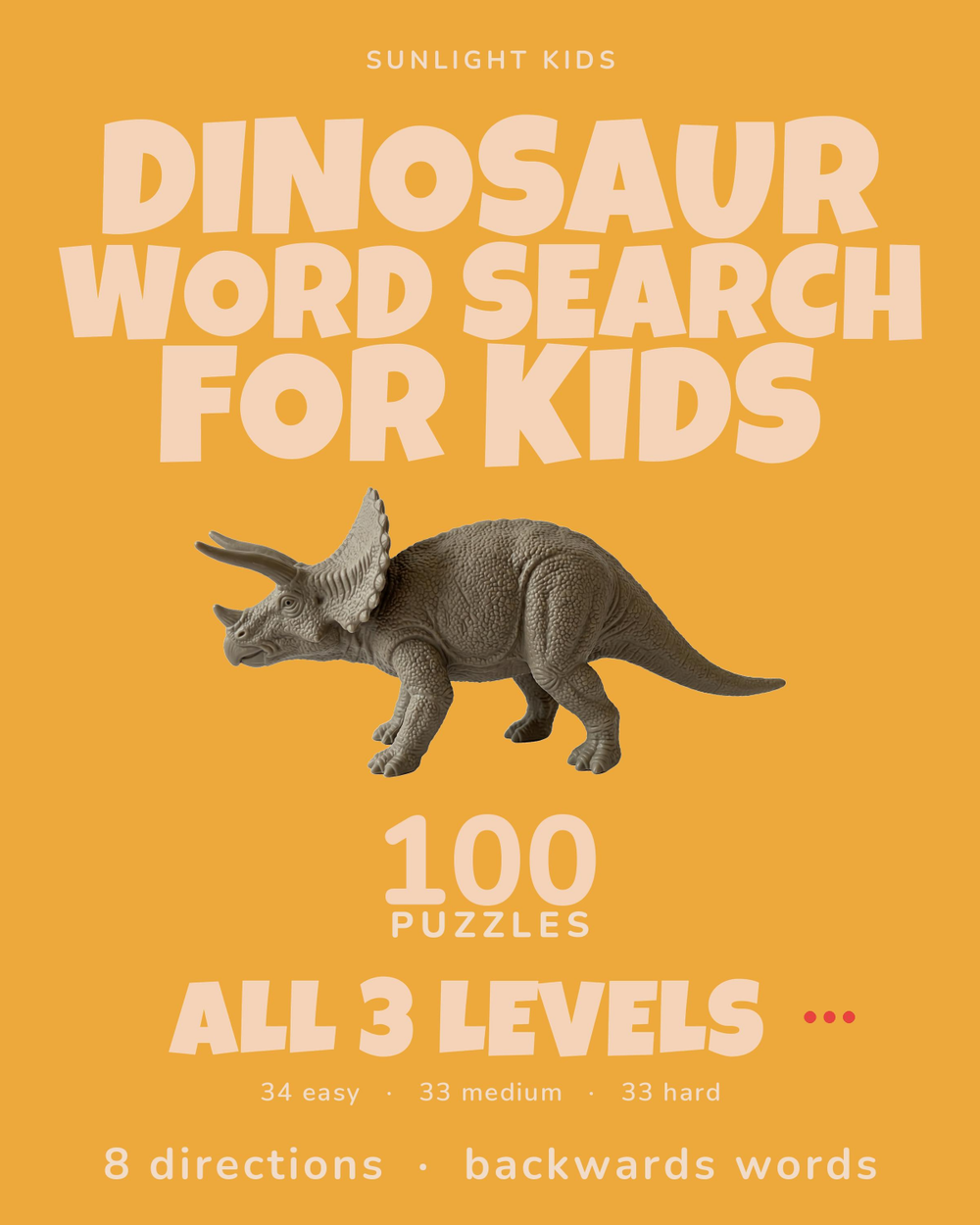
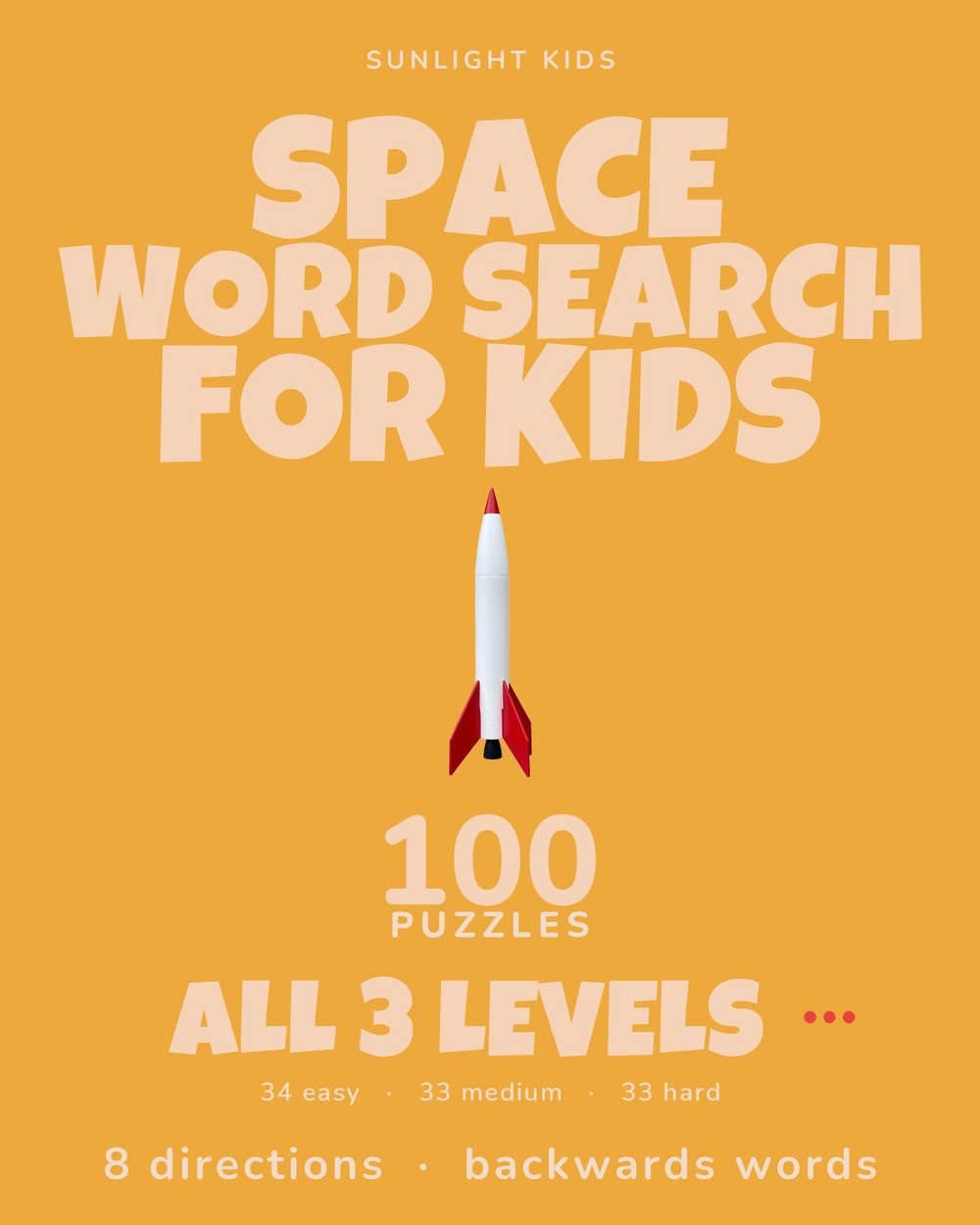
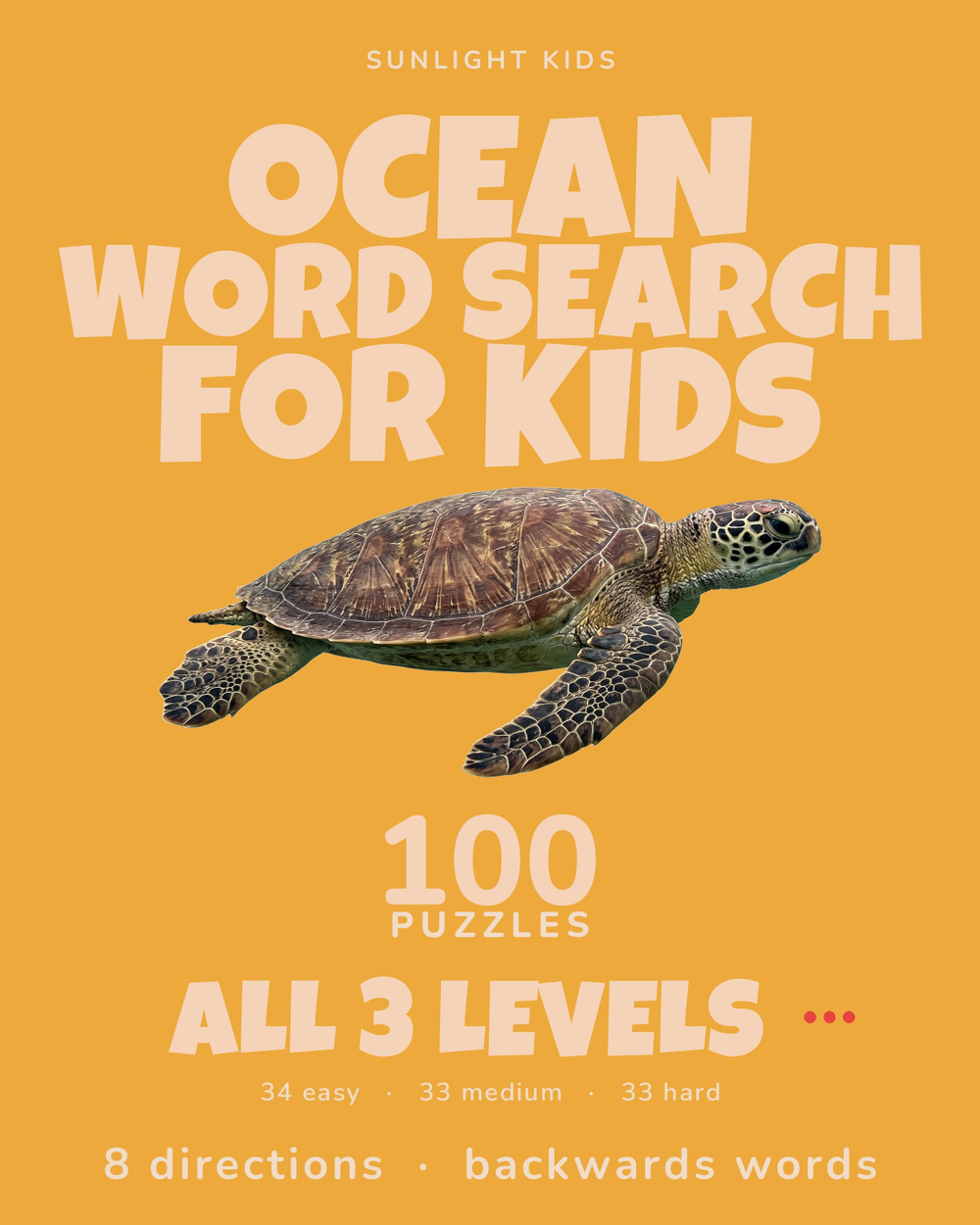
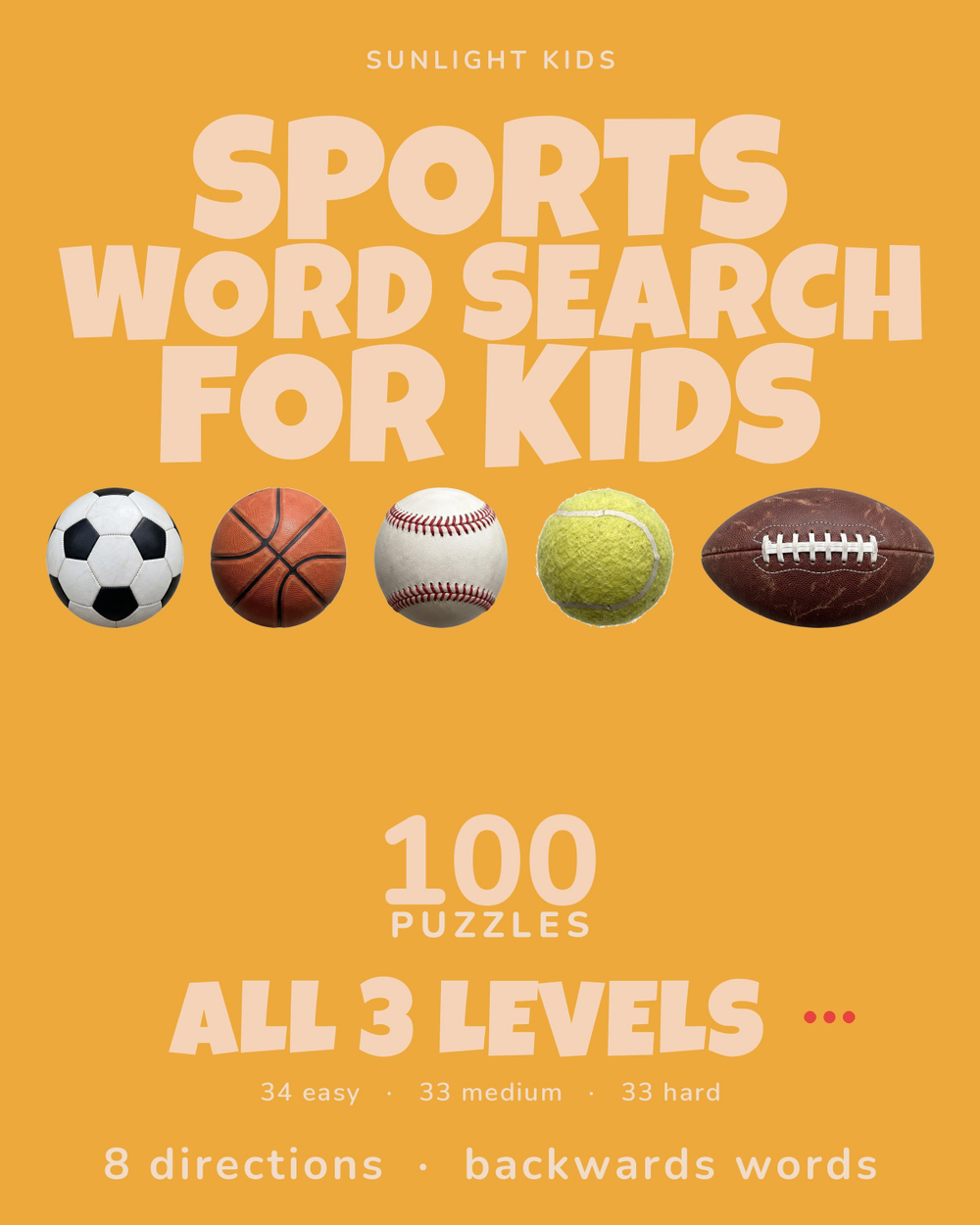
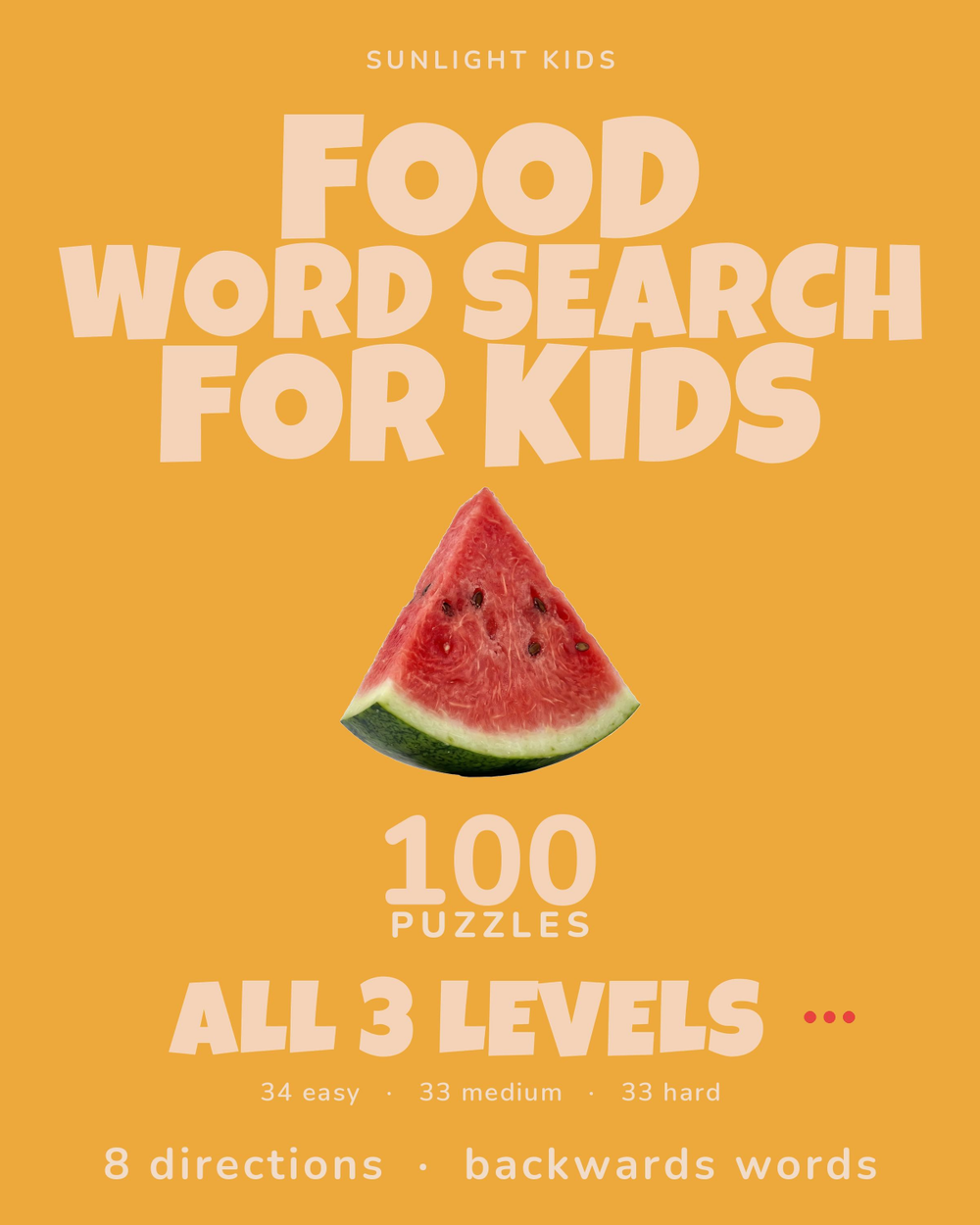
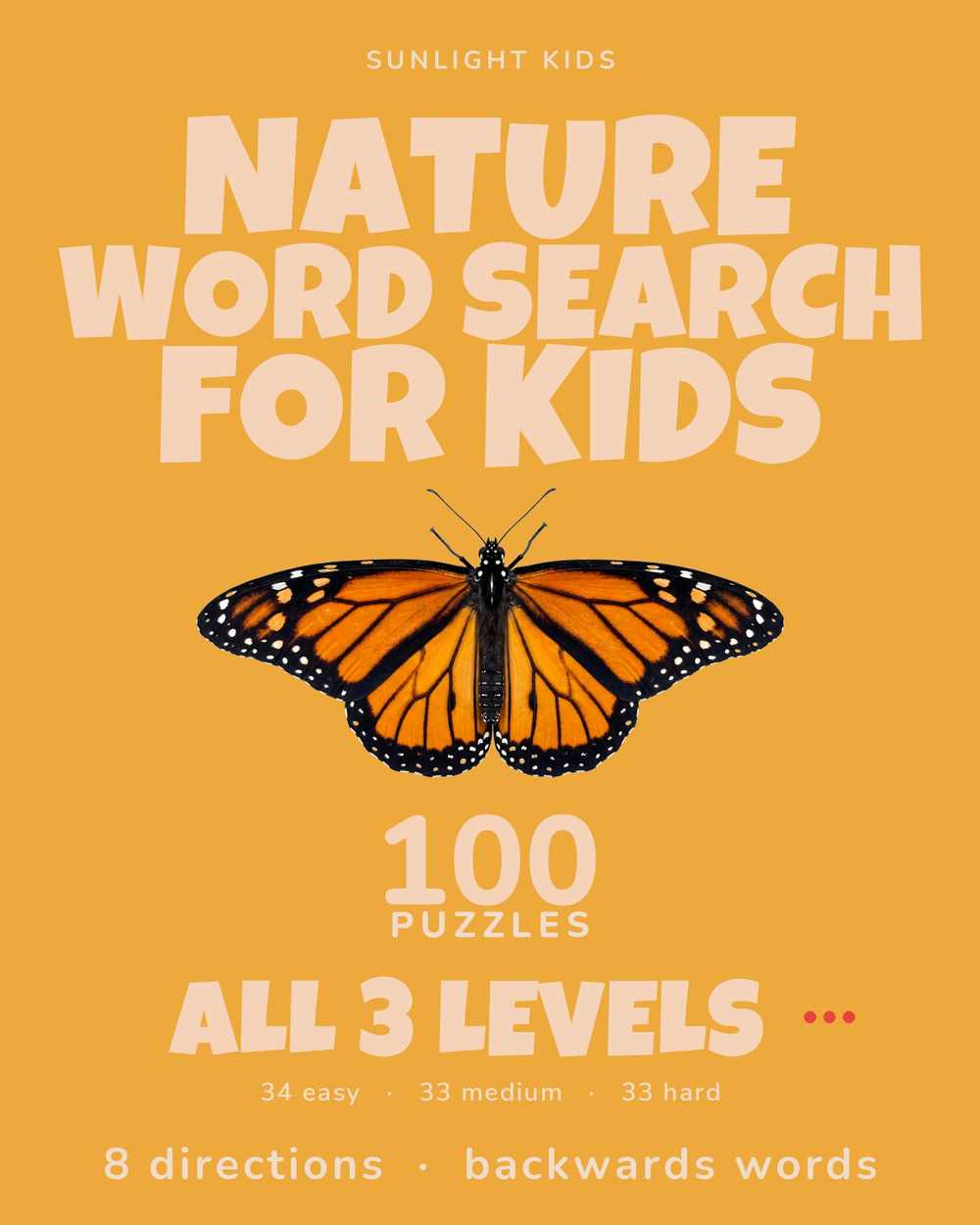
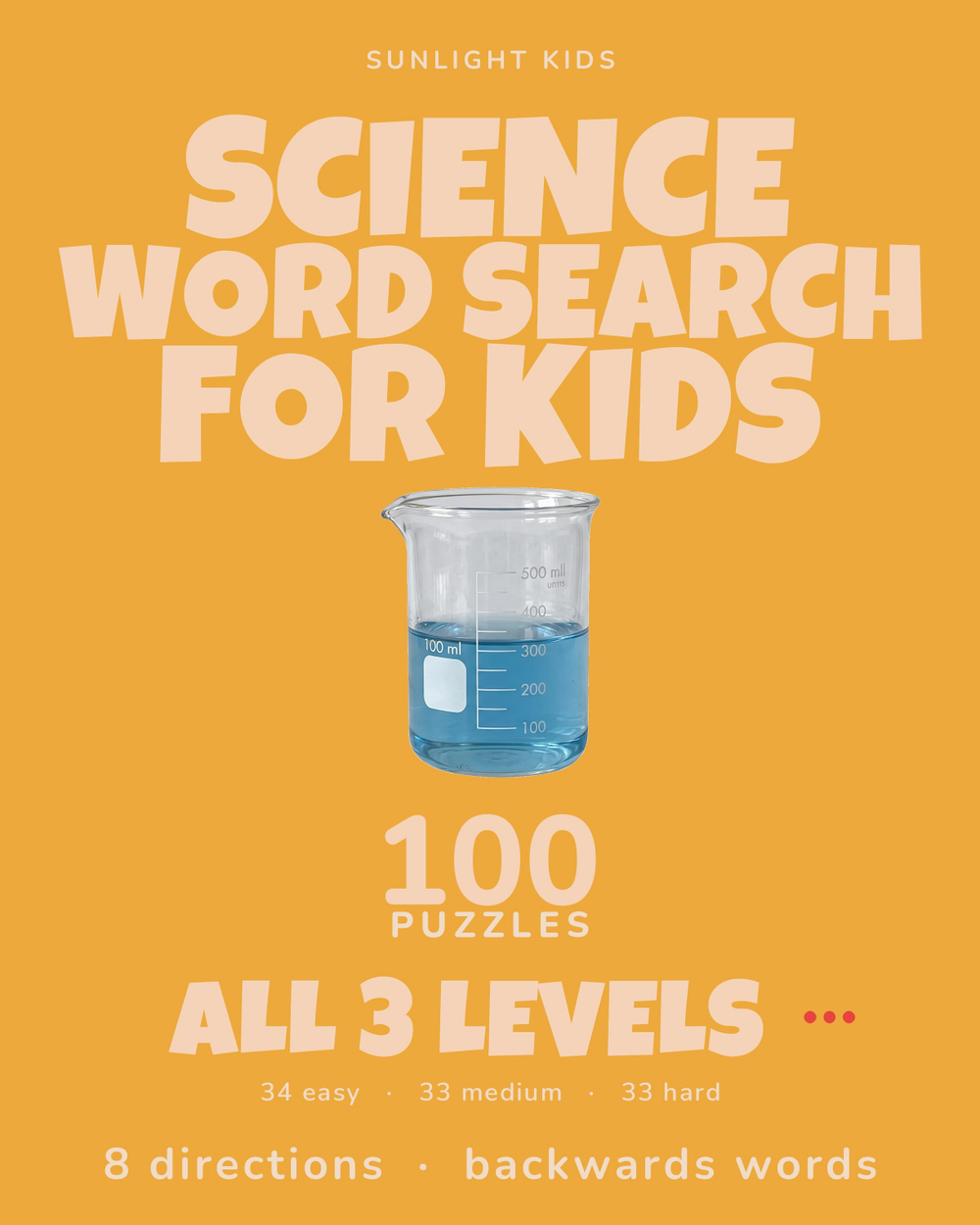
A theme a child already loves is the easiest way to get them to pick up a puzzle book. Each themed volume has 100 word searches for ages 6–12, easy to hard.
Hard word search for teens
For 13 and up: bigger grids, longer words and every direction from the first page.
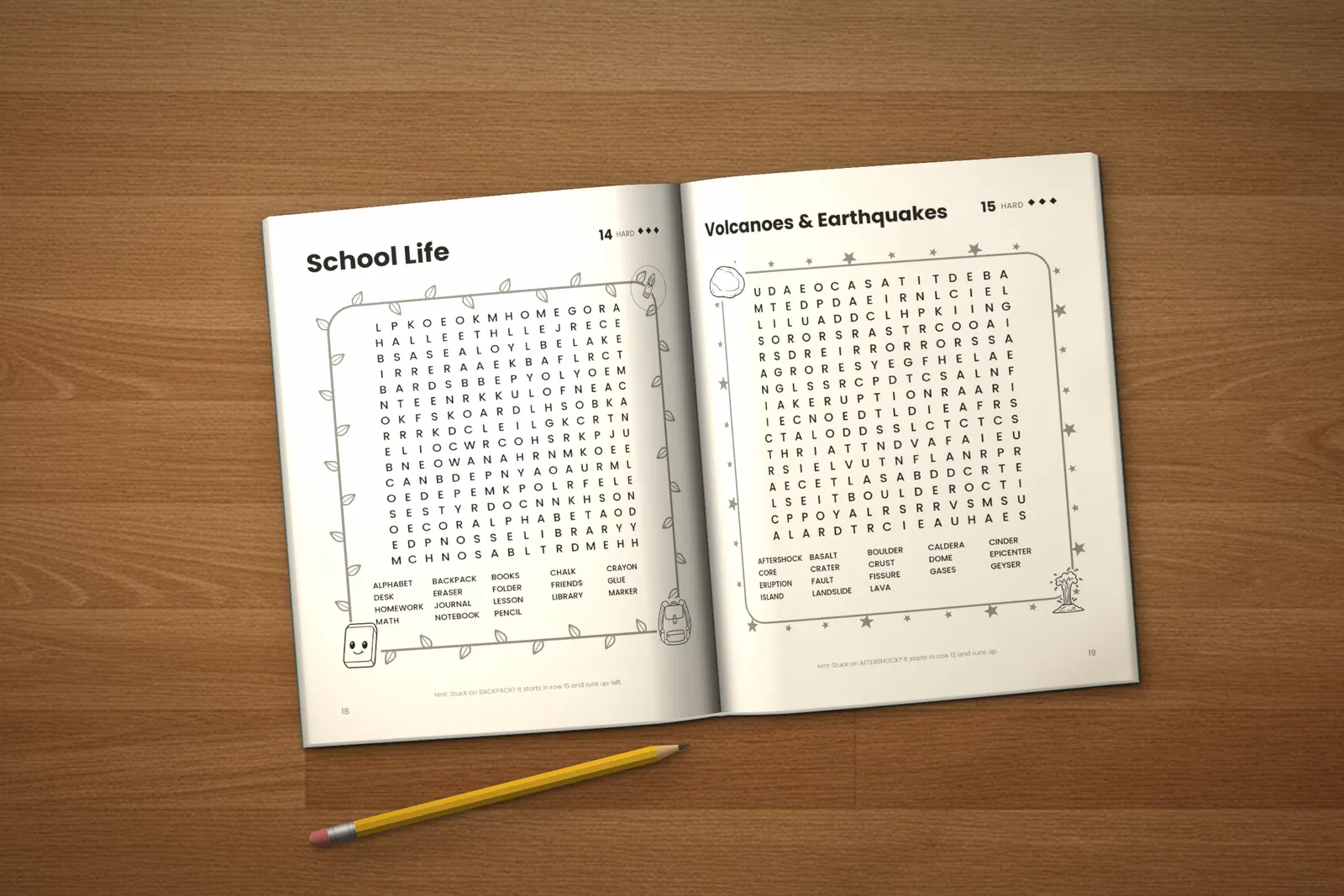
Hard Word Search for Teens — 100 puzzles, one per page — 8 directions · backwards words
What to look for in a word search book for kids
Match the grid to reading level, not birthday
A confident reader at seven handles 15×15 fine; a struggling reader at nine will stall on it. If you can see inside the book, count the letters across one row. Ten to twelve is beginner, thirteen to fifteen is middle, sixteen and up is for kids who already enjoy the format.
Count the words in one puzzle
Eight to twelve words is a sitting for a young child. Fifteen to twenty is a solid ten-to-twenty-minute puzzle for an eight-to-ten-year-old. Past twenty-five words the puzzle stops being a puzzle and becomes an endurance test, which is fine for a twelve-year-old and demoralizing for anyone younger.
Big letters and paper that takes an eraser
Kids circle, cross out, and change their minds. Thin newsprint tears under an eraser and shows the puzzle on the other side through the page. Look for bright white stock and letters large enough to read without the kid bending over the book — this matters more for young solvers than almost anything else on the cover.
Themes the kid already cares about
Theme is the single biggest driver of whether a book gets finished. Dinosaurs, space, animals, and sports carry a six-year-old through puzzles they'd otherwise abandon, and a themed word list quietly teaches vocabulary because the kid wants to know what the words mean. Generic "around the house" lists do not.
DIY vs buy
Print before you buy. Word search is one of the few puzzle types where a free PDF is genuinely as good as a paid book — the puzzle is the grid, and a well-built grid prints identically whether it came from a press or your printer. Our free hard word search pack (/printables/hard-word-search) is ten 20×20 grids with 25+ words each, aimed at ages 10 and up, and our Halloween word search pack (/printables/halloween-word-search) scales across three difficulty levels from easy 10×10 grids for first-graders up to two hard 20×20 grids. Between them you can find out in an afternoon which grid size your kid actually enjoys, for the cost of paper. Where buying wins is volume and durability. A hundred-puzzle book survives a suitcase, sits in a car door pocket for a year, and doesn't need a printer at 8pm on a rainy Saturday. The sensible order is: print a few, learn the right difficulty, then buy the book at that level.
Word search books we built ourselves
Ages 2–5 · 4–7 · 7+ · Adults
Frequently asked questions
- What age can kids start word searches?
- Around 5 or 6, once a child can reliably recognize letters left-to-right and hold a short word in mind while scanning. Start with 8×8 or 10×10 grids, six to ten words, all running forwards across and down. A child who can read simple sentences but can't yet find words in a grid usually just needs the grid made smaller — it's a visual-search problem, not a reading problem.
- What's a good grid size for a 7 year old?
- 10×10 to 12×12, with about ten to twelve words per puzzle, words forwards across and down only. That's a five-to-fifteen-minute puzzle for a typical seven-year-old. Add backwards words once they're finishing those comfortably, and hold off on diagonals until eight or nine — diagonals are the single hardest jump in the format because they break the left-to-right reading habit the child just spent two years building.
- Are word searches good for dyslexia?
- Honestly, often not — and it's worth knowing that before you buy. Word searches ask a reader to identify letters in isolation, out of order, and without any sentence context to lean on, which removes exactly the supports dyslexic readers use. Many find them slow and frustrating rather than useful practice. If you want to use them anyway, make it easy: large grids of few words, high letter contrast, forwards-only directions, a dyslexia-friendly or plain sans-serif typeface, and generous letter spacing. Crosswords and hidden-picture puzzles are usually a kinder fit for the same quiet-focus purpose.
- Do word searches actually help with reading or spelling?
- They help less with reading than the packaging suggests and more with attention than people expect. Finding "OCTOPUS" in a grid trains visual scanning, sustained attention, and letter-sequence recognition — real skills, but not comprehension. The spelling benefit is real but modest and comes mostly from repeated exposure to the word bank. Themed books do better here, because a kid who wants to know what a word means will ask.
- Should words go backwards and diagonally in a book for kids?
- Eventually, yes, but not on page one. Forwards-only puzzles build the habit of scanning systematically. Backwards words are a reasonable step up around age eight. All eight directions, including diagonals and reversals, is a nine-to-twelve-year-old skill. The best books for a wide age range climb through those stages on purpose rather than mixing them randomly.
- How many puzzles should a word search book have?
- A hundred is the sweet spot for a bound book — enough that it lasts a summer, few enough that the publisher had to make each one count. Be skeptical of "500 puzzles" and "1,000 puzzles" titles aimed at children: they hit those counts by shrinking grids and letters, and by recycling word lists across the volume.
Sunlight Kids activity books — for every age.
Ages 2–5 · 4–7 · 7+ · Adults