30 Montessori Activities to Do at Home (Ages 1–6)
Thirty practical-life and sensorial activities you can set up with things from your kitchen — no expensive 'Montessori' toys required.
Montessori at home isn't about buying wooden trays and pastel toys — it's an approach: give children real, purposeful work, child-sized tools, and the freedom to do it themselves. 'Help me to do it myself' is the whole idea. The payoff is independence, concentration, and fine motor skill.
Below are 30 Montessori-inspired activities grouped the Montessori way — practical life, sensorial, and fine-motor/coordination — almost all using objects you already own. Set one up on a tray, show it slowly once, then let your child take over.
Free printable
Free Montessori-at-Home Starter Pack (printable PDF)
- A printable 'shelf work' rotation planner
- Practical-life activity cards using household items
- Color, size, and matching printables for sensorial work
- A short parent guide to 'show, then step back'
Independent work they can finish themselves
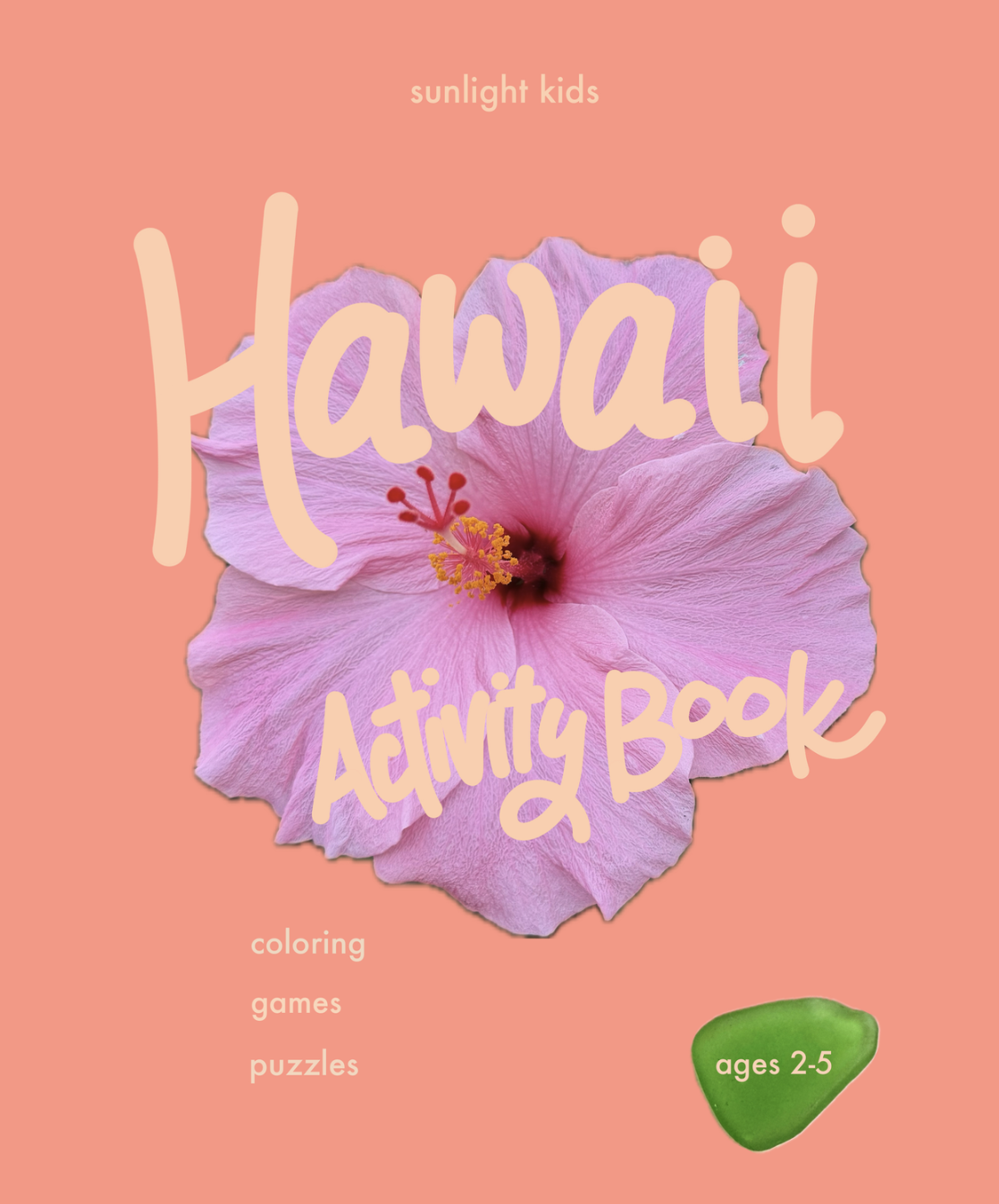
The Sunlight Kids Hawaii Activity Book (ages 2–5) fits the Montessori spirit: purposeful, self-directed pages a child completes on their own.
Practical life (real, purposeful work)
The heart of Montessori for young kids: real tasks done with child-sized tools.
Pouring water between small pitchers
Ages 2–4- Needs:
- Two small pitchers + a sponge
- Keeps them busy:
- 15–20 min
- Builds:
- Coordination, concentration
Spooning/transferring beans or pasta
Ages 2–4- Needs:
- Two bowls + a spoon
- Keeps them busy:
- 15 min
- Builds:
- Fine motor, focus
Real food prep (banana slicing)
Ages 2–5- Needs:
- Banana + a child-safe knife
- Keeps them busy:
- 15 min
- Builds:
- Practical life, independence
Washing a table or toy
Ages 2–5- Needs:
- Small sponge + bowl of water
- Keeps them busy:
- 15–20 min
- Builds:
- Care of environment
Dressing frames (zip, button, snap)
Ages 2–5- Needs:
- Old clothes with fasteners on a hoop
- Keeps them busy:
- 15 min
- Builds:
- Self-dressing skills
Watering a plant
Ages 2–5- Needs:
- Small watering can
- Keeps them busy:
- 10 min
- Builds:
- Responsibility, care
Sorting laundry / matching socks
Ages 2–5- Needs:
- Clean laundry
- Keeps them busy:
- 15 min
- Builds:
- Sorting, contribution
Setting the table
Ages 3–6- Needs:
- A placemat outline
- Keeps them busy:
- 10 min
- Builds:
- Sequencing, independence
Hawaii Activity Book for Kids
Coloring, tracing, counting, ABCs & first Hawaiian words — made for toddlers & preschoolers.
Sensorial (refining the senses)
Sound-matching jars
Ages 3–5- Needs:
- Pairs of jars with rice/beans/coins
- Keeps them busy:
- 15 min
- Builds:
- Auditory discrimination
Texture / fabric matching
Ages 2–5- Needs:
- Pairs of fabric swatches
- Keeps them busy:
- 15 min
- Builds:
- Tactile discrimination
Color tablet matching
Ages 2–5- Needs:
- Paint chips in pairs
- Keeps them busy:
- 15 min
- Builds:
- Color discrimination
Size sorting (small to big)
Ages 2–5- Needs:
- Nesting cups or bowls
- Keeps them busy:
- 15 min
- Builds:
- Seriation
Mystery bag (feel & name)
Ages 3–6- Needs:
- A bag + familiar objects
- Keeps them busy:
- 15 min
- Builds:
- Stereognostic sense, vocabulary
Smelling jars
Ages 3–6- Needs:
- Jars with cotton + scents
- Keeps them busy:
- 10 min
- Builds:
- Olfactory discrimination
Fine motor & coordination
Tongs/tweezers transfer
Ages 2–5- Needs:
- Tongs + pom-poms + ice tray
- Keeps them busy:
- 15–20 min
- Builds:
- Pincer/tool grasp
Threading beads on a dowel/string
Ages 2–5- Needs:
- Large beads + string
- Keeps them busy:
- 20 min
- Builds:
- Coordination
Nuts & bolts matching
Ages 3–6- Needs:
- A few nuts + bolts
- Keeps them busy:
- 15 min
- Builds:
- Coordination, problem-solving
Pushing coins/buttons through a slot
Ages 2–4- Needs:
- Lidded container + slot
- Keeps them busy:
- 15 min
- Builds:
- Pincer grasp
Open & close containers
Ages 1–3- Needs:
- Jars/boxes with lids
- Keeps them busy:
- 15 min
- Builds:
- Hand strength, problem-solving
Sandpaper letters / tracing
Ages 3–6- Needs:
- Textured or printable letters
- Keeps them busy:
- 15 min
- Builds:
- Pre-writing, letter shapes
Frequently asked questions
What is a Montessori activity?
It's a purposeful, hands-on activity that lets a child practice a real skill independently — pouring, sorting, dressing, matching. The adult demonstrates slowly once, then steps back so the child can repeat it and master it themselves.
Do I need to buy special Montessori toys?
No. Authentic Montessori at home leans on real, everyday objects and child-sized tools — pitchers, spoons, jars, fabric scraps. Expensive 'Montessori' toy sets are optional, not the point.
How do I set up a Montessori activity at home?
Put one activity on a tray, keep it simple and complete, show your child how slowly and without talking over it, then let them do it independently and repeat as long as they like. Rotate activities on a low, accessible shelf.
What ages is Montessori at home for?
The practical-life and sensorial activities here suit roughly ages 1–6, scaled to the child. Younger toddlers need closer supervision and simpler versions; older preschoolers can handle real food prep and more complex work.
Isn't Montessori expensive?
The branded furniture and materials can be, but the method itself is nearly free — it's about respect, real tasks, and letting children do things themselves. Everything here uses items you already own.
How is this different from regular play?
Montessori activities are purposeful and often have a built-in 'control of error' (the child can see if they got it right), and the adult intervenes less. It complements — doesn't replace — open-ended free play.
Take the fun with you
Hawaii Activity Book for Kids — Coloring, tracing, counting, ABCs & first Hawaiian words — made for toddlers & preschoolers.